

Authors: Agnieszka Marta Kosla and Carol Jasper (2026)
What’s the article about? (At a glance)
Background: Nostalgia is a bittersweet emotion that arises when reflecting on memories of the past. Food can be a powerful elicitor of nostalgia. Consumers often select foods that comfort and remind them of past experiences and loved ones, and food companies often appeal to nostalgia to sell products.
The present study by Kosla and Jasper explored the role of nostalgia when considering the transition to a vegan diet. The researchers interviewed 24 omnivores about their past experiences with food, including the food traditions they engaged with growing up, and had them reflect on how being vegan might influence the way they participate with those food traditions in the present – for example, what do they think of traditional foods made only with vegan ingredients?
Key findings: The authors report on three major themes from the interviews.
- The role of traditional meat-based dishes in a sense of home and place. First, participants expressed how meat played a crucial role in many of the food traditions within their family, and how engaging in these traditions served as a mechanism to connect with people and their past, create a sense of belonging (“[When cooking Golaki like my dad did], it is something that keeps you like connected with kind of your roots”), and manage their moods (“My mom’s cooking cheers me up. It makes me feel safe, makes me feel happy, brings me back to my childhood, makes me feel like I’m home.”). While some participants were doubtful about the effectiveness of vegan substitutes to elicit equivalent nostalgic feelings, the authors perceived that others recognised the value of these products for helping vegans preserve a connection to their past.
- Negotiating the attitudes of friends and families. When imagining what it would be like to be vegan, participants imagined that transitioning would create more challenges with their family than friends, due to the disruption to family routines and feeling that being vegan would make them a burden at family events (“I don’t think my parents would cope with it whenever I go home”; “…with my friends, I think it would be totally fine. I mean, there are so many vegan places nowadays”). Some participants expressed concerns with the cost of ‘vegan food’ or saw vegan substitutes as less tasty, while others viewed vegan diets as a prominent trend in modern dining (“…if anything, I’m just swimming with the tide, rather than swimming against the tide”).
- It’s not the meat, it’s the memories. When contemplating changing their diets, some participants acknowledged that the nostalgic feelings they have about meat-based meal traditions are more about the positive connections fostered by the meal and the coming together for the meal, rather than the food itself (“I think they were more around the kind of all the process and the experience rather than the food itself”). To quote the authors, “It can be inferred that the true essence of nostalgic food frequently resides not in the actual ingredients but in the shared experiences associated with them” (p. 12).
Implications for advocacy
The authors’ findings have important implications for vegan advocacy. They remind us that people often choose to eat foods that they know will elicit nostalgic feelings and connect them to their pasts and family traditions. Thus, it is important that plant-forward diets offer consumers the opportunity to use food for this purpose.
Importantly, it seems that some meat consumers recognise that the specific ingredients of nostalgic meals matter less than the overarching goal of connecting with the memories and the people associated with those meals. Thus, it is an important message for vegan advocacy to effectively communicate that such nostalgic experiences are possible even when animal-derived elements of a traditional meal have been replaced with more compassionate options.
Quick Links
The paper “Looking Back and Feeding Forward: An Analysis of Food Nostalgia on Meat Eaters’ Attitudes towards Transitioning to a Vegan Lifestyle” was published in Volume 5 (2026) of the PHAIR journal.
To read the full, open-access paper, go here
Blog post by Jared Piazza for PHAIR

Cover photo by Odiseo Castrejon
Authors: Matthew Ruby and Garrett Broad (2026)
What’s the article about? (At a glance)
Background: Past research by Broad (2023) has shown that consumers fall into four groups when it comes to interest in alternative proteins. This framework is based on the interplay of two variables: Meat Attachment (attached vs. not attached) and Novel Food Technology (optimists vs. sceptics).
1) Ecomodernists are attached to meat and are techno-optimists.
2) Carnivore traditionalists are attached to meat and are techno-sceptics.
3) High-tech vegans are not attached to meat and are techno-optimists.
4) Good foodies are not attached to meat and are techno-sceptics.
The new PHAIR article by Ruby and Broad (2026) explored the attitudes of these four consumer groups towards five different alternative proteins: (1) whole-food veggie burgers, (2) conventional meat, (3) plant-based meat, (4) cultured meat, and (5) meat produced using regenerative farming. Six-hundred participants from the US and UK completed a questionnaire assessing Meat Attachment, Food Technology Neophobia, and attitudes towards alternative proteins (e.g., willingness to try).
Key findings:
- Cluster analysis replicated Broad’s (2023) four consumer groups (with a fifth unclassified group). Analyses of the two structuring dimensions (i.e., Meat Attachment and Food Tech Neophobia) revealed distinct contributions across the five protein products.
- Food Tech Neophobia was a strong predictor of negative attitudes towards plant-based meat and cultured meat.
- Meat Attachment was a strong predictor of negative attitudes to whole-food veggie burgers and plant-based meat, and positive attitudes towards conventional and regenerative meat.
Implications for advocacy
The results suggest that distrust of new food technologies and emotional attachments to meat are two key barriers to acceptance of alternative proteins. While meat attachment is the more pervasive barrier, it does not appear to be a barrier to cultured meat acceptance among consumers in the US and UK, whereas food technology phobia is a barrier to cultured meat acceptance. Plant-based meat may be the most challenging protein to advocate for since all but high-tech vegans are likely to find some aspect of plant-based meat problematic or undesirable.
Key future directions include testing interventions aimed at reducing food technology neophobia. Given the pervasiveness of meat attachment as a barrier to plant-forward eating, the fact that meat attachment was weakly related to cultured-meat evaluations highlights its viability as a potential alternative to conventional meat for ecomodernists.
Quick Links
The paper “Consumer Attitudes toward Conventional, Regenerative, Plant-based, and Cell-Cultured Meat: The Role of Meat Attachment and Food Technology Neophobia” was published in Volume 5 (2026) of the PHAIR journal.
To read the full, open-access paper, go here
Blog post by Jared Piazza for PHAIR
Cover photo by Judith Prins
Authors: Gloria Mittmann, Susanne Siegmann, and Verena Steiner-Hofbauer (2026)
What’s the article about? (At a glance)
Background: Veganism is more than a dietary identity; it represents a way of living grounded in moral conviction and a political commitment to ending animal exploitation. Sustaining a vegan identity presents a number of challenges as vegans attempt to navigate a predominantly non-vegan world. Vegans can struggle to coordinate their dietary choices with loved ones, locate satisfying vegan food options, and are exposed to content about animal cruelty on a daily basis. How do vegans successful navigate these challenges? How do they experience being vegan in a non-vegan world?
The present research by Mittmann, Siegmann, and Steiner-Hofbauer explored the lived experiences of 100 self-identified vegans (90% female). Most participants were from Austria (82%) or Germany (16%) and had been practicing a vegan lifestyle for over 5 years (63%). Participants answered closed- and open-ended questions probing their relational, societal, and emotional experiences as a vegan, such as “How has your vegan lifestyle affected your relationships with family, friends, or partners who are not vegan?”; “Has your vegan lifestyle changed how you see society, human behaviour, or the world as a whole?”; “How has your vegan lifestyle affected your emotional or mental well-being?”
Key findings:
- Positive and negative emotions: Qualitative analysis revealed that participants experienced a mixture of emotions both positive and negative. Many vegans reported a sense of peace and satisfaction with their lifestyle choices (“(…)I know I’m having a positive impact on the environment, that I’m not responsible for animal suffering, and that I myself live in a healthier and more conscious way“), while also reporting some frustrations arising from their ongoing exposure to animal exploitation and doubts about their capacity to change things at a societal level (“(…) because you know that you can’t really change anything. In most cases, the law protects the animal exploitation industry“).
- Sense of belonging: Many participants reported time spent with other vegans as particularly meaningful and reinforcing, while acknowledging feelings of ostracism or relational distance from non-vegan family members, friends and partners. Online vegan communities were frequently highlighted as an important source of support (“I now frequently visit vegan subreddits online to read opinions, arguments, news, or recipes, but also because it gives me the feeling of being part of a worldwide community or movement, since I know very few vegans in my offline life“).
- Experiences at the societal level: Interactions within the wider social environment were often characterised by ambivalent emotions. While feeling at peace with themselves and their choices, and a connection to other vegans, participants’ attitudes towards society as a whole were less positive. Many reported frustrations with society and characterised it negatively, while some participants expressed hope that society is moving in a better direction (see the full article for details).
- Experiences across time: Participants reported experiencing several positive changes across their time living vegan including improvements in vegan food options that make everyday life easier, as well as family members, friends and colleagues becoming more accepting and accommodating of their choices over time. These positive changes were reported more consistently among vegans living in urban as opposed to rural settings.
Implications for advocacy
The present research spotlights the multifaceted experiences of vegans as they navigate a non-vegan world. While many vegans in the sample reported that their veganism was personally affirming, they also reported challenges related to navigating relationships, coping with the stress of animal exploitation, and maintaining hope that society is improving (see also Greenebaum, 2012; Markowski & Roxburgh, 2019; Veitch & Gregson, 2025). The findings converge with recent work highlighting the value of vegan community, a sense of belonging, and social support in sustaining vegan commitments. They also highlight the importance of supporting new vegans, practically and socially, during the early stages of adoption. The research shows that over time new vegans tend to cultivate essential skills and knowledge that serve them well, and social tensions often soften as family members and friends become more accepting. Thus, ensuring that new vegans have the means to navigate these initial challenges and find belonging and community remain important foci for vegan advocacy.
Quick Links
The paper “Becoming Vegan in a Non-vegan World: A Qualitative Analysis of Social and Psychological Experiences After Adopting a Vegan Lifestyle” was published in Volume 5 (2026) of the PHAIR journal.
To read the full open-access paper, go here
Blog post by Jared Piazza for PHAIR
Cover photo by Markus Winkler
Authors: Luke McGuire, Fatma Sabet, Luciana Torquati, and Natalia Lawrence (2026)
What’s the article about? (At a glance)
Background: Is it typical for people in the UK to consider abstaining from meat when they are young? What percent of young people go on to stop eating meat and why? How many of these young abstainers continue to abstain into adulthood? And what might be some of the reasons why people return to eating meat?
The present research by McGuire, Sabet, Torquati, and Lawrence sampled retrospective reports of 1063 emerging adults (18-26 years old) online, to answer these questions about meat avoidance in childhood. Prolific participants answered a series of questions about their past experiences with meat abstention. An initial screening question identified 461 UK-based participants from among the initial sample who had thought about stopping eating meat before they had finished secondary school. These participants reported if and when they gave up meat, for how long, their reasons for abstaining, and, for those no longer abstaining, their reasons for returning to eat meat. They also answered some questions about their current attitudes.
Key findings:
- Animal-concern focus for contemplating abstention: ‘Animal rights, welfare and concern’ (29%) was reported as the most common reason for considering abstaining from meat in childhood, followed by ‘social influences’ (25%) and ‘media’ (14%).
- Predictors of abstention related to receiving social support: Parental support was the strongest predictor of whether participants were able to stop eating meat, with school support also playing a role.
- Taste preferences and health as reasons for returning: ‘Taste preferences’ (32%) and ‘health’ (31%) were the main reasons for returning to meat, followed closely by ‘social influences’ (25%) and ‘convenience’ (24%).
- Lots of contemplators and plenty of abstainers: About half of the initial pre-screening sample (48.5%; n = 516) had thought about stopping eating meat while growing up. Of the contemplators, another half went on to stop (i.e., about a quarter of the entire sample).
- Length of abstention ranged from days (15.3%) to years (permanently 25.5%).
- Age of abstention: Participants first started to think about stopping at a range of different ages (4 to 21 years); the average age of contemplating fell within late childhood / early adolescence (11-12 years). Average of age of stopping was also within adolescence (M = 13.3 years old; range = 5 to 23).
- Gender divide: Women were more likely than men to have thought about stopping and had stopped.
Implications for advocacy
The research findings have several implications for vegan advocacy. First, they spotlight the high rate of meat-abstention contemplation that occurs in the UK. These rates suggest that there may be more consumers sympathetic to plant-based diets than when focusing only on behavioural indices (e.g., eating behaviour). Some models of behaviour change suggest that contemplation and sympathetic attitudes often precede wider societal uptake of moral innovations. Thus, the relatively high rates of childhood contemplation observed here may be a sign of a wider appetite for change.
However, the results also underscore the need to support current abstainers, as many reported abstainers in the sample returned to eating meat within days to years of stopping. That parental support was an important predictor of abstention maintenance is consistent with other recent work suggesting that social support, particularly support from family, both emotional and practical, is fundamental to the maintenance of plant-forward transitions among young people and emerging adults.
Quick Links
The paper “Early Attempts to Stop Eating Meat: Prevalence, Predictors and Outcomes Among UK Youth” was published in Volume 5 (2026) of the PHAIR journal.
To read the full, open-access paper, go here
Blog post by Jared Piazza for PHAIR
Cover photo by Green Prophet

Authors: Willem Sleegers, David Moss, William McAuliffe, David Reinstein and Daniela Waldhorn (2025)
What’s the article about? (At a glance)
Background: Even though wild animals represent more than 99% of the animals living on the planet, they have been given very little attention both in research and advocacy. Human-animal studies have largely focused on companion animals, though with a recent upturn in work on the exploitation of animals, particularly within food systems. Donations to animal charities are still disproportionately funnelled towards companion animals (e.g., animal shelters) as opposed to animals in factory farms, labs or suffering in the wild.
The recent PHAIR paper by Sleegers, Moss, McAuliffe, Reinstein and Waldhorn bucks this research trend by focusing on the topic of wild animal welfare. The authors argue that wild animal suffering has been historically neglected largely because many people see wild animals as falling outside the sphere of human responsibility. Further, the immense scale of wild animal suffering may cause compassion collapse or a sense that little can be done to ease animal suffering. Nonetheless, there are many good reasons why advocacy groups should prioritise the suffering of wild animals (see especially ACE’s arguments based on principles of effective altruism).
Research aims: The present research was aimed at developing and validating a psychometric instrument – the Attitudes towards Wild Animal Welfare (AWAW) scale – that can be used to quantify attitudes towards wild animal welfare. The scale classifies attitudes along four related dimensions or subscales (with 4 items per subscale):
- caring about wild animal suffering (e.g., “I care about the difficulties wild animals face in their natural environment, even when these are solely due to nature”);
- support for interventions to ameliorate wild animal suffering (e.g., “We should intervene in nature to reduce the natural hardships wild animals face”);
- an idyllic view of nature (i.e., the view that life in the wild is generally pleasant; e.g., “In their natural environment, unaffected by humans, wild animals live pleasant lives”);
- a belief that interventions will be ineffective (e.g., “It is not possible to solve the problems that wild animals face in nature”).
Summary of findings: Across four studies (total N = 2,949), the authors developed and validated the AWAW, confirming the 4-item, four component structure.
- Correlates: positive attitudes towards wild animal welfare (i.e., higher caring and support, and lower levels of idyllic views and ineffectiveness beliefs) were shown to relate to lower levels of speciesism and greater willingness to donate money to a wild animal charity (Wild Animal Initiative) as part of a donation task where windfall funds could be divided between one of three charities.
- The AWAW was shown to capture a construct distinct from basic optimism-pessimistic attitudes.
- Demographics: women tended to score higher than men on all AWAW components but ineffectiveness beliefs. Non-omnivores tended to score higher than omnivores on all components but idyllic views of nature.
Implications for advocacy
The AWAW should serve as an invaluable tool for assessing which segments of the population support interventions on behalf of wild animals. Initial research has already unearthed important differences associated with gender and diet. The authors envision their scale being used to test how wild animal welfare attitudes shift across development (e.g., the attitudes of young people compared to adults) and how they relate to broader attitudes towards wildlife management (e.g., attitudes towards lethal vs. nonlethal forms of management).
Quick Link
The paper “Measuring Wild Animal Welfare Attitudes: The Attitudes towards Wild Animal Welfare Scale” was published in Volume 4 (2025) of the PHAIR journal.
To read the full open-access paper, go here
Blog post by Jared Piazza for PHAIR
Cover photo by Fidel Fernando

Authors: Nicholas Tan, Brock Bastian, and Luke Smillie (2024)
What’s the article about? (At a glance)
The ‘meat paradox’ encapsulates the conflict many people feel with regards to eating animals. Realising that one’s dietary practices contribute to harm to animals can be unpleasant. One way of reducing these negative feelings is by denying that farmed animals have sophisticated minds or suffer much. Of course, there are likely vast individual differences with regards to who experiences the meat paradox.
This Open Access PHAIR paper by Tan et al. (2024) explores how personality traits and ideological attitudes impact on how meat eaters experience and resolve the meat paradox via mind denial. Across two studies, self-identified omnivores were reminded of the harm involved in rearing farmed animals (cows or pigs) when considering meat-based meals, or they were not reminded of harm – similar to methods used by Bastian et al. (2012). Measures of mind attribution and negative affect were collected after the harm description. Participants also completed a range of personality and ideological measures such as Big Five personality traits (e.g., Openness to experience, Emotional volatility), preferences for inequality and group-based hierarchy (known as ‘Social Dominance Orientation‘) and conservatism. This way, the research team was able to explore whether participants’ responses to the harm information would be stronger or weaker depending on their personality traits and ideological attitudes.
Study 1 (N = 311) replicated the findings of Bastian et al. that harm descriptions led to lower mind attributions than the absence of harm – though negative feelings were unrelated to mind denial. Participants with higher (vs. lower) levels of Social Dominance Orientation and conservatism exhibited, overall, more animal-mind denial. Additionally, participants lower on Openness and higher on Emotion volatility engaged in more mind denial after learning about animal harm than those higher on Openness and lower on Emotion volatility.
Study 2 (N = 232) separated the harm information into “moderate” and “high” levels of harm, and sought to replicate and extend the findings of Study 1. Replicating Study 1, more mind denial occurred when participants read about the harm to farmed animals, and, this time, negative feelings correlated significantly with mind denial – that is, those who experienced more conflicted feelings exhibited more efforts to deny minds to farmed animals. The moderating effects of personality were less clear in Study 2, though Openness and Emotion Regulation Ability correlated with less mind denial.
Implications for advocacy
Knowing one’s audience and how they may respond to advocacy messages is important for optimising the effectiveness of advocacy efforts. The present findings highlight the need for targeted animal advocacy interventions that take into account the personality profile of audiences. Certain segments of the population are unlikely to respond sympathetically to messages about the suffering of farmed animals.
Based on Tan et al.’s findings, individuals higher in Social Dominance Orientation, conservatism, and Emotion volatility, and lower on Openness, are more likely to respond to such ‘harm’ messages with defensive reactions – for example, denying farmed animals minds – as a way of minimising the negative feelings caused by the meat paradox. By contrast, individuals higher in Openness and those better at regulating their emotions, may be more likely to respond positively – or at least less defensively – to such messages.
Blog post by Jared Piazza

Cover photo by Lucia Macedo
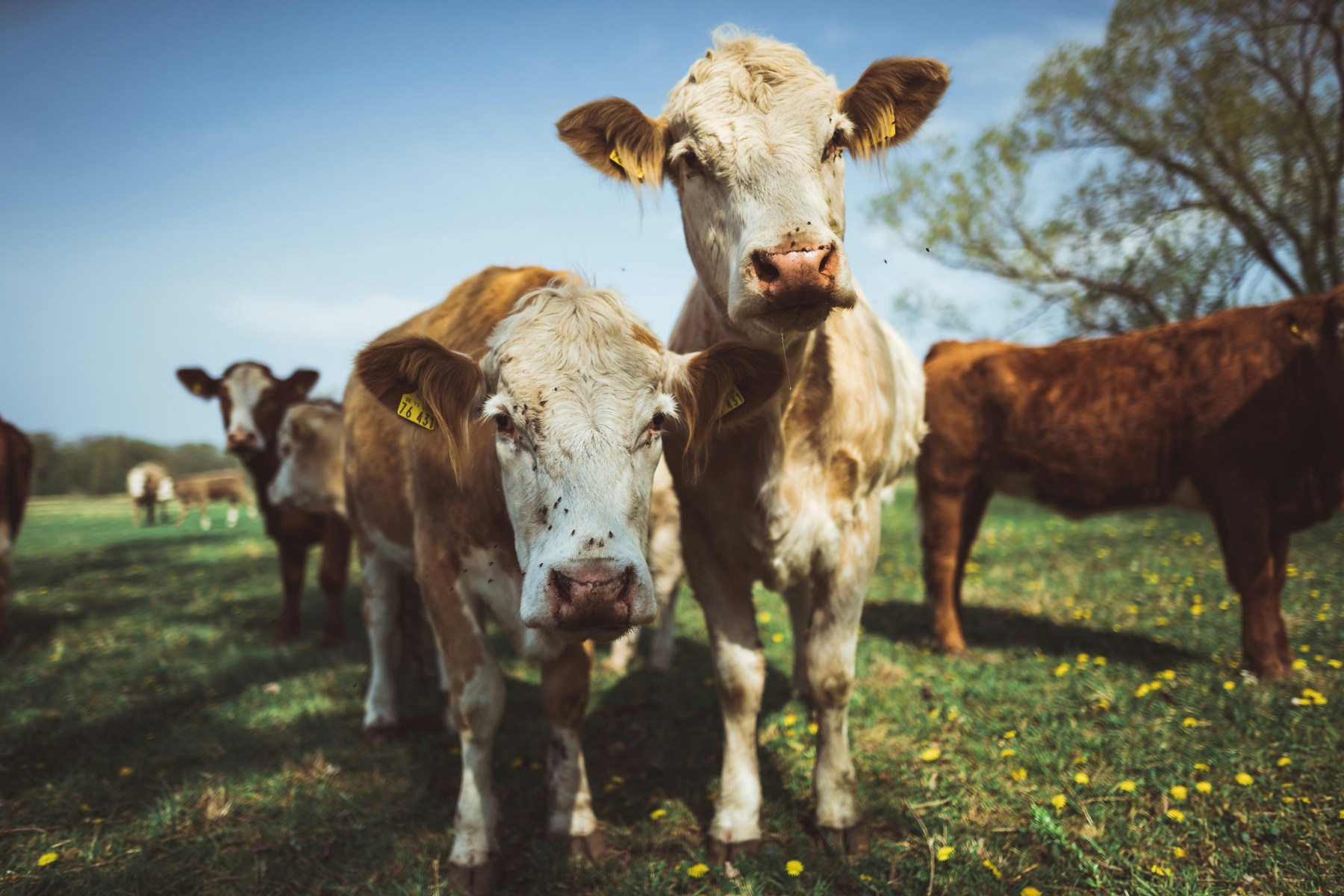
Authors: Julie Pedersen & Steve Loughnan (2024)
Link to the paper (Open Access)
What’s the article about? (At a glance)
Might drawing consumers’ attention to the animal-bodily origins of dairy milk (e.g., its basis in cow lactation) and the potential for pathogen risk reduce consumer interest in dairy? Pedersen and Loughnan (2024) recently explored this question in a registered report published in PHAIR.
In Study 1, they had participants reflect on the bodily processes by which dairy cows lactate or digest their food. The lactation vignette emphasised the potential for “bacterial contamination”, whereas the digestion vignette emphasised the role of gut bacteria in the breaking down of grass. Participants indicated how disgusted they felt about consuming dairy milk and their willingness to consume it before and after the intervention. Relative to reading about digestion, thinking about cow lactation increased disgust towards dairy milk, which in turn reduced willingness to consume it.
In Study 2, a similar pre-post procedure was used, though the digestion condition was replaced with a neutral condition, where only baseline information about cows was presented. Participants indicated again how disgusted they felt about dairy milk, but the researchers also offered participants the opportunity to eat milk chocolate buttons to measure the intervention’s impact on dairy consumption. The lactation information, again, increased feelings of disgust towards dairy milk, but there was no difference in milk chocolate consumption (serving size) between the lactation and neutral conditions.
Together, the studies demonstrate how thoughts about the animal origins of dairy milk, linked to the bodily processes involved in mammalian lactation and pathogen risk, can momentarily reduce appetite for milk and a willingness to consume it. However, these momentary attitudinal effects did not translate into actual reduction, at least not in terms of eating milk chocolate.
Implications for advocacy
Studies have shown that pathogen-linked disgust can be a strong deterrent of food consumption (see previous PHAIR blog on meat disgust). The Humane League for example found that fish consumers were particularly troubled when learning about the potential for disease transmission within fish farms. One key direction for future work then is working out how these body and pathogen-linked concerns about dairy products can be harnessed to truly shift consumer decisions and increase the uptake of plant-based alternatives. Long-term changes in dairy consumption may require more personal and recurrent encounters with the unpalatable aspects of dairy production.
PHAIR post by Jared Piazza
Cover photo by Max Saeling

Authors: Nora Bennigstad, Hank Rothgerber, & Jonas Kunst (2024)
Link to the paper (Open Access)
What’s the article about? (At a glance)
Meat-animal dissociation is when people fail to ‘see’ animals in meat or suppress thoughts about the animal origins of meat. In this PHAIR article, Bennigstad et al. (2024) distinguish between two types of meat-animal dissociation:
(1) active dissociation, where a person actively suppresses thoughts about the animal origins of meat (e.g., when an animal reminder is present);
(2) passive dissociation, where a person fails to think about the animal origins of meat when interacting with meat (e.g., because a product is familiar or habitually eaten).
The authors developed a scale that reliably distinguishes between the two forms of dissociation (e.g., active item: “I actively avoid meat that visibly reminds me of an animal”; passive item: “Animals rarely come to mind when I eat meat”) (Study 1). They found that both active and passive forms of dissociation are stable (Study 2); and explored active and passive orientations among meat industry workers and general consumers (Study 3).
Implications for advocacy
It may be useful for advocates to distinguish between these two forms of dissociation when building interventions. Passive dissociation may be especially problematic for animal advocacy because it may be indicative of a habitual relationship with meat. Indeed, Bennigstad et al. found that passive dissociation had a consistent positive relationship with meat consumption (Study 1). Furthermore, passive dissociation increased with time spent working with meat (Study 3), which may highlight the role of habit in its maintenance.
By contrast, active dissociation may be a sign that a person is ambivalent about meat and open to reduction, since they are actively trying to suppress problematic thoughts about meat in their daily lives.
Part of the work of advocates is to increase the visibility of animals exploited for food. But an equally important effort may involve finding ways to bring consumers’ thoughts to animal exploitation when they interact with animal products.
PHAIR post by Jared Piazza
Cover photo by: Markus Spiske

