

An Interview with Dr Maddie Judge on the dynamics of moralised social change
Maddie, could you briefly introduce yourself?

Kia ora! My name is Maddie Judge and I’m a lecturer in marketing at the University of Otago in Aotearoa, New Zealand. My academic background is in social and environmental psychology, and I focus on understanding how to promote the adoption of pro-environmental behaviours – ranging from individual behaviours to more political behaviours. More recently, I’ve focused on understanding the social psychological aspects of sustainability transitions, like the protein transition. In my free time, I enjoy spending time with my whānau (family) in nature.
Your recent paper, “Accelerating social tipping points in sustainable behaviors: Insights from a dynamic model of moralized social change” considers how moral innovators might inspire social tipping points. Could you walk us through how the dynamics in your model might play out in the real-world example of plant-forward eating?
In our Dynamic Model of Moralized Social Change, we theorise how moralisation (i.e., starting to view a behaviour as having a moral quality) influences social tipping points in behaviour change. Social tipping points are social change thresholds that are followed by rapid and widespread changes in human behaviour, such that the adoption of a behaviour, like plant-based eating, becomes self-sustaining. Our model presents five key phases in this process:
- moral recognition
- moral amplification
- approaching social tipping points
- institutionalisation
- norm abandonment
In the case of plant-forward eating in societies that have high levels of animal product consumption, the moral recognition phase focuses on the actions of a minority of “moral innovators” – individuals who deviate from dominant social norms for moral reasons – like vegans rejecting products of animal exploitation and adopting plant-based diets. In this first phase (see the figure below), vegans are often stigmatised and ostracised as ‘oddballs’ due to their deviation from the meat-eating norm, and their moral arguments are not widely acknowledged as legitimate. This may lead to the formation of clusters of moral innovators who can bond over their shared behaviour and provide each other social support.
In the moral amplification phase, more people start to become aware of the moral nature of the novel behaviour, and perhaps start to experience uncertainty about the morality of their own behaviour, partly due to the sustained actions of moral innovators. In this phase, there may be increased levels of debate and social conflict. This may contribute to individuals strategically hiding their moral views, and a situation where internal shifts in attitudes (e.g., awareness of moral issues with animal agriculture and one’s involvement as a consumer) may not yet be aligned with a corresponding shift in behaviours (e.g., eating less meat). However, once a critical mass is reached, social tipping points may occur, in which more and more people start to adopt plant-based diets and products.
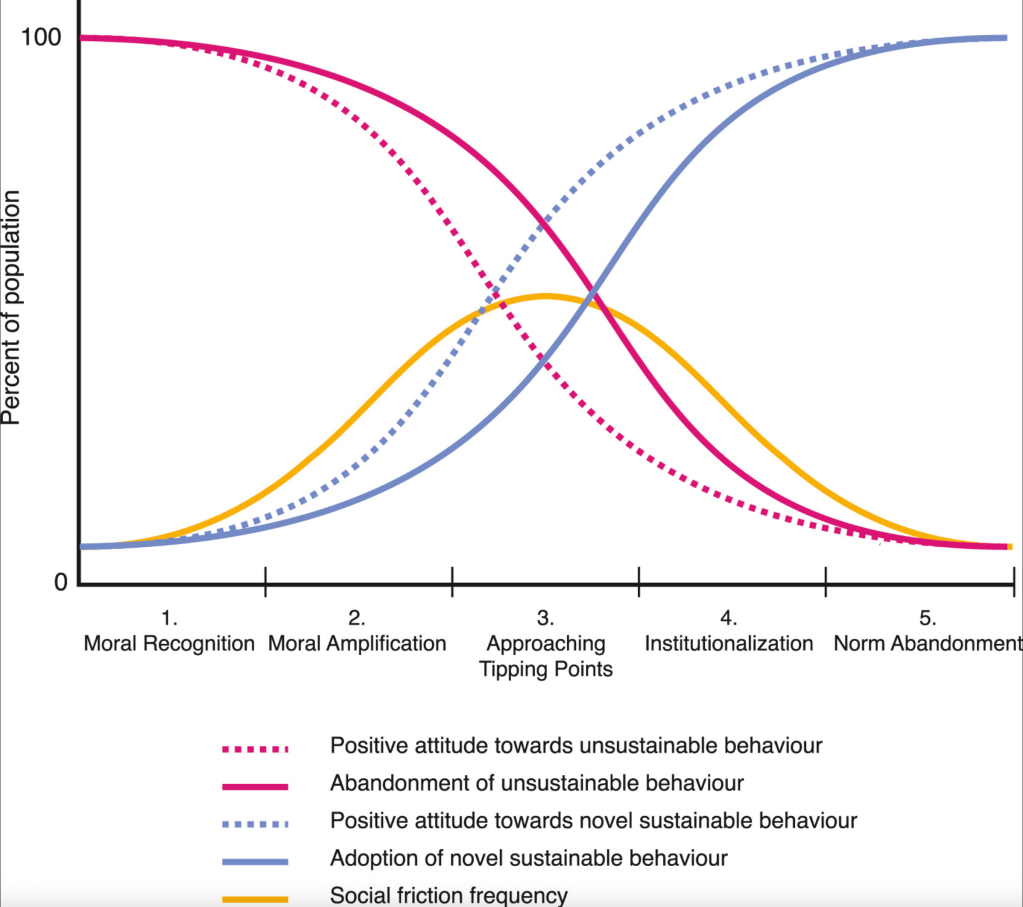
At later stages in the diffusion process (i.e., institutionalisation and norm abandonment), the novel behaviour can gain institutional support (e.g., government policies to promote plant-based products) and the dominant social norms may even switch so that ordering a meat-based meal is seen as the controversial choice, or as a behaviour that is specific to certain minority groups.
What distinguishes your Dynamic Model of Moralised Social Change from traditional models of behavioural change or diffusion of innovation, especially in the context of sustainability?
Our approach attempts to integrate various insights from different disciplines into a broad theoretical model. In psychology, most traditional models of behaviour change focus on change within individuals, usually within the timeframe of a single experiment or cross-sectional survey, rather than longer-term changes within individuals or changes involving entire groups or populations. Conversely, most sociological models of social change, such as diffusion of innovations theory (Rogers, 1962) and more recent work on network dynamics and complex contagion (Centola, 2018), focus on network characteristics or structural factors, rather than individuals and internal psychological processes. We aim to contribute a novel perspective to these approaches by theorising how internal processes of moralisation may impact on social interactions and the longer-term diffusion of sustainable behaviours across entire populations.
Furthermore, we began from a starting point of grassroots, bottom-up social change and considered how this might interact organically with top-down political, legal and market-related changes in the social environment. This is a bit different to most research on social norm interventions, which often start from a top-down perspective of how the government might implement such interventions.
You describe moralisation as a “double-edged sword” – that can both inhibit and speed up social change. What do you mean by this?
Moralisation (i.e., connecting a moral value to a behaviour) can be a powerful motivator that compels people to take action – by both changing their own behaviour, and by trying to convince others to change their behaviour. However, moralisation can also contribute to social conflict. For instance, when we are confronted by someone who claims to be acting more morally than we are, rather than feeling inspired to change, we can often feel threatened. This can lead us to derogate the source of the message (known as “do-gooder derogation“; Minson & Monin, 2012).
My co-authors and I argue that, at a collective level, these processes of moralisation and social conflict are likely to delay social tipping points, because they disrupt the communication channels required for the diffusion of ideas and behaviours. However, once a tipping point is reached, moralisation can speed up social change – in part because individuals who have moralised the issue will be motivated to enforce new social norms. This social change is also likely to be more enduring than change that is not driven by moral concerns.
In the context of plant-forward diets, how can advocates communicate issues of morality in a way that does not slow change?
Individual adopters often experience a dilemma between wanting to communicate their moral motives with the hope of persuading others to follow suit, and wanting to avoid being viewed negatively or socially excluded for judging others.
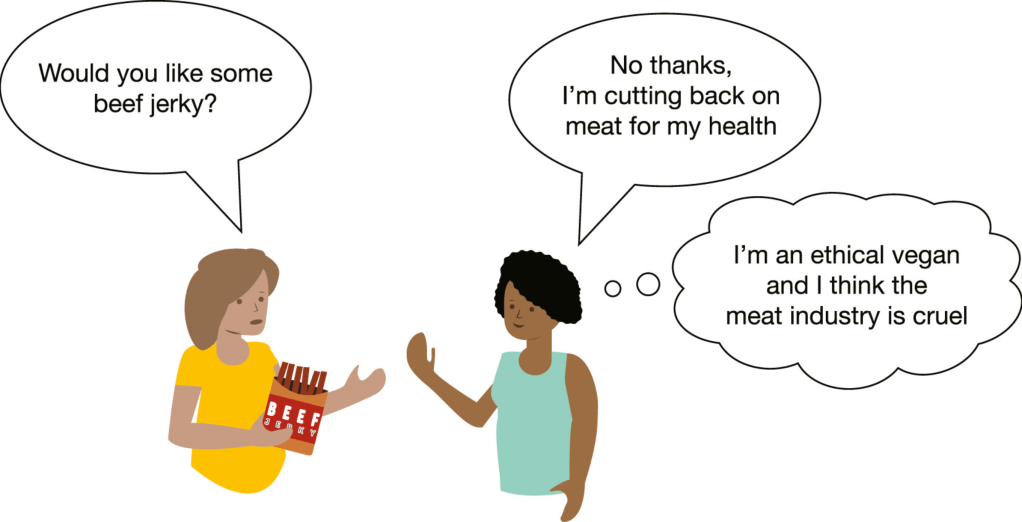
More research is needed on how advocates can effectively navigate such conversations. Nonetheless, a few initial ideas spring to mind:
First, our model suggests that the stage of the diffusion process may affect whether individual adopters can safely reveal their moral motives. Specifically, it may become easier to discuss moral motives once there is widespread recognition of the moral nature of the behaviour. This means that, potentially, adopters could consider adapting their strategy to where they think others are in this process. For example, downplaying moral motives to avoid being ostracised might be a necessary strategy in the early stages of diffusion. However, revealing one’s moral motives may be important for breaking the “spiral of silence” in later phases. Interestingly, research suggests we are often poor judges of the speed of cultural change, so we might currently be underestimating how open others are to hearing moral motives – if presented in a gentle way.
We are often poor judges of the speed of cultural change, so we might currently be underestimating how open others are to hearing moral motives – if presented in a gentle way.
Second, it might also help to keep in mind that, as an individual, you are just one part of a collective effort, and that other actors (e.g., non-profits) can also help raise awareness of the moral implications of behaviours.
Lastly, it might help to consider some insights from the research on complex contagion; for example, if you can aim to attend social events with at least two or three other plant-based friends, that might help contribute to the multiple exposures needed for others to consider changing their behaviour.
In the paper, you outline a couple of recommendations for moral innovators to correct misperceptions about how much social support there is for change. This includes that innovators “maintain their perceived status as part of the group” and “share their opinions publicly”. What might this look in practice?
Although being part of a community of moral innovators can be helpful for providing one another social support, in order to be able to influence wider social norms, it is also important to stay connected to different communities. People are motivated to pay attention to changing social norms in their environment, but not if they believe that the norm is something limited to a particular group (e.g., the practices of a specific religious group). So, in the context of plant-based diets, vegans need to be seen as legitimate members of common social groups (e.g., fathers, footballers, teachers, etc.) in order to be able to contribute to shifting social norms in those contexts.
To be able to influence wider social norms, it is important to stay connected to different communities.
Related to this, some of my research has looked at the role of a vegan social identity in helping vegans to maintain their behaviours and attempt to influence others. Having a vegan social identity may be particularly important in the early stages of diffusion, to help identify like-minded individuals and to offer and receive social support. However, as mainstream interest in plant-forward eating grows, the social identity of vegans may need to become less central or a new form of the identity may need to be developed.
What would you say to those who hold the pessimistic view that individual behaviour change is unlikely to lead to widespread social change?
I agree that promoting individual behaviour change on its own is unlikely to lead to widespread social change, but I think it is an important element of the change process. As individuals, changing our everyday behaviours (e.g., by adopting a plant-based diet) may not only have a concrete impact but may also influence other people and shape perceived social norms, leading to ripple effects across society (see below).

My view is that when it comes to addressing the harmful impacts of human behaviours, bottom-up approaches like these that aim to shift everyday social norms and practices will be needed alongside more stringent top-down policies, in order to make the alternative behaviour seem more feasible, normal and attractive. If we attempt to enact top-down policies without also incorporating bottom-up approaches to shifting widespread social norms and practices, I believe there is likely to be greater resistance and polarisation in response to such policies.
Do you think we’re currently seeing signs that plant-forward diets are approaching a tipping point? What are the key signals to watch for?
The notion of social tipping points has recently become quite popular with policymakers and researchers because it sounds like a simple and effective way to promote rapid social change – which is what we need in order to address the climate crisis and other urgent issues such as the scale of animal suffering in industrial farming systems. However, in reality, it can take years or decades of activists’ efforts to get to a point where social tipping points may occur. I think there is reason to believe that some countries may be approaching social tipping points around plant-based diets, though.
Here in Aotearoa, I think we’re still a way off, but in other countries (e.g., Denmark, the Netherlands), there has been much more visible shifts in that direction. I would love to do some cross-national research to try to figure out where different countries are at in our diffusion model. This is also an interesting time because there are some claims of the plant-based or vegan “bubble” bursting (this is also known as the “trough of disillusionment” in the Gartner Hype Cycle). I am curious to see which elements of change will be able to make it through this period.
What do you hope activists, researchers, or policymakers take away from your model that might change how they approach plant-forward dietary transitions?
There are a few things I might suggest:
First, apparent backlash and social conflict is not necessarily a sign that a cause is doomed to fail. Instead, it can signal that the cause is related to something that most people care deeply about like animal welfare.
Second, moralisation can be an important part of the process of social change. However, it is also important to create the conditions in which people can start to see their behaviour as a choice. For example, by having attractive, low-cost plant-based alternatives widely available, this makes choosing the plant-based option easier, seem normal, and not in conflict with various social identities.
Finally, I’d recommend staying optimistic and sharing your experiences, because social diffusion happens when people share their views rather than self-silence, and social diffusion happens more often than you think!
If you would like to get in touch with Maddie, they can be reached via email: maddie.judge@otago.ac.nz
Coverphoto by Michiel Annaert
Blog and interview questions by Jared Piazza and Rebecca Gregson



An Interview with Fatma Sueda Evirgen
Sueda talks with us about her organisation, Animetrics, and shares recent findings on Turkish consumers’ perceptions of what farming practices are permitted under halal food production. The results highlight a “powerful entry point” for animal advocacy.
Sueda, could you briefly introduce yourself.

Hi, I’m Sueda (she/her). I’m a behavioural and experimental economist and a co-founder of Animetrics. I will soon be joining the Berlin Social Science Center (WZB) as a postdoctoral researcher on a project focusing on promoting prosocial behaviour. I recently completed my PhD in Economics at Tilburg University in the Netherlands, where my research focused on identifying biases—such as those based on ethnicity—and studying the causal effects of institutional structures on social and economic outcomes. Social justice has always been at the heart of both my academic work and personal commitments. In recent years, this commitment has expanded into advocacy for non-human animals. Together with my then-flatmate (now co-founder) Gülbike Mirzaoğlu, we started Animetrics to help bring evidence-based and accessible research to the animal advocacy movement. Alongside my academic work, I engage in cross-movement work, by organising talks that highlight the common ground between animal advocacy and other social justice movements to encourage collaboration and exchange of strategies.
You are one of the co-founders of Animetrics. Could you briefly introduce your organisation. What makes Animetrics unique?
Animetrics is a research and capacity-building organisation dedicated to supporting advocates with evidence-based insights and practical tools. We are a team of four: myself, my co-founder Gülbike Mirzaoğlu, and our long-term volunteers Megan Jamer and Sophie Weiner. Gülbike holds a PhD in Economics and specialises in social contagion and experimental economics. She also gives lectures on animal rights/welfare and environmental issues—having delivered over 25 so far, and counting—in collaboration with the Middle East Vegan Society. Megan is our fundraising advisor and has been helping us shape our fundraising efforts with a great mix of strategic insight and practical experience. Sophie is our creative design and communications volunteer, helping us make our research more accessible and engaging for a wider audience.
At Animetrics, we prioritise research projects based on the needs of advocates. This means working across a wide range of topics. At the moment, our primary focus is on understanding attitudes toward farmed animals within Muslim communities and the MENA region. We’re especially interested in the regional, cultural, and religious dynamics that shape how people engage with farmed animal issues.
Gülbike and I founded Animetrics after long conversations about how we could best contribute to the movement. In those discussions, we identified several critical gaps: while excellent research exists, very little is conducted in the Global South. Economists are largely underrepresented in this space, and, too often, research doesn’t reach advocates or address their most immediate needs. These gaps matter, because the advocacy movement operates with extremely limited resources, and we can’t afford to make strategic decisions without context-specific evidence. We use our expertise to fill these gaps.
What makes us unique is our integrated approach. We co-design research projects with advocates and support them in applying findings to real-world strategies. Our work includes original and collaborative studies, and free capacity-building services like research support and training for advocates and organisations on how to generate and use evidence effectively.
Your team recently published a report of research you did with Muslim consumers in Turkey, exploring their perceptions of what is “halal” when it comes to animal welfare practices. What inspired this research, and what were some of the key findings?
This research was inspired by personal experience. Through conversations in our Muslim families and communities, Gülbike and I often encountered the assumption that halal food automatically ensures high animal welfare standards. That is unfortunately not the case. Advocates working with Muslim populations echoed this perception and pointed out a lack of data on how widespread these beliefs are or how people might respond if they were corrected. That sparked our study.
We surveyed around 800 Muslim adults in Turkey, where halal is the norm for food production, to explore two questions:
- How much do consumers know about whether common industrial farming practices are allowed under halal rules?
- And how might learning the truth affect their willingness to buy these products or consider plant-based alternatives?

Participants were presented with six common practices linked to animal welfare concerns: chick culling, debeaking, cow and calf separation, lack of required long-term medical care, absence of protection for animals’ natural lifespans, and inadequate space for chickens to exhibit natural behaviours. They were asked whether they believed each practice was permitted under halal food production. If they answered incorrectly, we shared the correct information and then asked how it might influence their purchasing decisions and openness to plant-based options.
The results showed major knowledge gaps: for each practice, over half of our participants either believed it was forbidden or were unsure. Once informed, many said they’d be less likely to buy products involving those practices, and a smaller but meaningful share said they would consider plant-based alternatives. Responses varied across the sample. Certain groups—such as women, older adults, individuals who place high importance on halal, and those who view animal welfare as central to halal—were more likely to respond strongly to the new information.
The results showed major knowledge gaps: for each practice, over half of our participants either believed it was forbidden or were unsure.

What were some of the practices that consumers thought were forbidden under halal food production rules, but were in fact permitted?
The most widespread incorrect belief was the belief that long-term medical care is legally required in halal production systems. When presented with the statement, “In facilities where halal products are made, it is legally mandatory for animals with permanent injuries or who are no longer productive to receive long-term care and medical treatment,” nearly half (47.2%) of respondents incorrectly believed this is true. In reality, no such legal requirement exists within halal food production in Turkey.
A similar proportion (46.8%) also believed that halal standards require chickens to be given enough space to express natural behaviours—another incorrect assumption. Many participants also wrongly believed that the other farming practices were prohibited. In all cases, at least one in four participants held incorrect beliefs about what halal food production allows.
Your team observed that consumers with gaps in their understanding of what is halal showed increased intentions towards plant-based eating. What do you think explains their openness to shift their diet in response to learning that their assumptions were mistaken?
In our study, 70% of participants stated that they believe animal welfare is essential to halal. This suggests that welfare considerations may play a central role in how consumers evaluate the acceptability of animal products. When participants were presented with accurate information showing that certain industrial farming practices are permitted under halal standards, they may have experienced a sense of mismatch between what they believe halal should represent and what the industry currently allows. This may have triggered cognitive dissonance: a recognition that their beliefs about halal food conflicted with the actual conditions under which it is produced.
In this context, plant-based alternatives may have appeared more consistent with their ethical and religious values. This interpretation is supported by several patterns in the data. Participants who viewed animal welfare as central to halal were more likely to express increased intentions toward plant-based options, possibly because the new information directly challenged their beliefs. Similarly, those who had incorrectly believed a practice was prohibited under halal rules showed stronger shifts than those who were merely unsure, suggesting that this conflict shaped how participants responded. Another important insight is that beliefs about religious compatibility may shape openness to dietary change, as participants who saw plant-based diets as compatible with Islam were more likely to consider such alternatives.
How might Muslim consumers’ beliefs and commitments to eating halal be a platform for advocating for more plant-forward diets?
For many Muslim consumers, halal is not just a set of dietary rules. It’s closely tied to values such as compassion, stewardship, and avoiding unnecessary harm. This is reflected in the fact that a large share of participants in our study identified animal welfare as a core aspect of what halal means to them. This connection offers a powerful entry point for advocacy.
For many Muslim consumer, halal is not just a set of dietary rules. It’s closely tied to values such as compassion, stewardship, and avoiding unnecessary harm.
By highlighting where current production practices fall short of these values and showing how plant-based foods can meet halal requirements while avoiding animal welfare concerns, advocates can open constructive, values-aligned conversations. Framing plant-forward diets not only as compatible with Islamic principles but as an expression of them, may make these options more compelling. This is especially true when messages are tailored to resonate with cultural, religious, and ethical priorities within the communities being engaged.
See here to read the full report
For more information about Animetrics, visit their website here
Cover image by Tolis Dianellos
Interview and blog by Jared Piazza


How do small changes to our environment affect our decisions when making food choices? What can be done to reduce meat consumption when considering the interests of stakeholders? Dominic Lemken discusses his topical research on nudging, its ethics, and his recommendations for conducting intervention studies in the real world.
Can you briefly introduce yourself and what you do, Dominic?

I’m an economist and nutritionist leading a research group on Socioeconomics and Sustainable Nutrition at the University of Bonn, Germany. My work focuses primarily on food choice behaviour and nutrition policy, examining how economic, psychological and regulatory factors shape what people eat.
What is meant by nudging in the context of reducing meat or animal product consumption?
Nudging, as introduced by Thaler and Sunstein involves altering the choice environment in subtle ways to encourage certain decisions—such as choosing plant-based meals—without restricting people’s autonomy to choose or changing economic incentives. In practice, this might involve small cues like menu layouts or portion size defaults that gently steer consumers toward more sustainable options. However, some interventions are mistakenly labelled as nudges. For example, having a “veggie day” in a canteen removes meat from the menu entirely, effectively restricting choice rather than simply guiding it; this goes beyond the original definition of a nudge. These misinterpretations have contributed to a bad reputation among those who see it as paternalistic, but when done correctly, a nudge preserves choice while subtly influencing behaviour—especially among individuals who do not have a strong preexisting preference.
In your recent “Field study to reduce meat consumption in cafeterias,” published in Environment and Behavior, you tested the impact of two nudging interventions: default nudging and forced active choice. What are the differences between the two, and how did you investigate their impact in the study?

Economists often assume consumers know their own preferences and will make decisions that maximize personal utility. Yet, food choices are frequent, relatively low-stakes decisions that people tend to make out of habit rather than careful reflection. This makes it an ideal case for nudging.
Forced Active Choice prompts individuals to actively decide between a standard meat portion and a reduced meat portion. Before our intervention, only a small fraction of cafeteria users would have asked for a reduced meat portion on their own. Forcing a decision made people reflect more on their consumption, which led to lower overall meat intake compared to the status quo.
Default Nudging is a bit more intrusive. The cafeteria automatically served a reduced meat portion by default, while still allowing people to “opt out” and request a standard portion of meat if they wanted. To ensure patrons were aware of their options, we used signs at the counter and on menu plans, making it clear they could always switch to a regular portion.
We measured how often people ended up with the reduced portion in each scenario to determine which strategy led to greater reductions in meat consumption.
Which was more effective in reducing meat consumption?
From the outset, we expected the default nudge to be more effective, and indeed it was. The question is more about the effect size. Forced active choice did reduce meat intake, but not nearly as much as the default intervention. Ethically, though, forcing an active choice can be more transparent and may better reflect people’s true preferences. Our canteen partner actually continued the active choice beyond our experiment, as they felt it was an important technique to better match servings with preferences. Still, our data showed that in this particular canteen setting, most people accepted the default intervention, suggesting such an approach can be optimal from a sustainability perspective.
You also surveyed cafeteria users on how fair and acceptable the two interventions were. Why were you interested in this, and what were the findings?
We wanted to understand whether people felt either strategy was more or less patronising or unfair. In this setting, participants generally rated both the forced choice and even the default intervention as acceptable and fair. This could be partly because the default intervention was accompanied by clear signage about adjustable portion sizes, that was highlighted in the default description, to maintain transparency. Another factor may relate to the type of canteen patrons. Our partner was hopeful these guests would not be particularly critical of meat-reduction initiatives, despite on an average day—when offered one vegetarian and one meat dish—75% typically choose the meat option.
In your review article, “Options to design more ethical and still successful default nudging,” you highlighted that default nudging threatens consumer autonomy and can be perceived as less acceptable. Why do you think that was not the case in the cafeteria study?
Thank you for this question. I did not label all defaults as inherently autonomy threatening. Rather, I have concerns about certain interventions—labelled as defaults—that genuinely do threaten autonomy, ultimately hindering productive discussions among stakeholders regarding most default nudges.
I have a more recent publication that takes a nuanced view on autonomy. A choice architect’s guide to the (autonomous) galaxy: a systematic scoping review of nudge intrusiveness in food choices, examining the ways nudges, and especially defaults, might undermine autonomy. This happens, for instance, if choosing the non-default option requires considerable effort (e.g., going to another building or retrieving an item from a high shelf that needs a ladder) or if the alternative is so poorly communicated that participants are unaware, they have a choice at all.
In many academic studies, some level of autonomy remains intact; it is often explicit that participants can opt out or choose a different path. In the cafeteria study, factors such as transparent signage or easily accessible alternatives could have mitigated concerns about autonomy and acceptability, explaining why default nudging was not viewed as problematic in that particular setting.
Are there ways to design nudging interventions without “harming” consumer autonomy?
Absolutely. Many nudges preserve autonomy and are effective despite being transparent and requiring minimal effort for someone who wants a different option. This even holds when the default is disclosed during the intervention. However, it’s important to recognise that defaults are not magic bullets: they’re most successful among individuals who are already open to the nudged alternative. In heated debates about meat consumption, we can underestimate how in many cases, people do not have strong preferences and will simply “go with the flow.” Over time, frequent exposure to plant-based or reduced-meat options can help shift habits and social norms toward more sustainable eating patterns.
Many nudges preserve autonomy and are effective despite being transparent and requiring minimal effort
In another study, your team tested “an intervention aimed at promoting plant-based choice in online menus.” Based on your findings, how can default nudging be used to increase plant-based food choices when ordering food online?

Default nudging can be very effective in online food ordering by automatically preselecting plant-based options or favouring them in the presented order of choices. Even though people often have more time to think about their choices online, the large number of possible meals can be overwhelming, making the default choice persuasive. Implementing these nudges on (mock) platforms like delivery websites or self-service kiosks can be relatively simple and cost-efficient, which is why researchers often focus on digital settings. However, online ordering still represents only a smaller share of what we eat.
Ultimately, the question is not whether default nudges increase plant-based choices, but whether suppliers and stakeholders support such interventions. Many businesses are cautious about potential pushback from customers who may feel their autonomy is undermined, so securing buy-in from everyone involved is crucial for success.
You provided support for the idea that default nudging is effective because it is an act of “instant endowment.” Can you elaborate on what this means and how it is central to the effectiveness of default nudging?
Default nudges leverage several mechanisms, including decision inertia, perceived social endorsement (i.e., seeing the default as a recommendation), and cognitive biases such as the endowment effect. When an option is preselected, individuals may view it as immediately “theirs,” creating what is sometimes called “instant endowment.” Because people become reluctant to give up something they feel they already own, they are more inclined to stick with the default rather than switch—even if the alternative could be just as desirable. Depending on the specific setting, each of these mechanisms can vary in importance.
At the same time, these mechanisms not only affect a default’s effectiveness but also raise questions about its legitimacy. For example, if the default works primarily because of cognitive biases, it might be nudging people away from their true preferences. On the other hand, if decision inertia plays a key role, one could argue that consumers are not genuinely uncomfortable with the nudged option—otherwise, they would overcome their inertia to choose something else. Consequently, recognising which mechanism is driving behaviour is crucial both for understanding how defaults work and for assessing the ethical implications of using them. I describe this a bit more in the previously named article: “Options to design more ethical and still successful default nudging,”.
What are the key challenges you experienced when conducting field experiments? Can such challenges influence the research findings?

Many! Real-life partners, such as cafeteria managers, may introduce changes during experimental phases unrelated to your study—like tweaking menus or implementing sustainability measures without warning. These unexpected modifications can dilute or confound the experimental effects you’re trying to measure. In our cafeteria study, we avoided relying solely on checkout data; instead, a researcher was on-site each day to record what was happening and document dish choices. Although time-consuming, this hands-on approach helped us maintain some level of experimental control in a naturally dynamic environment.
Do you have any advice for those interested in conducting field experiments testing plant-based food choice interventions?
Persistence and Communication: Finding partners willing to collaborate might require multiple attempts. Emphasize how the study can benefit them by providing insights into their customer base. Their answer can change over time.
Multiple Strategies: There are different ways to reduce meat consumption—offering more authentic plant-based dishes, using meat substitutes, adjusting meat portion sizes, or simply enhancing side dishes. Be flexible and leave some decisions to your collaborator.
Accept Readiness Levels: Some settings might not be ready for major changes. This may mean that more effective nudges, such as defaults, are not feasible. Be flexible and start with widely accepted interventions such as labelling.
Document Everything: Thoroughly track any environmental changes and communicate with partners frequently to maintain some experimental control.
You may highlight rising meat prices or other trends which can sometimes open doors to cooperation. However, remember that meat reduction is not a top priority for collaborators. First, you need to connect on some level, i.e. get to know your collaborators’ conscious and unconscious design of the food choice environment.
If you would like to get in touch with Dominic, connect with his LinkedIn:
https://www.linkedin.com/in/dominic-lemken-8357a970/
Interview and blog post by Mia Patel and Georgia Harlow. Editorial supervision by Kristof Dhont.


For this week’s PHAIR blog, we are continuing our theme of dairy consumption – looking at psychological research that moves beyond the usual focus on meat consumption. I had a chat with Chelsea Davies and Samantha Stanley about their recent paper, “Untangling the dairy paradox: How vegetarians experience and navigate the cognitive dissonance aroused by their dairy consumption,” published in the journal Appetite. The paper explores whether vegetarians experience cognitive dissonance about consuming dairy products and, if so, what are the psychological consequences of these conflictual feelings – for example, do vegetarians rationalise their dairy consumption much like omnivores rationalise their meat consumption? Here’s what they had to say.

Chelsea and Samantha, could you each briefly introduce yourself?
My name is Chelsea Davies, and I am a Clinical Psychology Masters student at the University of Canberra in Australia. I first completed my honours degree in psychology at The Australian National University where I worked with Dr Samantha Stanley. Here, using a social psychological framework, we channelled our mutual interest in the negative impacts of the meat and dairy industry to guide our research. Specifically, we noticed there wasn’t much research on the psychology and rationalisation of dairy consumption, despite the theoretical and practical parallels to meat consumption (e.g., the impact on personal health, the animal, and the environment). I hope to continue exploring this field of social-environmental psychological research by integrating my clinical-based interests in the future.

I’m Dr Samantha Stanley and I’m a research fellow at the Institute for Climate Risk & Response at the University of New South Wales in Australia. In my work, I apply research and theory from social psychology to try to better understand the way that people think, feel, and act, in relation to climate change. My current role is funded by an Australian Research Council Early Career Fellowship and focuses on public attitudes towards policies that would support those most affected by climate change (e.g., resettlement for those at risk of displacement, compensation for Loss & Damage). I also have a strong personal interest in animal welfare and caring for the environment, which has shaped my research on the psychology of meat consumption and abstention.
Your new paper, “Untangling the dairy paradox”, extends work on the meat paradox to dairy consumption. Could you briefly summarise what the research was about and what you found.
In this paper, we aimed to test whether vegetarians experience cognitive dissonance about their dairy consumption. We had vegetarian participants complete an online survey about their motivations for being vegetarian and tell us about their recent dairy consumption. Then, we had half of them read about the ways that the dairy industry is harmful to animals, the environment, and human health. We found that those who read this message felt more guilty about their dairy consumption relative to those who did not read it, suggesting it induced cognitive dissonance. We wanted to know what vegetarians did with this cognitive dissonance – for example, would they ‘explain away’ or rationalise their dairy consumption as Natural, Necessary, Normal, and Nice (as found in meat-based research)? Interestingly, we found that, if anything, vegetarians were less likely to justify their dairy consumption, and more likely to contemplate reducing how much dairy they eat.
We found that, if anything, vegetarians were less likely to justify their dairy consumption, and more likely to contemplate reducing how much dairy they eat.
Work that has examined common arguments that meat eaters provide to defend meat consumption relate to four “N” categories: Necessary, Normal, Natural, and Nice. Your research suggests a fifth “N” applies to dairy justifications. What is that fifth “N” and how is it used to justify dairy consumption?

Chelsea had read widely on the 4Ns that justify meat consumption (and we are big fans of Jared’s work on this!). She found a Masters thesis by Sarah Kunze that uncovered a fifth “N”, Neglectable, in the context of dairy consumption. In this research, Sarah interviewed people in focus groups to hear about their justifications for consuming dairy. In doing so, she found some similar justifications that Jared and his colleagues found in relation to meat (e.g., that dairy is Normal to eat). But she also found a new category of justifications that seemed unique to dairy consumption. This fifth “N” (Neglectable) is used to justify dairy consumption by framing it as: (a) innocuous compared to meat (e.g., “Eating dairy products is better than eating other animal products”) and (b) so embedded in the food system that it’s unrealistic for people to completely cut it out (e.g., “Dairy products are too hard to avoid”). These examples are items in the scale we developed to measure the fifth “N”.
One surprising finding was that vegetarians who read about the environmental, animal welfare, and health issues linked to dairy defended dairy consumption on certain dimensions (e.g., its Naturalness) less than those who did not read about these issues. This is the opposite of what should occur if vegetarians were experiencing dissonance about their dairy consumption and were motivated to defend it. What does this result suggest about how vegetarians respond to potentially dissonance-arousing information about dairy?
In the cognitive dissonance literature, there are different avenues people can take to alleviate dissonance. Behaviour change isn’t a common route, especially for enjoyable behaviours like eating. A more common route is to justify one’s current behaviour, such as saying a food is too nice to give up (have you ever heard someone say they can’t go vegan because they love cheese too much?). Our results suggest that vegetarians in our sample did not try to alleviate cognitive dissonance by justifying their dairy consumption. Instead, they were more likely to acknowledge the problems with eating dairy by rating dairy consumption as less Natural and less Neglectable, and rating cows as having greater agency, when experiencing guilt about their consumption. Social identity theory offers one explanation for our unexpected finding. It is possible that when vegetarians in our sample read that dairy is equally as harmful to the environment, animals, and their bodies as meat, this threatened their sense of self. Then, to protect their identity as a value-conscious eater, they did not try to justify or defend their choice to eat dairy, and, instead, stated that they intended to reduce how much dairy they consume. Unfortunately, we didn’t have funds for a follow-up study to measure actual behaviour change, so we have no way to know if they followed through on this intention.
As a vegan, I find it easier to justify consuming dairy than meat. Indeed, it somehow “feels” less bad to consume an entire cheese pizza than a single pepperoni on a cheese pizza, even though I know that’s not true for the animals involved. Does your research into the dairy paradox help explain these irrational feelings I have about consuming dairy vs. meat?
This sounds like textbook “Neglectable” rationalising! We would hypothesise that it’s even easier to justify more ‘invisible’ ingredients too, like milk powder hidden in otherwise plant-based foods. We didn’t ask participants about their meat consumption or attitudes towards eating meat, but there are a few findings that are relevant here. Our cognitive dissonance induction reduced perceptions of dairy as Neglectable, which was associated with retaining higher levels of cognitive dissonance over time. In other words, seeing dairy as more Neglectable could help feelings of guilt pass. Perceiving dairy as a Neglectable food item could give people some protection from these guilty feelings when they hear about the negative aspects of the dairy industry. We also found a positive correlation between dairy consumption and Neglectable scores. This suggests that people who eat more dairy products also tend to see this behaviour as more Neglectable, so perhaps seeing dairy in this way helps vegetarians to keep eating cheese pizzas.
Cognitive dissonance is a powerful emotional state that can strengthen or change a behaviour.
What would you like vegan and animal advocates to take away from your research, and apply to their advocacy work?
One of the reasons we think our experiment led to behaviour change intentions rather than strengthening justifications for continuing to eat dairy is that we had participants commit to their vegetarian values (by telling us why they don’t eat meat) and report on their recent dairy consumption. This way, our experimental manipulation made the disconnect between their stated values and their behaviour very clear. Vegan and animal advocates could apply this in a few ways. The first is to consider tailoring their advocacy efforts to their audience. Vegetarians might respond differently to appeals to reduce their dairy consumption than meat eaters would to the same messaging. The second is to consider leveraging the reasons vegetarians give for abstaining from meat when explaining the problems with the dairy industry. For example, someone who has committed to abstaining from beef because they care deeply about cows might be more persuaded to change their dairy consumption if they are walked through the ways the dairy industry harms cows. Cognitive dissonance is a powerful emotional state that can strengthen or change a behaviour. Our research points to the importance of studying this process specifically within vegetarian samples and for dairy consumption, so that appeals can be tailored to the audience and the behaviour we’re hoping to change.
If you would like to get in touch with Chelsea and Samantha about their research: You can reach Chelsea by email at davies.a.chelsea@gmail.com and Samantha at s.stanley@unsw.edu.au
Interview and blog post by Jared Piazza
Cover photo by Hans Ripa
If you would like to read more about the ‘Dairy Paradox’ and the research discussed in this interview, please check out:
Davies, C. A., & Stanley, S. K. (2024). Untangling the dairy paradox: How vegetarians experience and navigate the cognitive dissonance aroused by their dairy consumption. Appetite, 203, 107692. https://doi.org/10.1016/j.appet.2024.107692

Research on the psychology of animal product consumption is rapidly expanding into new areas, including dairy, egg, and fish consumption, moving beyond just meat consumption. Maria Ioannidou has been at the forefront of this emerging research, with several recent articles published in Appetite and Food Quality and Preference. In this blog, we discuss her fascinating research, which provides a glimpse into the minds of vegetarians, pescatarians, and omnivores.
Can you briefly introduce yourself, Maria?
My name is Maria Ioannidou. I completed my PhD in 2024 in the area of social and moral psychology at the University of Bradford. Before that, my academic journey began with an honours degree in Psychology and Crime and an MSc in Psychology, both at the University of Bradford, followed by an MSc in Forensic Psychology at the University of York.
I’m currently the Graduate Student Representative for the PHAIR Society, and serve as events and conference co-organizer. Beyond academia, I am an animal rights activist, a cat and dog mother, and I take care of stray cats in Athens.
How is it possible that some people (pescatarians, vegetarians) can stop eating meat over concern for animal welfare while at the same time continue consuming other animal products, knowing this involves severe animal welfare issues?
You recently completed your PhD on the psychological factors that underpin animal product consumption. What inspired you to do this research?
I became vegan eight years ago after watching Dominion, a documentary that forever changed my life and my perspective on humanity. Following that, I engaged in various forms of animal activism. When I was pursuing an MSc in forensic psychology, I began to wonder, as many people before me: Why do we love some animals but eat others? After delving into the research literature on this topic, it all started to make sense as I recognized many of the justifications and psychological strategies that people use to feel more comfortable with meat consumption. For instance, I often heard the claim that animals don’t really suffer in the meat industry or that animals only have limited mental capacities to feel or suffer. Research has shown this is one way of how people convince themselves there are limited ethical issues with eating animals, enabling them to continue consuming meat. However, I also kept wondering about dairy, egg, and fish consumption, given that most research had been focusing on meat consumption.

Through my activism, I encountered various justifications for consuming dairy, eggs, and fish such as the misconception that dairy and egg production are part of the animals’ natural processes and don’t involve animal suffering. Coming from Greece, another striking example concerns people’s consumption patterns during the Greek-orthodox fasting period before Easter. Despite fasting entailing abstinence from animal products, many Greeks still eat fish during this period because they do not consider them animals.
These personal experiences and anecdotes suggested the use of cognitive dissonance strategies may not be limited to meat consumption but also apply to the consumption of other animal products. Given the lack of research on the psychology of dairy, egg, and fish consumption, I wanted to pursue a PhD to investigate these ideas.
A key question I wanted to address was: How is it possible that some people (pescatarians, vegetarians) can stop eating meat over concern for animal welfare while at the same time continue consuming other animal products, knowing this involves severe animal welfare issues?
In one of your articles “Feeling Morally Troubled about Meat, Dairy, Egg, and Fish Consumption” published in Appetite, you investigated the use of rationalizations and dissonance reduction strategies in a range of dietary groups based on survey data from hundreds of respondents, including omnivores, pescatarians, vegetarians, vegans, and flexitarians. What did you find?
As expected, meat consumers (omnivores and flexitarians) used rationalizations to justify their meat consumption, for instance, agreeing that humans need to eat meat to be healthy. They were also more likely to deny the suffering of animals killed for meat compared to meat abstainers (pescatarians, vegetarians, vegans).
Critically, the main new finding was that similar rationalizations and dissonance strategies were used by dairy and egg consumers, including vegetarians, to justify egg and dairy consumption, as well as by fish consumers, including pescatarians, to justify fish consumption. For instance, whereas vegetarians and pescatarians acknowledged the suffering of animals in the meat industry, they tended to deny the suffering of animals in the dairy and egg industry. Similarly, fish consumers used justifications to defend fish consumption (“humans need to eat fish for a healthy diet”) and were more likely to deny that fishes suffer when being raised and killed for fish production, compared to fish abstainers (vegans and vegetarians).
People perceive the intelligence, sentience, and moral worth of animals in a selective and self-serving way, motivated by their dietary behaviour.
Did you find any evidence that these dietary groups also differ in the way they perceive animals used for food? You investigated this further in your article “Minding Some Animals but Not Others”.
Yes, in that study, we presented participants with a list of farmed and aquatic animals, and we asked participants to indicate how intelligent (e.g., capable of remembering or planning) and sentient (e.g., experience pain or pleasure) each animal is. Participants also indicated how much they felt morally concerned for each animal. Importantly, some animals were listed twice but specified with a different food function such as a cow used for meat (beef cow) and a cow used for dairy (dairy cow), and a chicken used for meat (broiler chicken) and chicken used for eggs (layer chicken). We were particularly interested in whether pescatarians and vegetarians would be strategic in the attribution of moral worth and mental capacities to different types of animals in ways that suit their own consumption patterns.
And indeed, pescatarians and vegetarians showed a remarkable flexibility in extending moral concern and perceptions of animals’ capacities. They attributed moral status and mental capacities to a lower extent to dairy cows compared to beef cows, and to a lower extent to layer chickens compared to broiler chicken. In other words, people perceive the intelligence, sentience, and moral worth of animals in a selective and self-serving way, motivated by their dietary behaviour, even when evaluating the same animal but with a different function.
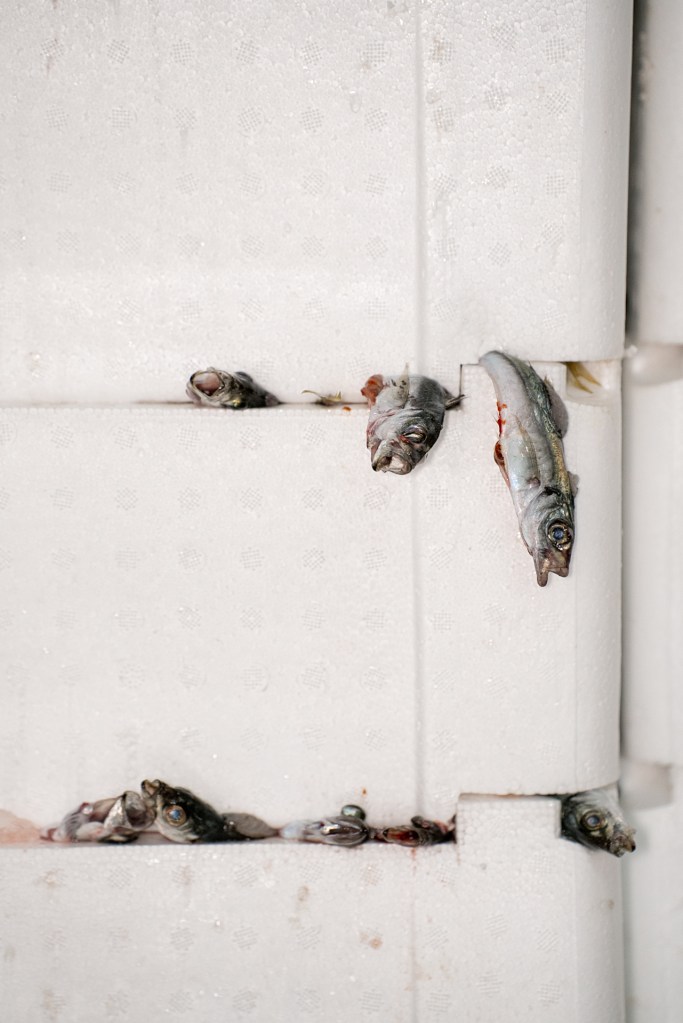
Along similar lines, of all dietary groups, pescatarians showed the largest discrepancy in moral concern and mind attribution between farmed land animals and aquatic animals, attributing particularly low levels of mental capacities and moral worth to aquatic animals.
How can you explain this type of apparent inconsistency in the perception of animals?
Our reasoning is that pescatarians and vegetarians may feel morally uncomfortable (cognitive dissonance) with the idea of contributing to the suffering of animals by consuming animal products (dairy, eggs, or fish products). Many of them have quit meat consumption out of concerns about animal rights and suffering, yet they continue drinking milk and eating eggs or fish and thus engage in consumption behaviours that involve enormous amounts of animal suffering. The findings suggest that pescatarians and vegetarians may resolve this cognitive dissonance by selectively downplaying the mental capacities and moral worth of the animals associated with their consumption behaviour. This way, they can avoid feeling morally troubled about the consumption of fish, dairy, or eggs, yet simultaneously express care and moral concern for animals by rejecting meat consumption.
Could it also be that people are just less aware of the ethical problems with the dairy or egg industry? If so, raising awareness about these issues could help with changing attitudes and behaviours. Isn’t that what you tested in your “Don’t Mind Milk?” article?
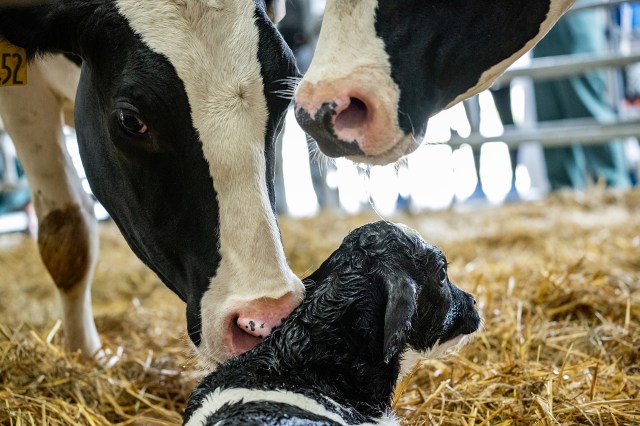
Correct! We conducted an experiment to test the impact of increased awareness of animal suffering in the dairy industry. My impression was that people may consider dairy consumption more ethical than meat consumption because they don’t link it with the killing of animals. They may also be unaware of harmful industry practices like the forced impregnation of cows, the separation of calves from their mothers, and the confined living conditions, causing severe health problems for the cows (e.g., bacterial infections, inflamed udders, and injuries to joints and knees). We wanted to investigate whether informing participants about these harmful conditions would change their perceptions of dairy cows and dairy consumption. Therefore, half of the participants read about a dairy cow living in these harmful conditions (high harm condition), whereas the other half read about a dairy cow that can spend time in outdoor areas and have decreased risk of health problems (low harm condition).
How did participants react to this information?
Participants informed about the harmful practices in the dairy industry felt more guilty about their dairy consumption compared to participants in the low harm condition. However, they also perceived the cow as less sentient and less intelligent. So again, minimizing or denying the mental capacities of animals seem to help people to feel better about their dairy consumption despite knowing the harm being done to animals.
At the same time, participants informed about the harmful dairy industry practices also expressed a greater willingness to reduce and stop dairy consumption. We don’t know if those intentions would also lead to actual reductions in dairy consumption, but these findings are more promising for animal advocacy efforts. Raising awareness about animal suffering in these industries tend to make people uncomfortable about their consumption behaviours and can make them reconsider their dietary habits.
This is also means consumers can show different reactions after becoming aware of the suffering of animals in the dairy industry and experienced feelings of guilt. Some people may react defensively and justify their animal product consumption, whereas others react empathetically and are open to change their dietary habits to align their consumption behaviour with their moral values and concern for animals.
Your findings on dairy reduction intentions are also generally consistent with previous findings, indicating that appealing to animal welfare appears to be effective in motivating people to reduce meat consumption.
Can you reflect on the implications of your findings for animal advocacy?
Across all studies, we see that consumers of animal products tend to use rationalizations and deny the sentience and intelligence of farmed animals to justify their animal product consumption. I think it is important to be aware that such psychological barriers may not only prevent meat consumers to reduce meat consumption but that similar barriers may also prevent vegetarians to reduce dairy and egg consumption. Animal advocacy campaigns could potentially address these barriers by increasing awareness of the mental capacities of farmed animals, directly confronting denial strategies, and promoting empathy. The use of visual imagery, compelling storytelling, and documentaries could be especially effective as these techniques can reduce the psychological distance between consumers and the animals.
When targeting animal product consumption among pescatarians and vegetarians, it is also worth keeping in mind that pescatarians and vegetarians typically hold more positive attitudes towards animals, compared to omnivores. Acknowledging their existing pro-animal attitudes, while emphasising that animal suffering is prevalent across all animal industries, can make pescatarians and vegetarians aware of the inconsistencies in their behaviour and increase their willingness to expand their plant-based food choices.
If you would like to get in touch with Maria: mioannidou5@gmail.com

Interview by Kristof Dhont
Photo credits: Jo-Anne McArthur / We Animals Media
Maria completed her PhD under supervision of Kathryn Francis, Barbara Stewart-Knox, and Valerie Lesk.
Key articles
Ioannidou, M., Francis, K. B., Stewart-Knox, B., & Lesk, V. (2024). Minding some animals but not others: Strategic attributions of mental capacities and moral worth to animals used for food in pescatarians, vegetarians, and omnivores. Appetite, 200, 107559. https://doi.org/10.1016/j.appet.2024.107559
Ioannidou, M., Lesk, V., Stewart-Knox, B., & Francis, K. B. (2024). Don’t mind milk? The role of animal suffering, speciesism, and guilt in the denial of mind and moral status of dairy cows. Food Quality and Preference, 114, 1–12. https://doi.org/10.1016/j.foodqual.2023.105082
Ioannidou, M., Lesk, V., Stewart-Knox, B., & Francis, K. B. (2023). Feeling morally troubled about meat, dairy, egg, and fish consumption: Dissonance reduction strategies among different dietary groups. Appetite, 190, 107024. https://doi.org/10.1016/j.appet.2023.107024
Ioannidou, M., Lesk, V., Stewart-Knox, B., & Francis, K. B. (2023). Moral emotions and justifying beliefs about meat, fish, dairy and egg consumption: A comparative study of dietary groups. Appetite, 186, 106544. https://doi.org/10.1016/j.appet.2023.106544

We sit down with Dr. Sam Finnerty regarding his research into the “Scientist’s Dilemma in Climate Activism” – how scientists manage the potential identity tensions that arise from their involvement in climate activism and advocacy.
Sam, could you briefly introduce yourself?

My name is Samuel Finnerty. I am a Wellcome Trust funded Senior Research Associate at Lancaster University. My academic journey began in social and cultural anthropology with a degree and master’s at Maynooth University, followed by a master’s in cognitive science at University College Dublin. I then undertook a PhD in social psychology at Lancaster University under the supervision of Mark Levine and Jared Piazza. My research initially explored the intersection of scientists’ identities and environmental activism but has since extended to examining how higher education institutions themselves are responding to the climate and ecological crises. Beyond academia, I’m engaged in climate action, continually reflecting on the roles scientists and institutions play during this critical moment.
You recently investigated the topic of the scientist’s dilemma in climate activism. What is ‘the scientist’s dilemma’, and how does it relate to scientists’ involvement in activism?
The scientist’s dilemma arises from the tension between traditional scientific norms—objectivity, impartiality—and the moral urgency of the climate crisis. Scientists are essential to understanding and tackling the crisis, yet many struggle with balancing professional expectations and public action. On the one hand, scientists are expected to maintain their credibility as neutral observers; on the other, some feel a moral responsibility to ensure their findings lead to societal change. This dilemma often forces scientists to navigate competing imperatives: should they remain distant and neutral, or actively advocate for solutions based on their expertise?
In other work, you found that scientists who see their scientist and activist identities as compatible engage more in activism. Can you tell us a little about that work and what you found?
Our Nature Communications Earth and Environment paper demonstrated that the content of a scientist’s identity—how they perceive the relationship between science and activism—significantly predicted their engagement in activism. Scientists who viewed advocacy as compatible with scientific objectivity and saw environmental stewardship as a moral duty were more likely to participate in action. This same group of scientists was also less inclined to endorse techno-solutionism, a perspective that emphasises future technological solutions, while downplaying the need for systemic and political change. These findings underscore the importance of “inter-identity fit”, as scientists who align their values with activism are more willing to engage meaningfully in addressing the climate crisis.

Does your work suggest that certain individuals are more likely to struggle with the scientist’s dilemma than others?
Yes, certain groups of scientists are more likely to experience this dilemma. The traditional conception of scientists as impartial and apolitical—rooted in scientific norms of objectivity and detachment—can deter engagement for those who strongly adhere to these values. Such conceptions are often reinforced through professional norms, institutional cultures, and concerns about credibility or polarisation. However, many scientists challenge this traditional model, arguing that remaining “neutral” in the face of the climate crisis is morally and intellectually untenable. These tensions reflect diverse scientist identity constructions that can either hinder or enable action.
In your recent paper, you interviewed scientists from several countries and found that scientists confront and wrestle with the scientist’s dilemma using two different repertoires: By “reconceptualising scientist identity” and “reframing the work that scientists do”. Can you briefly explain what those repertoires involve?
In our paper, we found that scientists manage the “scientist’s dilemma” through two broad approaches. First, some challenge or reinterpret traditional views of what it means to be a scientist, aligning activism with their professional identity. For example, they may emphasise a moral duty to act, arguing that expertise creates an ethical responsibility to engage, or frame activism as a logical and objective response to scientific evidence – an extension of their role rather than a departure from it. Others reject the notion of “pure objectivity” altogether, suggesting that acknowledging personal values can lead to greater transparency and stronger scientific integrity.

For those less comfortable with activism, the focus shifts to their professional roles. They channel their efforts into research, teaching, and public communication, reframing these activities as deliberate forms of advocacy. Some carefully distinguish their engagement as “advocacy” rather than “activism”, reflecting concerns about credibility or professional norms while still contributing to change.
Ultimately, these different approaches illustrate the creative and strategic ways scientists resolve the dilemma, allowing them to engage with the climate crisis in ways that align with both their values and their professional identities.
Do you have a favourite quote from your interviews with scientists? Why is it your favourite?
One of my favourite quotes comes from an ecologist who captured the urgency and unique responsibility of scientists:
“I’m not just any scientist, I’m an earth scientist. I specifically know about what’s happening to the planet and […] my knowledge compels me to act […] because […] I worry that there might be people out there thinking “well, if it was really that bad then the scientists would be freaking out.” So, I think it’s important that we act like it’s an emergency […] it’s important that scientists are visibly freaking out.”
I find this quote particularly compelling because it highlights why many scientists feel driven to act publicly. If scientists appear calm and detached, the public may fail to grasp the scale and urgency of the crisis. For this ecologist, visible action is not just about raising awareness—it’s about embodying the seriousness of the situation and demonstrating that the climate crisis demands an immediate, collective response.
Your most recent work explored how scientists talk about the future in the context of the climate crisis. What did you find, and why does it matter?
We found that scientists talk about the future in very different ways. Some insist that societal collapse is inevitable, which often reflects a deep frustration about the scale of the crisis. Others see collapse as delay-able, but only if we act urgently. Then, there are those who focus on transformation, framing the future as something that can still be reshaped through human action.
What struck me was how these ways of talking about the future influence not just how scientists see their role, but also the kinds of solutions they argue for—whether it’s prepping for societal collapse, engaging in civil disobedience or collective action, or investing in technological innovation. Scientists aren’t just producing knowledge; they’re shaping how society imagines what is possible, which can make a real difference in how people think about and respond to the climate crisis.
You are a scientist yourself (a psychologist), and an activist. How has this informed the work that you are doing and your approach?

Being both a social psychologist and an activist provides me with a dual perspective. As a psychologist, I study how identities, norms, and values shape behaviour—key factors in understanding scientists’ engagement with activism. As an ethnographer actively involved in climate action, I’ve experienced firsthand the tensions I research, such as balancing professional credibility with moral responsibility. This combination allows me to approach the work with both critical insight and empathy, understanding how scientists navigate these challenges in their own lives.
What are some take-aways from your work that you would like all scientists on the fence about activism to know?
Activism doesn’t have to mean civil disobedience or public protest—there are many ways for scientists to advocate for change. This could involve reframing your research to address pressing environmental challenges, using your expertise to educate and engage the public, or influencing policy through outreach and communication. Importantly, activism and scientific objectivity are not mutually exclusive. Many scientists see advocacy as a natural extension of their role: using knowledge to inform action is part of what it means to be a scientist.
Finally, the urgency of the climate crisis prompts reflection. Choosing to remain silent or inactive is, in itself, a decision with consequences. For many scientists, advocacy and activism provides a way to reconcile their expertise with their sense of moral responsibility, ensuring their work contributes meaningfully to addressing the climate emergency.
If you would like to get in touch with Sam, he can be reached by email at s.finnerty [at] lancaster.ac.uk
You can also follow Sam on social media here: https://bsky.app/profile/samuelfinnerty.bsky.social
Interview questions and blog by Jared Piazza
Cover photo credit by: Andrea Domeniconi/Alamy Live News

Rebecca Gregson sits down with Julie Hesselberg to discuss her new research on how families manage dietary changes when teenage members adopt more plant-rich diets.
Julie, could you briefly introduce yourself?

My name is Julie Hesselberg. I am a PhD Candidate at MAPP Centre, Department of Management, Aarhus University. I have a background in economics and sociology. My research interests cover consumer behaviour and consumer culture.
You have a new paper out, co-authored with Susanne Pedersen and Alice Grønhøj, “Meat reduction meets family reality: Negotiating sustainable diets in households with adolescents”. What inspired this research and what were some of the key findings?
The research is inspired by the basic fact that no consumer lives on an island. And yet, in consumer research, consumers tend to be seen as individual units making decisions for themselves. Consumer research, as I see it, often fails to address the challenge of sustainability and identify real-world, family-oriented solutions. In this research, we focus on family decision making as it relates to meat consumption. By drawing on qualitative approaches we provide some key insights regarding how such decisions play out in everyday life.
In your work, you refer to the “fragile family meal equilibrium”. Can you explain what you mean by this?
“Equilibrium” refers to a way of eating where all family members are somewhat happy with the chosen food and, most importantly, can enjoy a shared meal. So, when individual members have different preferences, as they often do, equilibrium refers to the point where such preferences ‘intersect’. Family members seem to be striving for the point of equilibrium as a way of staying cohesive and maintaining ‘family’. What constitutes this point, in terms of concrete meal choices, will differ among families. However, new food preferences within a family, such as more plant-rich eating, constitute threats to the achieved equilibrium and harmony they have established.
Is it fair to say that the desire to uphold harmony and avoid conflict in families serves both as a driver and a barrier to reducing meat consumption. How does your research show this?

Yes, it is fair to say that the desire to uphold harmony in families serves as both a driver and barrier to reducing meat consumption. In our research, we see that in some families, green food preferences are toned down or even abandoned as a way of maintaining the “equilibrium”. In other families, the new, green preferences can be incorporated in everyday eating, as a way to maintain the equilibrium. This latter outcome is more likely to be the case when family members support the new preferences.
“Conflict is symptomatic of change”. Do you see this statement applying to the way households negotiate sustainable diets? How so?
No, I do not see conflict as an integral part of how households negotiate plant-forward dietary practices. Quit the opposite. No doubt conflicts are found in families, but these conflicts do not appear to be in any way dominant in the families we studied. Instead, we found that both parents and adolescents put considerable effort into avoiding conflict. This can be contrasted with studies of how families negotiate issues such as junk-food consumption and the “pester power” children can exert within these power struggles.
In your work, did you find any evidence of a “contagion effect” (e.g., one family member inspiring the family system to establish new eating practices)? If so, how did this unfold and what do you think were the facilitating factors?
Yes, we did. There were several facilitating factors. One of them, which we provide evidence for, is a desire to uphold harmony. For instance, parents will often be more than happy to eat meat-reduced meals if their children are involved and driving the change – family cohesion is often more important than eating meat. Also, change is facilitated better when more family members support the change. Lastly, our research indicates that time can be an important factor. Suggestions for new meals can sometimes be discarded due to limited time available for learning and cooking new meals in everyday life.
Parents will often be more than happy to eat meat-reduced meals if their children are involved and driving the change.
You highlight that there is some disagreement over the role that children play in family food-decisions. What is the disagreement about, and how does your research add to this commentary?

In the literature, there has been disagreement about how much control parents exert over children’s eating (and vice versa) and whether these decisions are still fundamentally hierarchical or more collaborative. Our research contributes empirical insights to the dynamics of family negotiation by showing that meal choices for dinner is often a product of negotiations and compromises by family members, parents and children alike.
You find evidence that the transition toward more sustainable food consumption practices within the household is likely to be characterised by “gendered work”. What do you mean by this?
In the population we sampled from (families in Denmark), shopping, cooking and cleaning are often shared tasks, done by mothers and fathers alike. But meal planning, and thus the planning of new green meals that will satisfy all members of the household, tend to fall on the shoulders of mothers. This can be a barrier to change since the job is challenging for one person alone to accomplish – it is difficult, time-consuming, and requires the input of others for success.
What would you like actors working on the transition toward a more sustainable food system to take away from your research?
I would like such actors to recognise that the lack of household change can be due to relational family dynamics, and is not solely due to consumer unwillingness, lack of knowledge or cooking competences, or perceptions of financial burden. Moreover, choices regarding meat reduction can be a source of family cohesion, attention, and expressions of love. Therefore, we support the idea that plant-rich eating in families can be a good first step towards society-wide food-systems change.
Interview and blog post by Rebecca Gregson. Editorial assistance by Jared Piazza.

Cover photo by Kelsey Chance
An interview with Maxim Trenkenschuh and Prof Chris Hopwood about their new research, published in Anthrozoos, that explores how personality differences relate to people’s support for farmed animal welfare legislation, like Proposition 12 in the United States.
Maxim, could you briefly introduce yourself?

Hi, my name is Maxim Trenkenschuh and I’m currently a PhD student at the University of Zurich. I’m interested in human-animal intergroup relations and I specifically want to find out how individual differences in people’s motives and personality predicts how they treat non-humans (e.g., whether they eat animals or not). I study this topic with my PhD supervisor, Professor Chris Hopwood. I currently live in Bonn, Germany with my partner and our son and work remotely. I also enjoy making music, drawing and skating.
You recently investigated the role of personality in people’s support for animal welfare legislation. What inspired this research and what were some of the key findings?
We conducted this research together with Courtney Dillard from Mercy For Animals. We were interested in general attitudes of the US population towards specific arguments for and against California Proposition 12. In contrast to a lot of previous work on how personality relates to attitudes about animals, we assessed personality using a more fine-grained measure that captures both broad (“big five”) domains as well as narrower facets of those domains. We did this because domain effects can miss important nuance. For instance, the Openness domain has features related to curiosity and creativity and other features related to intelligence, and these facets might be related to attitudes about animals in different ways.
For those of us unfamiliar with Proposition 12, could you briefly explain what it is, and how it relates to this study?

Proposition 12, also called Farm Animal Confinement Initiative, was a ballot initiative in California, which aimed at improving animal agriculture conditions by requiring more space for egg-laying hens, breeding pigs, and veal calves. It prohibits the sale of meat and eggs from animals confined in a noncomplying manner, regardless of whether the animals were raised in California or elsewhere. Since it also pressures out-of-state animal agriculture to conform with the requirements, it is considered one of the most important pieces of legislation by animal welfare advocates. The proposition was approved by California voters in 2018 but challenged by the National Pork Producers Council and the American Farm Bureau Federation at the Supreme Court of the US. The Supreme Court upheld Proposition 12 in 2023. This means it is now much easier for a particular state like California to influence animal welfare regulations not only within their own market but also among their out-of-state ‘providers’.
We are used to thinking of personality having to do with stable, but fairly general traits, that are not always predictive of situationally-based behaviour. What made you think that personality would matter for specific animal-advocacy actions, like supporting Proposition 12?
We now know that personality is less stable than was once thought, and in fact changes are normative during the transition to adulthood, at a time when many people are forming political opinions. Also, whereas no psychological variable is very predictive of behaviour in individual situations, there is a large body of evidence showing that personality traits are robust predictors of broad patterns of behaviour involving health, environmental behaviour, attitudes about social justice and compassion for animals. For instance, a recent meta-analysis showed that Openness and Agreeableness were reliable predictors of vegetarian and vegan dietary identity. These traits are also associated with more liberal and progressive political attitudes, which suggests they might predict the kinds of people who would support Proposition 12.
Which personality aspects did you expect to relate to support for Proposition 12 and why? Were there any unexpected or surprising findings, given your predictions?
Openness to experience appears to be an important aspect of personality for a range of concerns connected to nature and animals (e.g., pro-environmental attitudes). While associations between Openness and animal welfare attitudes are already well established, we wanted to explore Openness in a more granulated way. We expected that one specific component of Openness – the part related to curiosity and creativity – would principally drive the association. Indeed, this was the case. By contrast, aspects of Openness related to intellect actually had a weak, negative association with support for Proposition 12. The personality trait Agreeableness was also consistently associated with support for Proposition 12 and support for keeping it. But surprisingly it was the politeness aspect of Agreeableness, more than the compassionate aspect, that was predictive. Finally, the withdrawal aspect of Neuroticism was related to greater support for Proposition 12. We did not predict this finding, but interpreted it as possibly related to vystopia, i.e., the distress many vegans and people who support animal rights feel about the plight of farmed animals.
You found no evidence that age, gender, region, or political orientation moderated any of the trait-attitude relationships in the study. Why might this be, and what does this imply about the role of personality in animal advocacy?
Moderation effects are uncommon in studies like these, so this was not particularly surprising. It is well-known that moderation effects, when present, tend to be very small and thus very large samples are needed to find them. Although we had 802 people in our sample, it is possible that an even larger sample would have detected very mild moderation effects. More likely to us is that personality traits predict attitudes about animals similarly across demographic groups.
Next steps: How might personality matter for other forms of animal advocacy, such as joining organizations, participating in protests, advocating for vegan diets, etc.? Do you have plans to look at such trait-behavior relations?
Our team recently published a meta-analysis showing that the personality traits Extraversion, Openness, and Agreeableness are related to different kinds of civic engagement, such as advocacy, donating to organizations, joining organizations etc. (Stalhmann et al., 2023). When you consider these results in combination with previous studies about the traits that predict veg*n diet, compassion for animals, and support for animal welfare legislation, it seems that people who are more open and agreeable are both more likely to have more sympathetic attitudes towards animals and also to act on those attitudes. We are unaware of studies about which traits predict the people who are likely to become animal advocates specifically. This would be a natural extension of this work. Our work is currently focused on how changes in personality traits and dietary motives are related to changes in meat consumption and attitudes about animals. As I mentioned above, we know that personality traits can change at both the population and individual levels, and we are curious about how these changes predict changing attitudes in ways that could be leveraged for effective advocacy.
Interview questions and blog by Jared Piazza
Cover photo by Bill Fairs

An interview with Sophie Cameron, Matti Wilks, and Bastian Jaeger about their open-access PHAIR article, ‘Reduce by how much?‘, which considers what might be the optimal request we can make to consumers to hasten meat reduction.
Sophie, Matti and Bastian, could you each briefly introduce yourselves?

I’m Sophie Cameron, I completed my PhD and post-doctoral fellowship in moral developmental psychology at the University of Queensland. My research focuses on when children develop an understanding of moral character, and how it affects both their own behaviour and their evaluation of others’ behaviour. I am passionate about animal welfare and fascinated by the complicated relationship that human societies have with animals and meat.

I’m Matti Wilks, I’m a lecturer (assistant professor) in the Department of Psychology at the University of Edinburgh. I completed my PhD at the University of Queensland and was a postdoc at Princeton and Yale Universities. My research draws from social and developmental approaches to understand our moral motivations and actions. I am most fascinated by our moral circles and the factors that shape who we do and do not grant moral status to. In other research, I also examine attitudes towards cultured meat, as well as understanding the intersection between AI and psychology.

I’m Bastian Jaeger, I’m an assistant professor in the Department of Social Psychology at Tilburg University in the Netherlands. My background is in social cognition and behavioural economics and most of my research in the past focused on questions around first impressions – how we form them, how accurate they are, and how they influence decision-making. Once I had a more secure position in academia, I decided to look for a research topic where I felt that I could have more impact. Now, most of my research focuses on the intersection between animal welfare, moral psychology, and behaviour change. I am interested in applied questions, such as how to reduce meat consumption, and more foundational questions, such as how people think about the moral standing of non-human animals.
You recently investigated the topic of what might be the optimal request when approaching people about reducing their meat consumption. What inspired this research and what were some of the key findings?
There’s a long-standing debate about what is the most effective strategy for sustained behaviour change. Should we aim for incremental improvements that are easier to achieve, such as advocating for small reductions in meat consumption (e.g., Meatless Mondays) or minor changes in animal welfare standards? Or should we focus on a more demanding message, advocating for veganism or the abolition of factory farms? There are good arguments on both sides. Small changes might lead to complacency and prevent more important changes in the future, but they might also be more practical and feasible for people, slowly transforming public opinion and actually facilitating future changes. Ultimately, these are hypotheses that we should test – and that’s what we wanted to tackle in our paper.
In your recent PHAIR paper, you point out that asking people to completely eliminate meat from their diets may not be optimal to reduce overall meat consumption in the world. Why might this be the case?
Our paper is based on a simple, but also important observation. If the goal is to reduce how much meat is consumed overall, then we need to consider how many people consume how much meat. Different appeals that aim to reduce meat consumption likely impact these two variables in a different way. An appeal to eliminate meat consumption altogether may be ignored by most people because it is so demanding. But the few people that do comply with it change their consumption by a lot. So we get a lot of reduction, but only a few people taking action. Contrast that with what we might observe with a much less demanding appeal to cut, for example, 10% of meat from your diet. Many more people will probably comply with it because it’s easier to do, but they will only change their consumption by a little. So, we get a small reduction by a lot of people.
It’s not clear which strategy will lead to the greatest reduction in meat consumption overall. This depends entirely on how many people will comply with each appeal. It is also possible that the appeal that is optimal for overall meat reduction lies somewhere in the middle. That’s what we set out to test in our studies.
It’s not clear which strategy will lead to the greatest reduction in meat consumption overall. This depends entirely on how many people will comply with each appeal.
What did your research suggest in the most optimal request?
In our studies, we asked participants whether they would comply with meat reduction appeals that varied in how demanding they were. We first gave some reasons for reducing meat consumption and informed participants about the increasing number of people who are cutting back. Then participants indicated whether they would be open to reducing their meat consumption by different amounts, ranging from 10% all the way to 100%, for the duration of a week. We also asked them how much meat they eat in a typical week. This allowed us to look at two things.

First, as we suspected, we found that the more demanding the appeal was, the fewer participants agreed to cut their meat consumption by that amount (see Figure, left side). For example, in our sample of US participants, almost 90% said they would be open to reducing meat consumption by 10%, whereas only 25% said they would be open to eliminating meat from their diet entirely for a week (note that, although we encouraged participants to follow up on their intended reduction, we did not test whether they actually did, which means that the actual willingness to reduce consumption is likely lower).
More importantly, we could calculate for each requested reduction how much meat consumption was reduced overall. Our results consistently suggested that mid-range requests – asking for a reduction of around 50% – would be most effective in reducing overall meat consumption, more effective than the most demanding appeal (100% reduction) and the least demanding appeal (10% reduction) (see Figure, right side).
Was there much cross-cultural variability around this optimum?
What the optimal request is will ultimately depend on how many people are open to cutting back their meat consumption by various amounts. To get some idea of how much the optimal request varies, we ran the same analysis with four different groups of participants. We recruited a total of 500 people from Australia, the UK, and the United States via the online recruitment platform Prolific. These countries are, of course, relatively similar in terms of culture. Nonetheless, we were still a little surprised by how similar the results looked. In all three countries, mid-range requests around 50% were more effective than both the more demanding and the less demanding requests.
In all three countries, mid-range requests around 50% were more effective than both the more demanding and the less demanding requests.
We also recruited a sample of 200 university students from the Netherlands (participants represented in the above Figure). Overall, they were more open to reducing their meat consumption than our older, more demographically diverse participants from the Anglosphere. But we again saw that mid-range requests (50%-70%) were more effective than the more demanding and the less demanding requests.
There is, of course, more work that needs to be done here to understand how the optimal request varies across populations and which characteristics of a population are most important for determining the optimal request. However, our results suggest that mid-range requests around a 50% reduction may be better than much less or much more demanding requests.
Do you have a sense of whether mid-range requests are a feasible goal for most consumers?
It is safe to say that not every participant in our study who said they would be open to reducing their consumption by about 50% (which is about 60% of our US sample, for example) would actually do it. We also only asked about people’s willingness to reduce for a week. It is difficult to say how many people would try it but then go back to their regular diet after a week of reduction. We know that achieving widespread, sustained behaviour change is difficult, especially for behaviours that have a lot of “pull factors”. If I already eat meat, then continuing to do so is easier and more convenient in many ways.
Personally, we would guess that in the countries we studied, only a minority of people would try out a short-term reduction by about 50% and even fewer would stick to it over a period of months. Ultimately, we need more research that actually measures participants’ meat consumption in response to different requests to figure this out.
How would you like to see animal advocates applying your research?
Because of the many difficulties that we mentioned, it is difficult to make very confident recommendations. We would highlight two general points. A lot of discourse seems to focus on the extreme ends of a continuum: abolitionist approaches pushing for veganism versus small asks that could find broad adoption. Our findings suggest that the request that is most successful in reducing overall consumption may well lie somewhere in the middle of that spectrum.
More importantly, we hope that our paper shows one way in which this important question could be tested empirically. We think it’s important to adopt an evidence-based approach when trying to figure out what works best for the animals in the long run. Unfortunately, we often lack the strong evidence that is needed to address this question with confidence. It’s a difficult task and high-quality evidence often requires studies that are very time- and resource-intensive, for example, measuring participants’ actual meat consumption over longer periods of time. Our hope is that we will see more collaboration between advocacy groups and scientists on these questions in the future, for example, via forums such as PHAIR.
Questions and blog by Jared Piazza
Cover photo by amirali mirhashemian

An interview with Dr Marielle Stel about her recent research published in Anthrozoos on the value of perspective taking for attitude change. Do role reversal interventions work? If so, what might they be doing?

Marielle, could you briefly introduce yourself?
My name is Marielle Stel and I am currently working as an associate professor at the University of Twente (The Netherlands). I graduated as a social psychologist with specific interests in empathy and behaviour change. The research I’ve conducted so far can be broadly described as empowering individuals and society to enhance their safety for both physical threats (disasters and crises, including pandemics and climate change) as well as social threats (other people’s antisocial, egocentric behavior, deception). In my recent lines of work, I have been studying how to facilitate behaviour change towards a more compassionate and sustainable world, for instance, by aiming to increase the moral standing of animals. Regarding my personal interests, I love spending time with my four rescue cats, taking relaxing walks in nature, and bouldering.
You recently investigated a ‘role reversal’ intervention to change people’s attitudes and behavioural intentions towards using animals. What inspired this research and what were some of the key findings?
We were interested to what extent some of the existing interventions used by animal activists (e.g., Peta) would indeed lead to a change in attitudes and behaviours towards animals. We choose to investigate the role reversal intervention (click here for the video) as it included aspects that could theoretically change speciesism (e.g., creating awareness of how animals are being treated, facilitating taking the animal’s viewpoint, and emotional reactions towards observing unjustified suffering).

In two studies, we showed that this intervention led participants to more strongly intend to reduce their harmful behaviour towards animals, compared to a control condition with no video intervention. These behaviours included reducing the use of products for which animals were used (e.g., meat, dairy, cosmetics, medicines) and using animals for entertainment. Further analysis showed that this reduction in behavioural intentions was due to participants feeling a sense of injustice. There were no effects of the intervention on speciesist attitudes or signing an animal rights petition. So this intervention shows promise as people intended to change some behaviours that cause animals harm.
Could you say more about the ‘role reversal’ element of the video intervention. This seemed to depict animals as perpetrators of exploitative acts on humans. How might portraying humans as victims at the hands of animals increase our sympathy for animals who suffer at our hands?
We hypothesised that due to the role reversal element, the video may facilitate taking the animals’ viewpoint. Showing the reversed roles of animals and humans leads people to have to switch mentally. Furthermore, by showing a parallel world, activists hope that people become more aware of what we are doing to our animals and how awful this would be when the same would happen to us humans.
You are right that the animals become the perpetrators here, but it seems that the overarching message came across rather than the thought that animals would and could do that to humans. This is, for instance, reflected in increased feelings of injustice reported by participants when having watched the video, which in turn reduced intended harmful behaviours toward animals.

Do you worry that, in some contexts, it might backfire to portray animals as the perpetrators of violence?
I do not worry about that for the reasons just mentioned. However, if animals were portrayed as perpetrators of violence consistently and for a long period of time, for instance, in the media, on product packages, etc., it indeed may influence people’s attitudes towards animals negatively.
The ‘role reversal’ video seems to be increasing behavioural intentions via a sense of injustice. How might ‘role reversal’ images create this sense of injustice?
That is a good question. Feelings of injustice can be elicited when people learn about the suffering while taking perspective. So together with showing how animals are being treated (which does not necessarily have to be role reversed) and the role reversal aspect, this sense of injustice may have been elicited when watching the video. We did not find, however, that the video influenced perspective taking in itself, but it did influence feelings of injustice. Also, we did not have a condition showing these same pictures but without the role reversal. Thus, we cannot be certain whether this specific aspect of the video is necessary to obtain the effects.
Do you think this ‘role reversal’ method may be more effective than just having participants assume the perspective of victimised animals? Is this something you are currently testing?
No, I do not think it is necessarily more effective. Here, we were interested in whether these often-shared illustrations would actually have an effect. I believe that facilitating perspective taking more directly, for instance, by explicitly asking people to do so, might be more straightforward. Also, you do not have to worry about possible unwanted perpetrator effects.
We are not (yet) currently testing whether the video without role reversal would be as effective. We did conduct related studies on perspective taking. In two studies, we demonstrated that showing the suffering of animals alone is not sufficient to reduce speciesism (see preprint here). We showed that taking the perspective of the animals is crucial to obtain a reduction in speciesist attitudes and actual animal product consumption.
Importantly, the prejudice literature suggests that we should facilitate “imagine-self” perspective taking (imagining oneself in the situation of another individual) rather than “imagine-other” perspective taking (imagining how the other individual feels). Vorauer and Sasaki (2014) reported that the imagine-other perspective taking actually hindered prejudice reduction as this type of perspective-taking ironically led participants to focus more on how their own group was viewed by the outgroup rather than how the outgroup feels.
The video intervention was accompanied by sad music. Is the sad music essential to the intervention? Does it create a mood or tone that is essential for the intervention to work?
We did not test this, but I am guessing that the sad music is not essential for the intervention to work. It does create a mood that may strengthen the effect. That would be interesting to investigate. Happy music would probably reduce or neutralise the effects as some people may then interpret the illustrations as being funny.
The intervention altered people’s behavioural intentions but not their speciesist attitudes. Could your measure of speciesism be contributing to this null finding? (The Speciesism Scale is generally used to measure stable attitudes that vary between people rather than within.)
We agree it is indeed tricky to try and change such a stable attitude. Yet, we are interested in trying to find this ‘holy grail’: if/when people would change their beliefs about humans being morally superior, together with how morally acceptable they regard using animals for human aims. This would hopefully change their compassionate and sustainable behaviour more consistently. In the recently conducted perspective-taking studies I just talked about (see preprint), our intervention did reduce speciesist attitudes, measured with the Speciesism Scale.
Next steps: What are some outstanding questions from this research? Where would you like to take this research?
In general, my research focuses on the broader outstanding question of what aspects are needed to reduce speciesism and social dominance. Most people do not want to harm animals, yet they still do. I am interested in how to best inform and help people to reduce this inconsistency and overcome the many barriers that exist.
How would you like to see such an intervention applied by animal advocates?
The ‘how’ does not really matter to me, when the knowledge we create is helpful for animal advocates. When published, all interventions will be freely available to use. But the knowledge can be applied in other ways as well; for instance, by explicitly asking people to take the perspective of animals when showing images of animal suffering.
Questions for Dr Marielle Stel? She can be reached by email at m.stel@utwente.nl or via LinkedIn: https://www.linkedin.com/in/marielle-stel-a110915/
Interview questions and blog by Jared Piazza
Cover photo by: Alexander Andrews

Cover photo credit: Linda Robert
A brief interview with Professor Chris Hopwood, Editor-in-chief of the PHAIR Journal, about the history and purpose of the ‘roadmap for collaboration’ available here.
What is the brief history of this document? What motivated its production, how did it come together, and who has been involved?
A few years ago, I started consulting on a project with Courtney Dillard and Andie Thompkins from Mercy For Animals (MFA) to conduct survey data on attitudes about farmed animals and plant-based foods across 23 countries. During our work together, it became clear to me that there are important differences in the way academics like me and advocates like Courtney and Andie approach our work. This collaboration has been wonderful for me so far, and hopefully MFA has also seen it as a success. However, there were some differences in perspective along the way that I wished I had considered ahead of time.
For instance, my practice is to always post all my materials, data, and script for other researchers to access, use, and check my work, but there are obvious reasons why this is not advisable in an advocacy context. Another example is that the outlets that are most impactful for scientists (peer-reviewed journals like PHAIR) are not the same as the outlets that are most impactful for advocates (more publicly visible blogs, social media, and targeted communications to members), and this can affect the way studies are conducted and how the results are written up. These are not things I really thought fully about before beginning this project with MFA, but I spent a lot of time thinking about them during our work together.
Courtney, Andie, and I agreed that it might be helpful to the field for us to try to parse these kinds of issues and to encourage productive advocacy-science collaboration more generally. We enlisted two colleagues who we knew would have significant experience and good ideas about this – Andrea Polanco from Faunalytics and Chris Bryant from Bryant Research. Together, the five of us generated a draft that aimed to:
- define important terms related to advocacy-science collaboration,
- distinguish the relative strengths of advocates/advocacy organizations and scientists/universities,
- highlight some challenges that can come into advocacy-science collaboration,
- describe principles and best practices, and
- provide a few salient examples.
We solicited feedback from members of the animal advocacy research community and got a lot of great ideas. We also presented this draft at the Animal Advocacy Conference in Kent this summer, and got very helpful feedback from the attendees about our own blind spots, some issues to cover or emphasize, and other ways to improve the document. We used this feedback to revise the document into the version that is currently posted at https://phairsociety.org/advocacy-science-collaboration/.
What is the aim of the document and what is your hope for how academics and advocates will use it?
Best practice would be for animal rights advocates and psychological scientists to fully consider these kinds of issues ahead of time and come to a transparent agreement about how they would be handled during their collaboration. Our idea was to generate a document that could guide people at the outset of this kind of work.
What do you see are the main benefits of scientists and advocates working together?
The underlying idea of this project was that there are considerable benefits to animal rights advocates and psychological scientists working together. Collaboration can help both psychological scientists and advocates.
One thing I have struggled with most of my career, like most of my colleagues, is the nagging existential question about whether I am spending my time doing anything useful. My mid-career turn towards research on human-animal intergroup relations largely reflects an attempt to have a real impact. But to fulfil whatever potential I might have, I needed to go beyond conducting studies whose end goal is publication in peer-reviewed journals to figuring out what kind of research would be most helpful. Nobody knows more about what kind of research is needed than the people who are trying to apply research in their day-to-day work. Psychological researchers like me can therefore learn a lot about the kinds of research questions to ask by working closely with advocates.

Conversely, we believe advocacy will be most impactful to the extent that it is based on evidence. Of course, there are many ways to define impact and evidence, and we hope to have been inclusive of different perspectives in our approach. Across different approaches, the careful application of scientific methods increases rigor and confidence in any findings, and psychological scientists therefore have expertise that can be helpful to advocates.
One example that has been preoccupying me lately is the question of how effective meat reduction interventions that use psychological techniques to target individual behavior change are. There have been a few review papers published in the last couple of years listing the various factors that ostensibly make these kinds of interventions effective (e.g., see Harguess et al., 2020; Kwasny et al., 2022; Mathur et al., 2021). These papers may give advocates the impression that they should be using such techniques in their work. However, I am skeptical: meat reduction intervention studies typically:
- measure attitudes rather than actual behavior change,
- they rarely include meaningful follow-ups,
- there are few replications,
- and I am concerned about selective reporting or “publication bias” (studies that find an effect are more likely to have been published than studies that don’t).
In general, my observation is that the more rigorous a study is, the less likely a robust effect is found. This concerns me, because it raises the possibility that advocacy groups are using valuable resources on interventions that may appear to have some evidence and efficacy based on a review of the literature, even though the evidence is pretty thin. People whose day jobs are on the ground doing actual advocacy cannot be expected to deconstruct the scientific literature or design the kinds of studies that can rigorously test intervention hypotheses. This is where psychological scientists can help.
What are some of the major challenges to collaboration?
We outline several domains of challenge in the document, including:

- Bias. For instance, there may be anti-scientific bias among certain people in the advocacy community, who have a strong intuitive sense that what they are doing is right and should be effective. Conversely, there is a risk that researchers doing research on this politically-tinged topic may be perceived by other academics as biased.
- Tensions regarding goals and values. Advocates are generally interested in changing the world to be better as quickly as possible. Scientists are generally interested in learning about the nature of the world, and this usually involves a lot of mulling, replicating, and reconsidering. In many cases, advocacy proceeds by moving forward with the best information available, whereas science is generally most productive if progress is cautious and slow. As an example: From my scientific perspective, we do not have strong evidence that meat reduction interventions are an effective use of resources. But what is an advocate to do, throw up their hands and stop trying things until better evidence is available?
- Communication. Both the way we communicate with one another and with outside groups. To one another: the norms about roles and expectations within a collaboration may differ so much that you do not see them coming. It is naturally best to clarify these differences ahead of time. Outside: scientists tend not to be as good at explaining the relevance of our findings to the public as advocates. This is a great example of why it can be so fruitful for us to work together.
Where can interested readers find the document?
The document is posted on the PHAIR Society website at https://phairsociety.org/advocacy-science-collaboration/.
If you have any thoughts, comments, or suggestions, please share them with me, Chris Hopwood, at chopwoodmsu@gmail.com.
For further discussion of the roadmap, check out this blog post by Faunalytics.
PHAIR contributor: Jared Piazza
Cover image: Aleksey Melkomukov
Recently, at the PHAIR Society Animal Advocacy Conference, Devon Docherty (DD) gave a brilliant talk on the psychology of egg and dairy consumption. Since her talk, Devon and her colleague, Dr. Carol Jasper (CJ), have had their work published in Appetite, with their paper alluding to a “Cheese Paradox” among vegetarians (a nod to the well-known “Meat Paradox” experienced by omnivores). With our interest piqued, we approached Devon and Carol, who kindly agreed to be interviewed. We were interested to know more about how vegetarians reason about their egg and dairy consumption and the wider implications for the study of animal-product consumption and vegan advocacy. Here is what they had to say.
Devon and Carol, could you briefly introduce yourselves?

DD: My name is Devon Docherty and I am a writer and animal rights activist. I have a master’s degree in Human-Animal Interactions from the University of Stirling wherein I studied human-farmed animal relations and animal consumption from a social psychological perspective. I’m especially passionate about dairy and egg consumption and reduction strategies, which I feel are somewhat neglected areas compared to meat. Outside of academia, I work with Surge Activism and Earthling Ed to produce original and engaging content about veganism. I’m also super interested in rewilding.

CJ: I’m Dr Carol Jasper, I’m a lecturer in Social Psychology and Qualitative Research Methods at Stirling University. I’m currently working on several projects trying to understand more of the psychology of veganism, particularly some of the barriers faced. For example, we’re collecting data at present looking at the role of nostalgia in dietary choices and investigating another potential paradox! Outside of vegan research, I am also interested in subcultures which proliferate on social media, particularly incel communities and conspiracy theorism.
You recently published a paper describing “The Cheese Paradox” in the journal Appetite. Could you briefly explain what you did, and some of your key findings.
DD: In this paper we interviewed a group of people who identified as vegetarian to understand how they perceived non-meat animal products (NMAPs) like eggs and dairy, and their reasons for consuming them. We thought this was an important topic because these products entail the same – and perhaps even worse – ethical issues as meat, yet virtually all research exploring vegetarians’ motivations has focused on the exclusion of meat, rather than the inclusion of NMAPs.
We found that all participants acknowledged that NMAPs implicated ethical issues, but they found it easier to simply forgo meat while reaping the personal benefits of NMAPs, which they related to health and nutrition, convenience, and taste. Participants’ consumption of eggs and dairy appeared to constitute a social negotiation, in the sense that the inclusion of these products in social settings acted as a compromise between the priorities of avid meat-eaters and vegetarians. The presence of cognitive dissonance was also strongly supported by the data and we explored possible strategies they used to resolve it.
Could you explain for our readers, what the cheese paradox is?
DD: Vegetarians articulated that they felt more ethical conflict about consuming liquid milk than cheese, despite the two products originating from the same source. We use the term ‘the cheese paradox’ to refer to this paradoxical thinking about cheese vs. milk. We also use this term more generally to refer to the tension arising from people’s consumption of NMAPs, despite knowing the harmful consequences they entail.

How do you see the cheese paradox as relating to the meat paradox (Loughnan et al., 2010)?
DD: The perspective of meat-eaters often revolves around considering meat as a foundational component of their diet, while individuals who consume dairy and eggs (but not meat) tend to acknowledge that these items aren’t absolute necessities in their diet, viewing them as significant yet supplementary components.
In addition, it seems that people who eat meat often use the argument that it’s natural to do so. However, we observed a distinct absence of ‘natural’ justifications for eating NMAPs, perhaps due to the inherent unnaturalness of consuming products like cheese, which are essentially the processed secretions of another species meant for their own offspring.
Consequently, vegetarians seem to exhibit a heightened conscious awareness of their dietary choices and the resulting ethical impacts, leading to complex relationships with animals and nuanced manifestations of cognitive dissonance.
We know that many current vegans often go through a period of being vegetarian on their journey to veganism. Do you see the cheese paradox as something that is a motivating force for vegetarians contemplating veganism?
CJ: I would suggest that cheese is a significant barrier to vegetarians moving to veganism. The fact that our participants were able to articulate animal harm, and acknowledge their role in that process, but still reconcile their cheese consumption creates some difficult questions for activism, advocacy, and food manufacturers alike. Advocates could make the link between cheese and milk more salient, to tap into the disgust our participants expressed about the cow-like qualities of liquid milk. Consumers also need to be educated more about the explicit harm to animals used to produce cheese.
You noted that vegetarians in your sample displayed a “willingness to compromise their moral values to enhance social coordination”. Is this social flexibility something that might benefit or hinder vegetarians in terms of their ability to garner other people’s respect or influence the food choices of others?

CJ: In other research, not currently published, we discovered that vegans are more likely to be people who, throughout their life course, had been prepared to challenge social norms. That could be in terms of their appearance, their subculture identities, or political activism. People who remain vegan may be more likely to be prepared to accept the social consequences of not compromising their moral values to ‘fit in’. In other words, committed vegans might be less socially flexible than the rest of the population. But this is an idea which requires further investigation.
At present, there is a discrepancy across the literature in how we treat vegetarian and vegan samples. Some researchers recognise these groups as distinctly different and treat them separately. Others collapse the two groups and use the label “veg*ns”, mostly to address concerns of small samples. What can researchers in the field learn from your paper, about how we treat vegan and vegetarian samples?
CJ: I can see the merit in both approaches. ‘Veg*n’ as a catch-all term is useful for broad brush meat-reduction strategies, especially when considering animal agriculture as a driver of anthropogenic climate change. For explorative or investigative qualitative work, however, I think the findings are more powerful when more distinctive terms are used. For example, we have recently conducted a similar project with pescatarians, which has been just as insightful and richly detailed. By interrogating specific beliefs and dietary rationales we can effectively target each dietary group’s specific attitudes and value systems in debates about harm reduction or consumer marketing strategies.
DD: The ‘veg*n’ label is something that I don’t find beneficial to research nor activism – people who are vegetarian, pescatarian, flexitarian, vegan, etc., have different diets, identities, and needs, and should be treated as such. They also tend to have different views on human-animal relations and the world. We can learn far more from treating them as distinct categories and studying their nuances in depth. If that means smaller sample sizes – so be it! Qualitative research in particular can produce rich and illuminating insights from just a handful of participants, which hopefully we have shown in our paper. This does mean that we may have to surrender any claims to generalisability, but in doing so we will uncover a more comprehensive understanding of the topics at hand and produce effective, tailor-made reduction strategies.
How can our readers get in touch with you both?
Carol Jasper (CJ): Email (carol.jasper@stir.ac.uk), Twitter (@DrCarolJasper)
Devon Docherty (DD): Twitter (@devonmdocherty)
PHAIR editors: Rebecca Gregson and Jared Piazza

 PHAIR Society