

An interview with graduate researcher Gina Song Lopez
Feature image credit: Vernon Raineil Cenzon
The voluntary abstention from animal-derived food products, or veganism, is said to have both a long- and short-history. The concept of animal-product abstention has a deep and prevailing cultural history throughout the Middle East and Asian countries as well as being central to many religious philosophies including ancient Jainism, Hinduism and Buddhism.
However, it was only in 1944 that the term ‘vegan’ was coined by Donald Watson and his wife Dorothy, to describe a then new sub-group of vegetarians who additionally abstained from the consumption of dairy and eggs for the purpose of animal welfare.
Despite its rich cultural history, much of what we know about the progression of the vegan or vegetarian (veg*nism) movement today comes from research and perspectives which utilise so-called “WEIRD” (Western, Educated, Industrialized, Rich, Democratic) samples.
To expand our historical and cultural understanding of veg*nism, we sat down with Gina Song Lopez, a graduate researcher studying the expansion of veg*nism in the Sino-Cultural Sphere (specifically: China, Taiwan, and Hong Kong). Here is what she had to say.
Gina, could you briefly introduce yourself?

Hi! My name is Gina Song Lopez (宋芝蘭 Sòng zhīlán/Song Chih Lan in Mandarin Chinese). I did my BA at the University of Queensland, Australia, where I majored in Political Science and International Relations. After graduation I moved to Taiwan where I completed my MA in Asia-Pacific Studies at National Chengchi University. Now I am a second-year doctoral student at the Centre for East and South-East Asian Studies at Lund University in Sweden. My research interests are largely focused on environmental politics and sociology in Asia, sustainability studies, Sci-Tech, and critical animal studies. Outside of research I really enjoy watching anime, drinking boba tea, and training Brazilian jiujitsu (I am not skilled at all though).
You recently started your doctoral research looking at the expansion of vegan and vegetarianism in the Sino-Cultural Sphere. What inspired you to take on this research?
This is a bit of a story. For my Master thesis I wanted to focus on Taiwan’s environmental movements at first. There is a bit of an established academic space for researching environmentalism in Taiwan, especially in the context of social movements and environmental politics and policy. However, around the time I was to start writing my proposal two things happened. First, I realized that beyond aspects of conservation and wildlife protection, animals themselves and concepts such as animal rights or animal welfare were largely absent or marginal in the literature. Second, veganism, as known in the West, started to gain traction in Taiwan with a few groups of very passionate and hardworking activists who I came to know. So, I realized that something important was happening and I needed to research it. After completing my MA thesis on the topic of the Animal Protection Movement in Taiwan, I knew that I wanted to take this to the next level and pursue a PhD. Then in 2019, with the publication of the EAT-Lancet report, I decided that I wanted to specifically explore the cultural and regional nuances of promoting plant-based diets in East Asia, starting with veg*nism and animal advocacy movements.
Can you give a brief overview of the history and the current state of the vegan and vegetarian movement in the Sino-cultural sphere?
When it comes to talking about the history of veg*nism in the region there is an important distinction and acknowledgement that needs to be made. To begin with, veganism and vegetarianism in the sense of ‘meat abstinence’ in East Asia has existed over millennia due certain religious practices (Buddhism, Daoism, etc). Also due to religion, meat avoidance has also often been coupled with concepts such as ‘mercy for animals’ or ‘respect for life’. However, while there are certain and significant overlaps, vegan and vegetarian practices are now in flux in the region.
The newer generation of vegans and vegetarians are more concerned with the environment, health, and of course, animal ethics. As for modern history, before the popularization of veg*nism this past decade, there was a ‘secular’ vegetarian project during the early 1900s where a group of intellectuals promoted plant-based nutrition for self and national development (see the work of Angela Ki Che Leung and Jia-Chen Fu). In the more immediate record, there are also some contextual and timeline differences.

In Taiwan, where I am most familiar with and have been researching the longest, the Life Conservationist Association (LCA) began promoting animal rights first in the 1990s. They produced the first Chinese Mandarin translation of Singer’s ‘Animal Liberation’ and led the charge for the passing of the Animal Protection Act in 1998. There are now several other prominent NGOs like the Environment and Animal Society of Taiwan (EAST), the Taiwan SPCA, Kindness to Animals (KITA), and Taiwan Animal Equality Association (TAEA). There are also university clubs and societies for animal protection and animal ethics discussions. As well as more international connections, you can find some Anonymous for the Voiceless chapters around Taiwan now. Taipei even joined the Official Animal Rights March organized with Surge Activism in 2019. Due to the COVID19 pandemic, many things were on hold for a while. As soon as things began opening up, the Taiwan Vegan Frenzy and the No Meat Market, the two main periodic vegan fairs on the island, resumed their events.
In China, vegetarian university clubs have also been quite active, as well as other social meet-ups and vegan advocacy groups like Vegans of Shanghai. To my knowledge, the Good Food Fund (GFF) has been a key driver in the movement in the past few years. Jian-Yi, the founder of GFF, was also involved in the establishment of the China Vegan Society which was launched this year along with the Meatless Monday campaign. The CVS just held a three-day VegFest in Beijing with reportedly over 10,000 participants in October. Hong Kong is certainly smaller in size and population compared to the previous two. Yet they also have an AV chapter with a monthly Cube of Truth and a HK Pig Save group connected to the Save Movement.
Much of what we know about the progression of vegan and vegetarianism has largely come from research which utilises so-called “WEIRD” (Western, Educated, Industrialized, Rich, Democratic) samples. With your insights into the Sino-cultural sphere, do you feel that this has produced a biased view of the movement?
Yes and no. To be fair, the emergent field of vegan studies was a project that began in a WEIRD setting. It’s where concepts such as animal rights and animal ethics entered academic discussions and began drawing attention. Anyone researching veg*nism knows of the Oxford Vegetarians. The West is also where veganism as we know it–from Straight Edge counterculture to vegan celebrities like Kim Kardashian and Joaquin Phoenix–have been operating. Now, with the globalizing power of the internet and people like me going back and forth between continents working and studying abroad, veganism and vegetarianism is spreading around the world. Many people are learning about veganism and animal rights and adapting it to their own cultural and political contexts and thus diversifying what veg*nism looks like. In the case of China, Taiwan, and Hong Kong, I argue that local advocates are in fact ‘translating’ veg*nism. Re-interpreting the meaning of meatless diets and human-animal relations against the backdrop of prevalent cultural and religious practices. I think what is important is to begin taking notice of these local movements, expanding accounts of veg*nism to other geographies and cultures as its adapted, and see what can be learned from each other.
I argue that local advocates are in fact ‘translating’ veg*nism. Re-interpreting the meaning of meatless diets and human-animal relations against the backdrop of prevalent cultural and religious practices.
What are some common misconceptions about the state of the movement within the Sino-Cultural sphere?
One thing you hear a lot when talking veg*nism or animal advocacy both inside or outside of Asia is that it is easy to promote such concepts because of the cultural-religious context. As mentioned above, there are overlaps for sure and in fact there is a sense of shared goals with some veg*n Buddhist groups. So, this is somewhat true, but their dynamic is actually more complex. This is perhaps better illustrated by the fact that there is a conceptual gap when translating ‘vegetarian’ or ‘vegan’ to Chinese. Recently I was having a conversation with an informant about the word ‘vegan’ in Chinese and she mentioned that it has been a source of debate. This is interesting because there are about five broad categories of meatless diets in Chinese (‘full/pure vegan’ [全素 quán sù/純素 chún sù]; ‘ovo-vegetarian’ [蛋素 qàn sù]; ‘lacto-vegetarian’ [奶素 nǎi sù]; ‘lacto-ovo vegetarian’ [奶蛋素 nǎi dàn sù]; ‘plant-based allium/allium vegetarian’ [植物五辛素 zhíwù wǔ xīn sù]) and only one sort of fits the word ‘vegan’, which is usually translated as ‘full/complete vegetarian’ (全素 quán sù) or ‘pure vegetarian’ (純素 chún sù). So, they have had to be creative and come up with variations for ‘plant-based’. For example, 蔬食(shūshí, ‘shū’ means vegetable and ‘shí’ means food), or 植物基 (zhíwù jī, which literally means ‘plant-based’).
For the launch of Meatless Monday in China, GFF and CVS founder Jian-Yi also mentioned that they had to think about what type of wording/characters they would use in Chinese to make sure people understood what it was about. They went with 蔬适周一 (shū shì zhōu yī). Which is a wordplay that sounds like 素食 (sùshí, ‘veg*n’) but is also a homonym with “舒适” (shūshì) which means ‘comfortable’ or ‘cosy’ (no relation to the delicious vinegared rice wrapped in seaweed you might crave for lunch, which is spelled 壽司 [‘shòusī’] in Mandarin Chinese). They did this, in part, because the term 素食 (sùshí), the most common translation for ‘veg*n food’, is generally infused with religious connotations. ‘Sù’ may mean ‘veg*n’, but it can also mean ‘plain’, ‘essence’, or ‘element’.
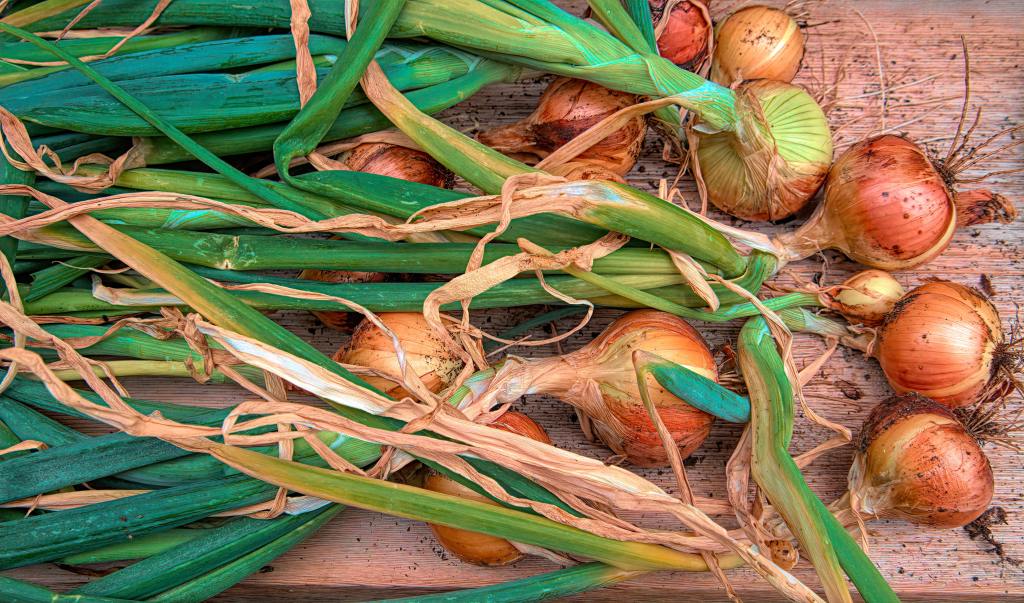
Another issue is that religious veg*ns do not consume alliums (garlic, onions, chives, etc). So, a dish might appear perfectly vegan for someone in the West and local non-religious veg*ns, but then exclude most of the local veg*n population. To address this issue, products may be labelled 五辛素 (wǔxīn sù, ‘allium veg*n’). However, 五辛素 (wǔxīn) products may contain eggs or milk. So, you see how complicated things can get.
Other than that, perceptions about the state of the movement really depend on who you ask and what their advocacy priorities are. For example, veganism and plant-based diets are certainly gaining prominence. Awareness about animal welfare is also more widespread now but ideas about animal rights are still quite novel. So, mobilizing people around animal liberation motives, like many other places, is not always possible.
What unique facilitators and barriers does the Sino-cultural sphere face in terms of the progression of vegan and vegetarianism?
As elaborated above, the context of veg*n religious practice is perhaps both, the most unique facilitator and barrier. There are certainly other socio-political and cultural aspects. In his research on social movements, sociologist Michael Hsiao from Academia Sinica once said that Taiwan has ‘a demanding civil society’. This certainly rings true with the work of vegan and animal advocates and the demonstrations, lobbying, and petitions they are involved with. In China, according to a 2019 consumer study, food neophobia is not much of a barrier. People are more willing to try new plant-based and cultivated meat products. So, it is not surprising that significant changes are also coming from industry, supermarket shelves, restaurants and coffee shop menus.
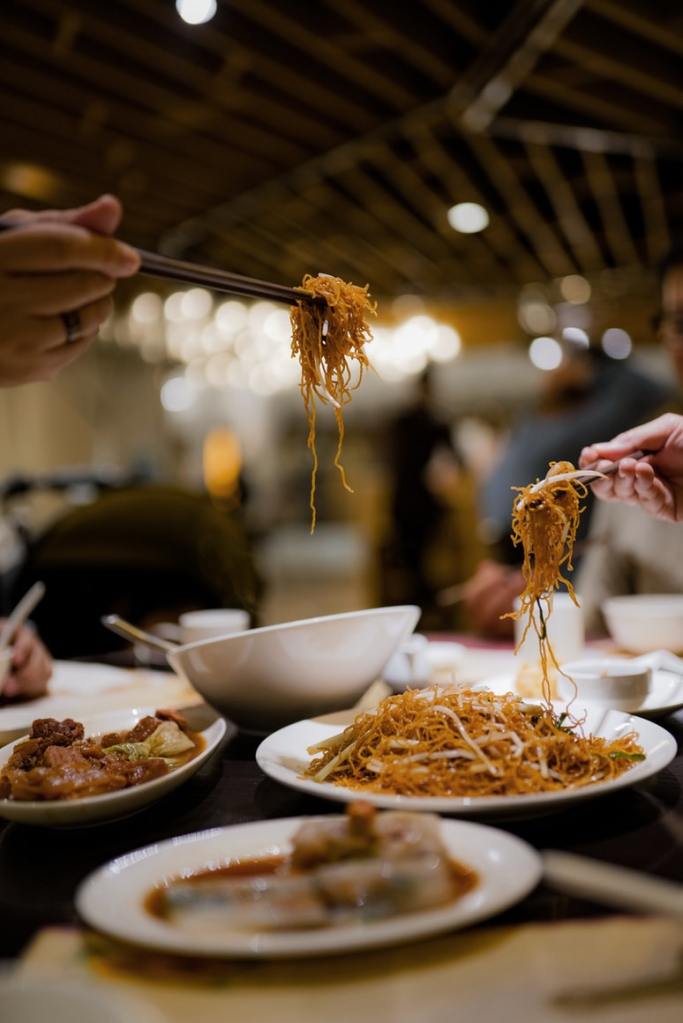
As for barriers, commensality aspects and health concerns are top of the list. In terms of commensality, especially at home or eating out with friends, communal eating is important. Sharing cài (菜) (meat and/or vegetable dishes) that complement the fàn (飯) (rice or other starch and grains) plays a role in family and social relations. Many people who go veg*n and live with family often must navigate this and eat ‘side or edge’ vegetarian food (鍋邊素). Meaning that they only pick the vegetables and plant-protein contained in a dish and avoid the meat part.
In terms of health, while the American Dietetic Association (now, ‘Academy of Nutrition and Dietetics’) might have established its position on the nutritional adequacy of appropriately planned veg*n diets, in the Sino-cultural context there is also the influence of Traditional Chinese Medicine. I am less versed on this aspect and have only recently began exploring it. However, people in East Asia do often talk about having to avoid/eat certain foods for their properties in TCM. Therefore, promoting veg*nism in the region from a health perspective definitely needs to engage more with TCM in order to reach and address local understanding of meatless diets and nutrition-based challenges. Unlike the word ‘vegan’, the phrase “what about protein?” (蛋白質怎麼樣?Dànbáizhí zěnme yang?) translates very easily into Chinese.
In the western world, the rise of veganism has been met with a rise in anti-vegan attitudes, does the movement in the Sino-cultural sphere come up against the same sort of resistance? If so, what does vegan resistance look like in the Sino-cultural sphere?
Fortunately, this degree of resistance and anti-veg*nism has not really happened so far. People might be surprised and curious to find out that someone would go meatless for non-spiritual reasons, but most often just assume it is because of religious reasons. Plant-based products like ‘faux meat’ and tofu have been conspicuous in Chinese vegetarian cooking alongside the existence of vegetarian Buddhism. Thus, veg*ns and plant-based food have usually had their own space and have not had to deal with such anti-veg*n reactions other than navigating family and social meals. The movement is also still small comparatively to the West. Many people still have never heard the word ‘vegan’. The only instance I am aware of in terms of public backlash was of a news piece from China a couple of months ago where a kindergarten in Chengdu was providing vegetarian meals to children. There was a social media post that led to public concerns about the children’s nutrition. The kindergarten was ordered to change its menu to adhere to national regulations.
What does the future of vegan and vegetarianism look like in the Sino-cultural sphere?
It’s looking promising! Being away from Taiwan for a bit over a year and now back for fieldwork I can notice a difference. Vegan advocacy is diversifying, not only with street activism and fairs. Hardworking and passionate advocates are trying to find the most effective ways to pass their message and engage with policy. Now there is also even more plant-based options around. I came back to find local brands of oat and almond milk at the neighbourhood supermarket. The establishment of the China Vegan Society this year is also a big step forward and I am excited to see what happens next.
Would you like our readers to be able to get in touch with you, and if so, how can they do so (e.g., Twitter, email, etc.)?
Sure! Readers can contact me via email (chih-lan.song@ace.lu.se) or follow me on Twitter and IG @veggyacademic.
Authors: Rebecca Gregson & Jared Piazza



In this piece, Rebecca Gregson considers the negative impact that anti-veganism might be having on the vegan movement, highlighting issues of dietary lapse, self-silencing, and intra-movement conflict.
Feature photo credit: Chris Slupski
Anti-veg*n Sentiment
For as long as meat-free diets have existed, there have been people who denigrate vegetarians and vegans (or veg*ns) for their dietary choices. As far back as the 19th Century, there is documented evidence of veg*ns being ridiculed in popular press, regarded as cadaverous, feeble, and half-crazed. These same sentiments were later echoed in the discourse analysis of UK national newspapers, some 100 years later.
But, with the rise in veg*n popularity and the advent of social media, today anti-veg*nism is a somewhat different beast. Some have argued that veg*n antipathy is experiencing a recent wave in prevalence. According to a 2020 Times article, the UK police forces have recorded 172 instances of veg*n hate crimes between the years 2015-2020, just under a third of which took place in 2020. These changes have prompted academics and government bodies to recognise anti-veg*nism as a prejudice and to protect ‘ethical veganism’ under the Equality Act 2010.

Like a virus, this anti-veg*n hate has spread online. Online communities of self-identified “anti-vegans”, like Reddit’s r/AntiVegan and Facebook’s Anti Vegan League have sprung up right across the internet. If you have happened to stumble across online anti-veg*n discourse, then you will know that these groups revel in satirical humour and the sharing of taunting internet memes.
“How do you know if someone is vegan?…Don’t worry, they’ll tell you.” Or so the meme goes. This meme in particular uses satire and frivolity to disguise the stereotypical view that those who eschew meat are intolerably vocal about it. This view sits alongside the common perception of veg*ns as being militant and moralistic. It speaks to the idea that veg*ns push their views on people, uninvited and at the wrong time.
Consider the way in which vegan character Nora is presented in this scene from How I Met Your Mother. Note a number of things about how the vegan character is portrayed. There is an entire story to be told about the fact that Nora is a female protagonist, but a story for another blog piece, perhaps. More relevant here is the way in which Nora is seen discussing the moral motivations of her dietary preferences and casting judgment on those at the dinner table (wrong time, wrong place).
This depiction is typical of TV’s representation of veg*ns. And, whether popular discourse implicates public opinion, or vice versa, this representation perpetuates the common stereotype of veg*ns as overly moralistic, judgmental individuals. Ted’s later dismissal of Nora’s vegan spiel also feeds into this idea that the acceptance of veg*ns hinges on the unspoken “don’t ask, don’t tell” rule, as discussed by Iacobbo and Iacobbo (2006).
Lonely, Lapsing Veg*ns
Anti-veg*nism is so prevalent and insufferable that even the meat-eating majority anticipate veg*n stigma, which serves as a The title of this article, “If I went vegan, my friends and family would hate me” drawing on one of the participants own quotes. In this study, non-vegans reported socially distancing themselves from vegans in order to avoid any second-hand stigma.
Losing the support of family members and close friends, and experiencing co-ordination issues around food, are certainly common characteristics of the lived experiences of veg*ns and may be responsible for former veg*ns’ dietary exits. It has been estimated that approximately 84% of people who attempt a veg*n diet later abandon it, with 34% of lapses occurring within the first three-months. In the same research report, it was suggested that the negative social aspects of a vegan diet, including social awkwardness, a lack of social support and the experience of vegan stigma, explain a significant proportion of why meat refusers revert to their previous omnivorous diet.
The research discussed thus far suggests that anti-veg*nism can make veg*nism a lonely place and, unsurprisingly, hard to maintain. In self-report research with a sample of 371 veg*n participants, approximately 45% of vegetarians and 66% of vegans said that they had experienced some degree of discrimination because of their dietary choice.
For those who experience and withstand veg*n stigma, many may find themselves adopting strategies to manage difficult social interactions. In the above research, 56% of vegetarians and 77% of vegans said that they had engaged in at least some form of stigma-coping mechanism. These mechanisms include concealing the moral motivations underlying their lifestyle or remaining altogether silent.
The Vocal Veg*n?
The qualitative work by Jessica Greenebaum documents a number of these “face-saving” strategies that vegans employ to manage the tension that they face when communicating with meat eaters. These range from waiting for an appropriate time to discuss veg*nism, to avoiding confrontation all together. Further, when such conversations do arise, vegans may reframe their diet as a ‘personal choice’, motivated by self-focused concerns, like health, to dilute the moral tone of their veg*nism. This strategy appears to make veg*nism more palatable to onlookers. Recent research from Maike Weiper and Roos Vonk shows that personally motivated vegans (i.e., those who eschew animal-products for health reasons) are liked more than those who do so for ethical reasons.

Jan Willem Bolderdijk and Gert Cornelissen suggest that during encounters with meat-eaters, those who eschew meat often remain silent about such decision. In their adaptation of the classic conformity study by Solomon Asch, Bolderdijk and Cornelissen recruited meat abstaining participants to complete an experiment alongside meat eating confederates. In this study, all participants were given the opportunity to sign a petition in favour of supermarkets increasing their assortment of vegan food alternatives, thus, expressing their meat-free preferences. In the pilot testing phase of this experiment, the authors established a baseline rate of petition signing amongst a sample of veg*n participants that fell between 88-100%.
In the critical condition, the non-vegetarian confederates received the petition first and declined to sign. When veg*n participants were exposed to the non-veg*n confederates who declined to sign, just 52.3% of them decided to sign the petition themselves. The authors take this as evidence that meat avoiders are less inclined to support meat-free policies when exposed to the counter-views of a majority. The authors refer to this effect as self-silencing.
In-Fighting
Recent research has suggested that despite sharing the same superordinate goal (the disavowel of meat consumption), there exist substantial tensions between vegans and vegetarians. It would seem that the topic of self-silencing veg*ns is one such source of tension between members of the animal rights movement.
Consider this post from r/vegan made four years ago. In this post, we hear from user ‘Jaybutts’ about their frustration towards self-silencing vegans. Jaybutts explains how vegans are under “social pressure” to remain silent about veganism and argue that submitting to such pressure is being “complacent”, conforming to the social norm which is to eat animals. Jaybutts concludes: “PLEASE do not let the flesh eaters silence you”.
While internal conflict is inevitable (some might argue natural) to progressive social movements, such conflicts can devolve to destructive patterns of avoidance, ostracism, and public humiliation, none of which maintain unity, encourage principled opposition, or demonstrate an ability to solve large-scale social problems. Thus, if left unmanaged, internal conflict has the potential to undermine the movements success.
Drawing Faulty Assumptions
While self-silencing might be a cause of frustration within the movement, psychological theory lends a hand in explaining why it’s to be expected and perhaps more common than we might have thought. The concept of pluralistic ignorance is the idea that individuals may, erroneously, hold the belief that one’s personal attitudes are different from the majority. This generally happens when people fail to communicate their personal attitudes for fear of deviating from the perceived normative view.
If we use this model to make predictions about veg*ns’ behaviour, then we might expect veg*ns to make erroneous judgments about the number of omnivores who hold anti-veg*n views. As work on minority influence attests, minority views are often held more widely in private than in public. Thus, there is likely more support for meat reduction among omnivores than veg*ns often infer. Ultimately, self-silencing might be based upon a faulty inference about what most omnivores actually think.
Using the same logic, it also follows that silent veg*ns perpetuate the view that veg*nism is a minority preference – a niche diet – and that eating animals is the norm. When veg*ns remain silent, omnivores assume there are fewer practicing veg*ns than there actually are. Thus, it’s possible that veg*n self-silencing may be slowing the momentum of the movement. How can we prevent this and break the silence?
“Come Together Right Now…”

Trawling the comment section of the aforementioned Reddit post, we learn that veg*ns may also self-silence because in such high-pressured discussions, they feel that they struggle to communicate effectively. While we may communicate with others in our everyday lives, communicating a message effectively is an art and something that takes practise to master. Recognising these issues, Melanie Joy and Tobias Leenaert founded the Centre for Effective Vegan Advocacy which has a whole host of freely accessible resources for veg*ns.
It can be difficult to feel empowered to speak about matters close to your heart when you are without a tribe, or community of people who support you in your choices. This issue was highlighted in recent work by Faunalytics, where it was found that a lack of social support was the principal reported reason for exiting a veg*n diet.
Perceiving the existence of allies can be a resource for overcoming self-silencing. In the study by Bolderdijk and Cornelissen, they included an additional condition where, across some trials, the group moderator endorsed the petition themselves, stating “I signed it, but don’t feel obliged to sign it as well”. In this condition, when the moderator endorsed the petition, thus, presenting themselves as a veg*n ally, a much larger proportion of meat-avoiding participants (84.4%) were willing to sign.
These finding speak to the important role that allies play in encouraging people to speak up about their own veg*nism. Those looking for veg*n allies might consider becoming affiliated with veg*n organisations, like our very own PHAIR Society, or the Vegan Society. You might take to social media, the likes of Facebook or Reddit, to find groups of like minded individuals, in your local area and with whom you can relate. In addition, if you are at an educational institute, a college or university you might find a veg*n society–a great place to meet fellow veg*ns and allies.
Internal conflict within a social movement can be self-defeating and thus practising acceptance toward other members of the movement is important. Experiencing prejudice can be hurtful and demotivating. In a movement that is concerned with compassion towards other living beings, we ought to practise this amongst ourselves; valuing the dignity and respecting the integrity of our peers.
Author: Rebecca Gregson.
Editorial Contributions: Jared Piazza

An interview with Dr. Anastassiya Andrianova
As a vegan mother of three, I often wonder if the way we depict animals in children’s books and film creates a disservice to our children. In children’s literature, we often encounter animals that can talk, have human emotions and desires, and face human challenges and obstacles; for example, in the hugely popular picture book series, “Tales from Acorn Wood”, the animals need help finding their friends, Pig and Hen, so they can enjoy a picnic together. These anthropomorphic depictions might be useful for teaching children how to navigate human relationships. But what do they teach children about animals themselves, when little of what children see or read about makes any contact with the realities animals face at the hands of humans?
In her provocative article, “To read or not to eat: Anthropomorphism in children’s books” (Society & Animals, 2021), Dr Anastassiya Andrianova, Associate Professor of English at North Dakota State University, considers some of the perils of presenting children anthropomorphic depictions of animals. The article spotlights and interrogates some of the “contradictory cultural messages” children receive about animals from books.
Jared and I were intrigued by the article as a potential counterpoint to some research in psychology that suggests animal anthropomorphism may, at times, help people feel connected to animals. Might anthropomorphising animals have a darker side? When used in children’s books, might it be a lost opportunity to teach children honest lessons about how society treats animals? Might such depictions “muddle” important distinctions between humans and animals?
To answer these questions and more, Dr Andrianova kindly agreed to chat with us about her article, ways to reconstruct the way we talk to children about animals and much more. Here is our conversation…
Dr. Andrianova, would you briefly introduce yourself for our readers?
My background is in comparative literature, especially British, Russian, and Ukrainian literatures. Starting with my dissertation on vitalism in 19th-century literature and philosophy, I have been interested in ecocriticism and human-animal relations, most recently examining the intersections of critical animal studies and critical disability studies. My recent publications include an analysis of nonhuman animal intersubjectivity in Ivan Turgenev’s story “Mumu” (Journal for Critical Animal Studies, 2020), a critical disability reading of Mikhail Lermontov’s “Taman’” (Disability Studies Quarterly, 2021), and the article most relevant to PHAIR, on the anthropomorphic depiction of animals in children’s literature (Society & Animals, published online ahead of print 2021). I am currently working on vegan children’s literature as well as on teaching literary theory through children’s books at the college level.
What inspired you to carry out this research on animals in children’s lit?
My research on anthropomorphism in children’s literature reflects both personal and academic interests: as a vegan parent of a young vegetarian child, a literary animal scholar, and a feminist, I was struck and disheartened by the depiction of animals in the books I was reading to and with my daughter. In these books, talking animals are used to tell human stories and teach human children lessons; they are often misrepresented and/or stereotyped, thereby communicating strange or outright false ideas about these fictional animals’ actual counterparts (e.g., that frogs and storks can become a loving couple in What I Love About You: Frog and Stork), or presenting idealized and sanitized versions of farms (e.g., Lindsey Craig and Marc Brown’s Farmyard Beat) that largely ignore the realities of factory farming, the rearing, use, and slaughter of animals for human consumption. Some books and rhymes are objectional in their trivialization of animal suffering and even death. As much as my daughter loves the French song “Alouette,” the titular lark’s defeathering reminds me, each time, of what typically follows the plucking of a bird: cooking and eating that animal. Or speciesism compounded with ableism in “Three Blind Mice.” Even “Baa Baa Black Sheep,” one of my daughter’s most favorite songs which magically puts her to sleep at naptime, of course instrumentalizes animals, suggesting to children that their fur, skins, and secretions are solely for human use and enjoyment. Most of these books, moreover, perhaps with the exception of Ian Falconer’s Olivia series and Olivier Dunrea’s Gossie & Friends books, predominantly feature male characters, as is the case with many children’s books. I want my daughter to identify with animals (and animal characters) and learn to empathize with them, not use them for her benefit.

“My goal is to encourage children and their adult mentors to start a conversation about animals, and why we are so keen on seeing them act like humans rather than letting them be themselves.”
– Dr. Anastassiya Andrianova
What are the dangers of a lack of distinction between humans and animals in children’s literature?
In Our Children and Other Animals (2014), Matthew Cole and Kate Stewart offer empirical analyses of how children “grow to feel emotionally attached to animals while simultaneously enjoying the vicarious privileges of their domination through consuming their bodies [and] bodily secretions.” The authors note, for example, that children would cry their eyes out over the orphaned piglet in the movie Babe (1995),but then happily chow down on bacon. Several of my friends recall being deeply saddened by Charlotte’s Web, yet have no problem eating meat. All of this confirmed for me the pernicious effects of anthropomorphizing animal characters and the link between reading and consuming: human children learn to consume animal characters as metaphors at the same time as they learn to physically consume their flesh, skins, and secretions.
In my article “To Read or Not to Eat: Anthropomorphism in Children’s Books” (Society & Animals), I expose the speciesist depiction of animals in mainstream children’s literature and its connection to children developing anthropocentric views later in life. Those in favor of anthropomorphism argue that difficult subjects, like religion and death, can be made more accessible through animals, without recognizing that this requires the denigration of animal life, suffering, and death—the latter, in the words of one writer, is “sad, but not traumatic.” The nonhuman animal is humanity’s most proximal and natural other; however, making this other lesser through humor and other literary techniques has broad ideological ramifications: it rears carnivores. Further, I draw attention to overt and more subtle animal violence, but also to seemingly innocuous “cute” representation of animals that has serious implications for children’s understanding of gender (girls being socialized into caring for “cute” puppies and kittens), dis/ability (disabled animals depicted as victims who inspire pity rather than empathy), and conservation (charismatic megafauna with neotenic features, like polar bears, privileged over other, less “attractive” species).
How can we go about addressing these issues and “make animals matter”?
In “To Read or Not to Eat,” my goal was not to do “vegan policing” or to suggest that we bowdlerize or ban children’s texts about animals; that is both counterproductive and futile. Rather, I want to encourage children and their parents, guardians, and teachers to talk about animals and the specific ways we can appreciate and celebrate their difference. To this end, I conclude the article with several questions about how animals are depicted, what sorts of messages such depictions convey, and how we might act upon them to help real animals:
- How is the animal represented in this text?
- What does this representation tell us about the actual life and conditions of the individual animal or the species of which they are member?
- If this animal is recognizably anthropomorphic (beyond “speaking” human language as a narrator and/or character in the story), does this representation tell us more about humans and society than it does about other animals?
- If so, what can we glean from such anthropocentric representation about both humans and nonhumans?
- If, furthermore, such a representation caricatures, reduces, or otherwise belittles the animal (associating chickens with avoidance and fear, asses with stupidity and obstinacy, foxes with cunning, etc.), how can we improve on it?
- Finally, what real-life changes to help the lives of animals does the story suggest?
And because I am not only a parent but also a university professor, I include animal-centered texts in my literature courses and ask my students some of the same questions about human-animal relations. Most of my work has a pedagogical component. In my article “Teaching Animals in the Post-Anthropocene: Zoopedagogy as a Challenge to Logocentrism” (JAEPL, 2019), for example, I invite others to “promot[e] inquiry and writing which interrogate the human-nonhuman boundary” as a way to “help students develop critical thinking and empathy.”
“I am not suggesting that we stop reading books that feature animals, but I am suggesting that we read them critically and talk to children about what such representations mean.”
Dr. Anastassiya Andrianova
What are the implications of your research findings for animal advocacy?
Cole and Stewart note one striking objection to vegan children’s literature: “a registered dietician in Atlanta” alleged that Ruby Roth’s Vegan Is Love (2012) could “easily scare a young child into eating vegan.” In Dan Bodenstein and Ronald Robrahn’s Steven the Vegan (2012), a book that takes up the tiresome objection that without meat-based protein children cannot build muscle, the eponymous Steven manages to successfully “convert” at least one of his school friends. If only I had as much power in my research and teaching about animals! By focusing on children’s literature and asking how early is too early and how early is too late to introduce children to the realities of industrial factory farming and anthroparchy, I draw attention to the serious role that children’s literature plays in early childhood development and how the kinds of books, nursery rhymes, and songs that children consume determine, to a large degree, the choices they make and the relationships they forge as adults. Reading to and with young children is, to me, a form of animal advocacy.
Any other research relating to animal studies that you have been involved in?
I am a literary animal scholar, so I offer new critically informed, animal-centered close readings of literary texts from an animal standpoint, challenging traditional interpretations that allegorize animal experience to make a point about human society. I think of this as putting the animal back into the text. In “Narrating Animal Trauma in Bulgakov and Tolstoy” (Humanities, 2016), for instance, I refuse to understand the dog in Mikhail Bulgakov’s Heart of a Dog (1925) as merely a symbol for the oppressed Russian masses; in my recent two articles on Ivan Turgenev’s “Mumu,” I similarly challenge the allegorical reading of the canine characters; I also underscore how not only animality but disability is thus erased by being transformed into a metaphor. In my other projects on ecocriticism and ecofeminism, I draw attention to the climate crisis which threatens both the human and the nonhuman.
My work on anthropomorphism in children’s books in particular has led me to vegan children’s literature, Roth’s, Bodenstein’s, and others’ countercultural children’s texts marketed to young vegans, vegetarians, and other vegan-friendly or vegan-curious readers. I have a manuscript under review on this subject and some ideas for further exploration—in large part to promote these texts otherwise overshadowed by speciesist landmarks like The Rainbow Fish.
Reading to and with young children is, to me, a form of animal advocacy.
Which picture book do you think should be on every child’s bookshelf?
This is a tough question. I think that Ezra Jack Keats’ The Snowy Day (1962) is a must-have, the first children’s book with an African-American protagonist to win the Caldecott Medal in 1963; remarkably, the text makes no mention of the child’s race, but the accompanying illustrations tell his story in a powerful manner. Another more recent book I adore is Jessica Love’s Julián Is a Mermaid (2018), which is about a gender nonconforming child who is fascinated by and wants to be a mermaid; the visuals are stunning, and the confluence of queer, animal, and disability studies (if understood as a revision of H.C. Andersen’s “The Little Mermaid”) makes this a gem both for children and academics.
When selecting a book specifically about positive human-animal relationships, my recommendation would be Robert Neubecker’s Linus the Vegetarian T. Rex (2013) and Leslie Crawford and Sonja Stangl’s Sprig the Rescue Pig (2018), especially for the youngest vegan and vegetarian readers. The former features a brave and inquisitive female protagonist on an adventure at the natural history museum; through her meeting and befriending the titular dinosaur, she learns the value of nature, history, and museums, as well as of a healthy vegetarian diet. The latter similarly centers on a relationship between a young girl and a nonhuman animal, while commenting on the dire conditions of “unhappy” farmed pigs and celebrating animals’ sensory experiences.
Dr. Anastassiya Andrianova is Associate Professor of English at North Dakota State University.
Email: anastassiya.andriano@ndsu.edu
Authors: Victoria Simpson and Jared Piazza

 PHAIR Society