

Research on the psychology of animal product consumption is rapidly expanding into new areas, including dairy, egg, and fish consumption, moving beyond just meat consumption. Maria Ioannidou has been at the forefront of this emerging research, with several recent articles published in Appetite and Food Quality and Preference. In this blog, we discuss her fascinating research, which provides a glimpse into the minds of vegetarians, pescatarians, and omnivores.
Can you briefly introduce yourself, Maria?

My name is Maria Ioannidou. I completed my PhD in 2024 in the area of social and moral psychology at the University of Bradford. Before that, my academic journey began with an honours degree in Psychology and Crime and an MSc in Psychology, both at the University of Bradford, followed by an MSc in Forensic Psychology at the University of York.
I’m currently the Graduate Student Representative for the PHAIR Society, and serve as events and conference co-organizer. Beyond academia, I am an animal rights activist, a cat and dog mother, and I take care of stray cats in Athens.
How is it possible that some people (pescatarians, vegetarians) can stop eating meat over concern for animal welfare while at the same time continue consuming other animal products, knowing this involves severe animal welfare issues?
You recently completed your PhD on the psychological factors that underpin animal product consumption. What inspired you to do this research?
I became vegan eight years ago after watching Dominion, a documentary that forever changed my life and my perspective on humanity. Following that, I engaged in various forms of animal activism. When I was pursuing an MSc in forensic psychology, I began to wonder, as many people before me: Why do we love some animals but eat others? After delving into the research literature on this topic, it all started to make sense as I recognized many of the justifications and psychological strategies that people use to feel more comfortable with meat consumption. For instance, I often heard the claim that animals don’t really suffer in the meat industry or that animals only have limited mental capacities to feel or suffer. Research has shown this is one way of how people convince themselves there are limited ethical issues with eating animals, enabling them to continue consuming meat. However, I also kept wondering about dairy, egg, and fish consumption, given that most research had been focusing on meat consumption.

Through my activism, I encountered various justifications for consuming dairy, eggs, and fish such as the misconception that dairy and egg production are part of the animals’ natural processes and don’t involve animal suffering. Coming from Greece, another striking example concerns people’s consumption patterns during the Greek-orthodox fasting period before Easter. Despite fasting entailing abstinence from animal products, many Greeks still eat fish during this period because they do not consider them animals.
These personal experiences and anecdotes suggested the use of cognitive dissonance strategies may not be limited to meat consumption but also apply to the consumption of other animal products. Given the lack of research on the psychology of dairy, egg, and fish consumption, I wanted to pursue a PhD to investigate these ideas.
A key question I wanted to address was: How is it possible that some people (pescatarians, vegetarians) can stop eating meat over concern for animal welfare while at the same time continue consuming other animal products, knowing this involves severe animal welfare issues?
In one of your articles “Feeling Morally Troubled about Meat, Dairy, Egg, and Fish Consumption” published in Appetite, you investigated the use of rationalizations and dissonance reduction strategies in a range of dietary groups based on survey data from hundreds of respondents, including omnivores, pescatarians, vegetarians, vegans, and flexitarians. What did you find?
As expected, meat consumers (omnivores and flexitarians) used rationalizations to justify their meat consumption, for instance, agreeing that humans need to eat meat to be healthy. They were also more likely to deny the suffering of animals killed for meat compared to meat abstainers (pescatarians, vegetarians, vegans).
Critically, the main new finding was that similar rationalizations and dissonance strategies were used by dairy and egg consumers, including vegetarians, to justify egg and dairy consumption, as well as by fish consumers, including pescatarians, to justify fish consumption. For instance, whereas vegetarians and pescatarians acknowledged the suffering of animals in the meat industry, they tended to deny the suffering of animals in the dairy and egg industry. Similarly, fish consumers used justifications to defend fish consumption (“humans need to eat fish for a healthy diet”) and were more likely to deny that fishes suffer when being raised and killed for fish production, compared to fish abstainers (vegans and vegetarians).
People perceive the intelligence, sentience, and moral worth of animals in a selective and self-serving way, motivated by their dietary behaviour.
Did you find any evidence that these dietary groups also differ in the way they perceive animals used for food? You investigated this further in your article “Minding Some Animals but Not Others”.
Yes, in that study, we presented participants with a list of farmed and aquatic animals, and we asked participants to indicate how intelligent (e.g., capable of remembering or planning) and sentient (e.g., experience pain or pleasure) each animal is. Participants also indicated how much they felt morally concerned for each animal. Importantly, some animals were listed twice but specified with a different food function such as a cow used for meat (beef cow) and a cow used for dairy (dairy cow), and a chicken used for meat (broiler chicken) and chicken used for eggs (layer chicken). We were particularly interested in whether pescatarians and vegetarians would be strategic in the attribution of moral worth and mental capacities to different types of animals in ways that suit their own consumption patterns.
And indeed, pescatarians and vegetarians showed a remarkable flexibility in extending moral concern and perceptions of animals’ capacities. They attributed moral status and mental capacities to a lower extent to dairy cows compared to beef cows, and to a lower extent to layer chickens compared to broiler chicken. In other words, people perceive the intelligence, sentience, and moral worth of animals in a selective and self-serving way, motivated by their dietary behaviour, even when evaluating the same animal but with a different function.
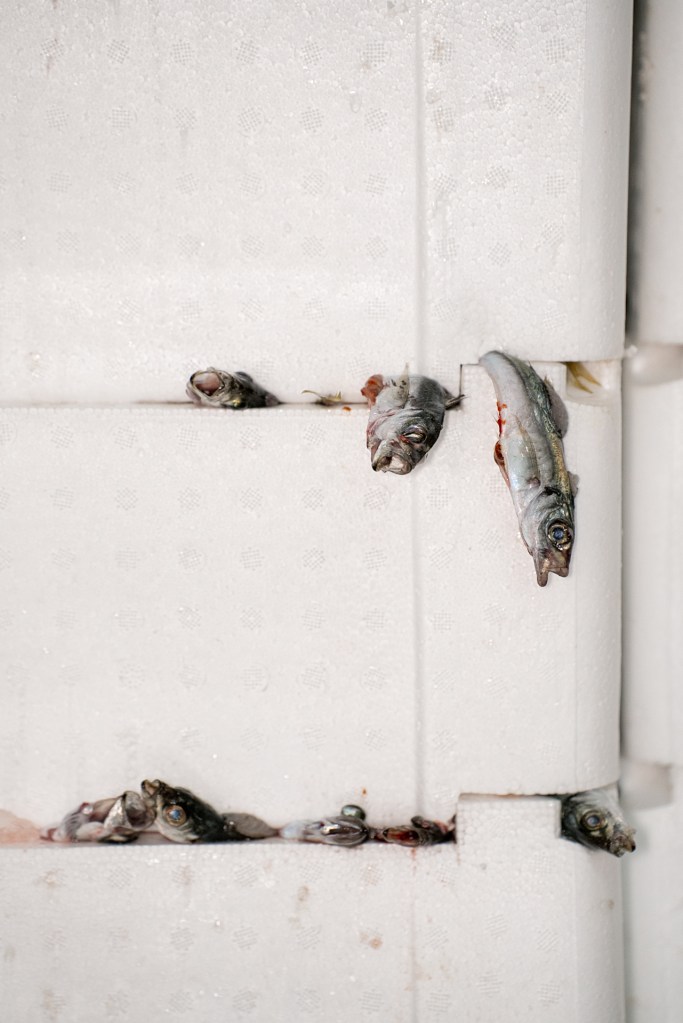
Along similar lines, of all dietary groups, pescatarians showed the largest discrepancy in moral concern and mind attribution between farmed land animals and aquatic animals, attributing particularly low levels of mental capacities and moral worth to aquatic animals.
How can you explain this type of apparent inconsistency in the perception of animals?
Our reasoning is that pescatarians and vegetarians may feel morally uncomfortable (cognitive dissonance) with the idea of contributing to the suffering of animals by consuming animal products (dairy, eggs, or fish products). Many of them have quit meat consumption out of concerns about animal rights and suffering, yet they continue drinking milk and eating eggs or fish and thus engage in consumption behaviours that involve enormous amounts of animal suffering. The findings suggest that pescatarians and vegetarians may resolve this cognitive dissonance by selectively downplaying the mental capacities and moral worth of the animals associated with their consumption behaviour. This way, they can avoid feeling morally troubled about the consumption of fish, dairy, or eggs, yet simultaneously express care and moral concern for animals by rejecting meat consumption.
Could it also be that people are just less aware of the ethical problems with the dairy or egg industry? If so, raising awareness about these issues could help with changing attitudes and behaviours. Isn’t that what you tested in your “Don’t Mind Milk?” article?
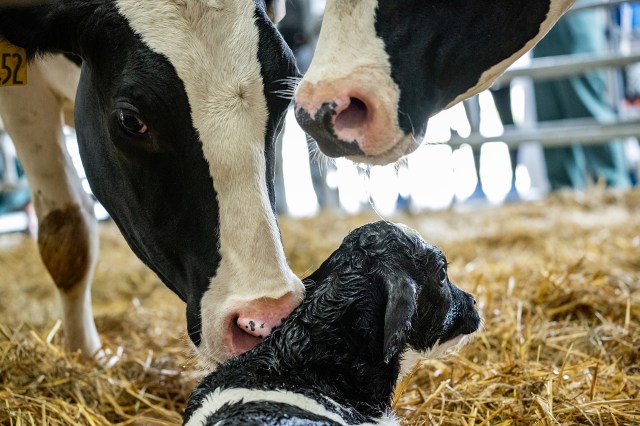
Correct! We conducted an experiment to test the impact of increased awareness of animal suffering in the dairy industry. My impression was that people may consider dairy consumption more ethical than meat consumption because they don’t link it with the killing of animals. They may also be unaware of harmful industry practices like the forced impregnation of cows, the separation of calves from their mothers, and the confined living conditions, causing severe health problems for the cows (e.g., bacterial infections, inflamed udders, and injuries to joints and knees). We wanted to investigate whether informing participants about these harmful conditions would change their perceptions of dairy cows and dairy consumption. Therefore, half of the participants read about a dairy cow living in these harmful conditions (high harm condition), whereas the other half read about a dairy cow that can spend time in outdoor areas and have decreased risk of health problems (low harm condition).
How did participants react to this information?
Participants informed about the harmful practices in the dairy industry felt more guilty about their dairy consumption compared to participants in the low harm condition. However, they also perceived the cow as less sentient and less intelligent. So again, minimizing or denying the mental capacities of animals seem to help people to feel better about their dairy consumption despite knowing the harm being done to animals.
At the same time, participants informed about the harmful dairy industry practices also expressed a greater willingness to reduce and stop dairy consumption. We don’t know if those intentions would also lead to actual reductions in dairy consumption, but these findings are more promising for animal advocacy efforts. Raising awareness about animal suffering in these industries tend to make people uncomfortable about their consumption behaviours and can make them reconsider their dietary habits.
This is also means consumers can show different reactions after becoming aware of the suffering of animals in the dairy industry and experienced feelings of guilt. Some people may react defensively and justify their animal product consumption, whereas others react empathetically and are open to change their dietary habits to align their consumption behaviour with their moral values and concern for animals.
Your findings on dairy reduction intentions are also generally consistent with previous findings, indicating that appealing to animal welfare appears to be effective in motivating people to reduce meat consumption.
Can you reflect on the implications of your findings for animal advocacy?
Across all studies, we see that consumers of animal products tend to use rationalizations and deny the sentience and intelligence of farmed animals to justify their animal product consumption. I think it is important to be aware that such psychological barriers may not only prevent meat consumers to reduce meat consumption but that similar barriers may also prevent vegetarians to reduce dairy and egg consumption. Animal advocacy campaigns could potentially address these barriers by increasing awareness of the mental capacities of farmed animals, directly confronting denial strategies, and promoting empathy. The use of visual imagery, compelling storytelling, and documentaries could be especially effective as these techniques can reduce the psychological distance between consumers and the animals.
When targeting animal product consumption among pescatarians and vegetarians, it is also worth keeping in mind that pescatarians and vegetarians typically hold more positive attitudes towards animals, compared to omnivores. Acknowledging their existing pro-animal attitudes, while emphasising that animal suffering is prevalent across all animal industries, can make pescatarians and vegetarians aware of the inconsistencies in their behaviour and increase their willingness to expand their plant-based food choices.
If you would like to get in touch with Maria: mioannidou5@gmail.com

Interview by Kristof Dhont
Photo credits: Jo-Anne McArthur / We Animals Media
Maria completed her PhD under supervision of Kathryn Francis, Barbara Stewart-Knox, and Valerie Lesk.
Key articles
Ioannidou, M., Francis, K. B., Stewart-Knox, B., & Lesk, V. (2024). Minding some animals but not others: Strategic attributions of mental capacities and moral worth to animals used for food in pescatarians, vegetarians, and omnivores. Appetite, 200, 107559. https://doi.org/10.1016/j.appet.2024.107559
Ioannidou, M., Lesk, V., Stewart-Knox, B., & Francis, K. B. (2024). Don’t mind milk? The role of animal suffering, speciesism, and guilt in the denial of mind and moral status of dairy cows. Food Quality and Preference, 114, 1–12. https://doi.org/10.1016/j.foodqual.2023.105082
Ioannidou, M., Lesk, V., Stewart-Knox, B., & Francis, K. B. (2023). Feeling morally troubled about meat, dairy, egg, and fish consumption: Dissonance reduction strategies among different dietary groups. Appetite, 190, 107024. https://doi.org/10.1016/j.appet.2023.107024
Ioannidou, M., Lesk, V., Stewart-Knox, B., & Francis, K. B. (2023). Moral emotions and justifying beliefs about meat, fish, dairy and egg consumption: A comparative study of dietary groups. Appetite, 186, 106544. https://doi.org/10.1016/j.appet.2023.106544
 PHAIR Society
[heart] Carol Jasper reacted to your message:
LikeLike