

An interview with Nicholas Poh-Jie Tan about his recent paper with a massive three-sample database showing that the link between depression and meat avoidance is weak and not likely to be causal, casting serious doubt on past claims of a relationship.
Nicholas, you recently published a Psych Science paper, “Associations between meat consumption and depression are small and unlikely to be causal”. What were the central aims of this paper, what motivated the research, and what did you find?
The central aim of our paper was to test whether eating less meat causes people to feel depressed. We were interested in this topic because existing research on this topic has largely been cross-sectional, rather than longitudinal – for example, see the systematic reviews by Jain et al. (2022) and Dobersek et al. (2021) – and has not provided evidence about the causal direction.
I also found this topic interesting because I was beginning to see some influential individuals like Jordan Peterson advocating that eating meat could be used to treat or protect against depression (Peterson is one of the leading advocates of the ‘all-meat’ diet). This is problematic given the lack of evidence for such claims. Although we were interested in the predictors and consequences of animal consumption in general, we focused on meat because of these kinds of claims, and because of the kind of data we used.
In our study, we examined the causal relationship between eating meat and depression across three very large longitudinal panel study datasets (total N = 77,678). We replicated past research by finding that there was a very small significant correlation of around .05 between eating less meat and feeling more depressed.
There was a very small significant correlation of around .05 between eating less meat and feeling more depressed.
This association was much weaker than the association between other correlates of depression such as time spend on social media, alcohol use, and exercise, which suggested that animal consumption is not a major factor in depression in general.
We also found that the between-person relationship was curvilinear such that there appeared to be a slight uptick in depression at very high ends of meat consumption, but a slight downtick at very low ends. This suggests that, although there is a positive correlation, people who eat excessive amounts of meat may be higher risk for depression than people who eat typical amounts, whereas people who abstain from meat might be at similar or even possibly lower risk than reducetarians.
We also found that during years where individuals ate less meat than usual, they were significantly more likely to feel depressed, however, this effect was very small, around .01. Perhaps most important, eating less meat than usual at one time point did not significantly predict feeling more depressed at the next time point. If there was a causal relationship, you would expect that dietary changes would precede mood changes in this way – but that’s not what we found.
Your research confronts the claim that there might be a relationship between avoiding meat and depression. What are some of the more common theories or arguments for why depression and meat consumption might relate?

Several arguments have been made for a causal relationship between meat avoidance and depression. One hypothesis is that meat provides nutrients like iron and vitamins B12 and D that protect against depression. Despite studies that have already ruled out this nutrients deficiency explanation, such claims still persist and circulate on social media.
There are also non-causal hypotheses. For instance, it could be that people who become depressed have a lower appetite and thus eat less meat, along with other kinds of food. Third variable explanations also exist. Though some previous studies have ruled out gender as a third variable, other third variable explanations have been made. For instance, climate change concerns might cause people to be both depressed and to eat less meat. Another third variable explanation is that people stop eating meat because they realise how horrific the animal agriculture industry is, and this causes them to be depressed.
It looks like some researchers have theorised that meat reduction, specifically, might be causally linked to depression. Why might being in a process of meat reduction cause depression? Did you find any evidence to support this idea?
Meat reducers are usually attitudinally ambivalent. On the one hand, they are still attached to eating animals, but on the other hand they are compelled by reasons not to. Because people make meal choices multiple times per day, they face this conflict regularly. It is fairly well-established that conscious ambivalence is distressing – that is why dissonance reducing strategies are so common and effective, because they help people avoid being aware of ambivalence. It is intuitive that a person who concentrates on this conflict and their internal ambivalence will tend to be more distressed than either a person who is fully committed to not consuming animals, or a person who consumes animals regularly and doesn’t give it much thought.
In your study, what was the reason to treat meat consumption as a continuous measure, as opposed to a categorical measure (i.e., meat consumers vs. avoiders)?
We chose to treat meat consumption as a continuous variable for three reasons. First, we used representative samples, and the proportion of meat abstainers in the general public is very low. Dividing people into those who do and do not eat meat would have resulted in very uneven samples.
Second, we were interested in variation among meat eaters, from people who eat meat once in a while to those who eat it a lot, because nutrition-based hypotheses generally propose that the more meat you eat the less prone to depression you should be. Third, it is well-established that dichotomizing continuous variables sacrifices reliable variance, and doing so in this study would have reduced power to detect effects.
In the study you compared three different samples from the Netherlands, Germany, and Australia, and each sample had methodological differences. How comparable were the measures from the three datasets? Could differences in measurement across the datasets affect the results?
Overall, the methods and results were highly comparable across the three samples. This can be seen from the consistency in the pattern of effects across all three samples and when the three samples were combined into a single “mega sample”.
Finding similar patterns in three samples from two regions of the world, using data at different timescales with slightly different measures, gives us confidence that our findings are relatively robust and generalisable.
Your team found small correlations between meat consumption and depression at the “between-person level”. You also found that “within-person associations” between meat consumption and depression were “exceedingly small”. Can you explain the difference between these different levels of analysis – “between-” vs. “within-person” correlations – and what they mean for your results?
Between-person associations compare average differences between individuals (e.g., people who eat more meat tend to be less depressed). Between-person associations are typically computed at a single time point (i.e., cross-sectionally), however, in our study we computed our between-person association by averaging across several time points, which led to more reliable estimates.
The between-person association from our study is analogous to the findings from past research conducted to date examining the relationship between meat consumption and depression. Importantly, the between-person association does not provide evidence of causality and could be confounded by other between-person variables (e.g., sociodemographic variables, personality traits).
Within-person associations examine how changes over time in one person, relative to their own average, are related. This metric asks: during years when a person eats more meat, are they are also more depressed, relative to their own typical level of depression? If there was a causal relationship between meat consumption and depression, we would expect that people would become more depressed during times when they eat less meat. In particularly, we would expect that a person who eats less meat today would become more depressed at some point in the future. However, we found no evidence to support this kind of lagged within-person effect.
Do you see your findings as a sizable step in silencing concerns about the relationship between meat avoidance and depression?
Our study suggests that changes in animal consumption is very unlikely to cause depression. To the extent that concerns about this are based on evidence, this study, along with other emerging research, should silence such concerns. But such concerns are often not based on evidence.
Our study suggests that changes in animal consumption is very unlikely to cause depression.
Your findings are based on self-reports of meat consumption, which we know can be unreliable – for example, with people reporting eating less meat than they actually consume. Have there been studies of meat consumption and mental health that have moved away from self-report measures of meat consumption?
Yes! Conner et al. (2025) conducted a study in which they delivered either meat or plant-based meat alternatives to participants in two experimental conditions. They measured wellbeing and nutrition indicators from blood samples. They found no differences between the groups. This finding aligns with our study in suggesting that reducing animal consumption does not increase risk for depression.
What are the next steps for research into meat consumption and mental health? Are there other controversial or outstanding questions that need empirical attention?
It might be interesting to examine other kinds of psychopathology. For instance, people with eating disorders typically restrict certain food groups, and animal products is one food group that is commonly restricted. Such individuals are often at risk of depression.
More experimental work, such as the study by Conner et al., would be useful as well. Culture may be an important moderator, and almost all research on this topic has been conducted with Western samples.
Finally, there is some anecdotal evidence from the advocacy community that people burn out because it is distressing to think about animal agriculture and animal suffering day to day. It would be interesting to turn this question around and ask about how a vegan worldview comes with emotional risks, and to figure out how those risks can be mitigated, so people can stay engaged with the movement.
(For resources on how to manage vegan advocacy burnout, you may wish to visit the Center for Effective Vegan Advocacy; see also ‘Tools and Practices’ at End Infighting.)
The featured article can be found here:
Poh-Jie Tan, N., Krämer, M. D., Haehner, P., Bleidorn, W., & Hopwood, C. J. (2026). Associations between meat consumption and depression are small and unlikely to be causal. Psychological Science, 37(3). https://doi.org/10.1177/09567976261426226
If you’d like to get in touch with the Nicholas about his research: Nicholas.tan@psychologie.uzh.ch
Cover photo by K. Mitch Hodge
Interview questions and blog by Jared Piazza at PHAIR Society.



Researcher: Jessica Schiller
Affiliation: Department of Health Psychology, Johannes Kepler University Linz
Favourite animal: Cat
Contact information (email): jessica.schiller[at]jku.at
LinkedIn: www.linkedin.com/in/jessica-schiller-6508b832b
What is the central topic or question of your PhD research? And what inspired you to pursue this topic/question?
I am doing my PhD in health psychology and I am broadly interested in the psychology of healthy and sustainable eating. A major part of that is meat and animal-product consumption. We know from research that, as a society, we need to reduce meat consumption for health, environmental, and animal-welfare reasons. At the same time, meat plays a central role in many people’s everyday diets. I live in Austria, where average meat consumption is quite high (around 58 kg per person per year), and where people are very culturally attached to meat products.
On a more personal level, I don’t eat animal products myself, which made me curious about how people think about meat, how they justify eating it, and why reducing meat consumption can be so difficult. When I was developing my PhD project, it quickly became clear that I wanted to understand how people can reduce their meat consumption, how they make sense of eating meat in the first place, and what psychological processes are involved. A big part of my work now looks at how people justify eating meat and how they react to different attempts or policies aimed at reducing meat consumption.
You recently published a paper titled, ” A license to eat meat? Exploring processes underlying the effect of animal labels on meat consumption”. Could you tell us a bit about the aim(s) of this study. Which theoretical perspectives did you draw upon and what were some of the key findings?
The main aim of this study was to better understand how animal labels on meat products influence people’s food choices. There is growing evidence that warning labels and graphic images can alter people’s choices – for example, reducing their intentions to purchase cigarettes, meat, or sugary drinks. But much less is known about the psychological processes behind these effects.
A key idea was to use animal images and systematically vary the valence of these to test their impact on purchasing decisions and explore some of the psychological processes that could be involved. The study draws upon theoretical perspectives including moral licensing, meat-animal dissociation, and emotional processes like empathy, guilt, and disgust. We wanted to test whether different types of animal labels might discourage meat consumption or, conversely, make people feel more justified in choosing meat.

In an experimental shopping task, we found that negative animal images reduced meat selection, mainly by disrupting dissociation processes and triggering emotional responses such as empathy and guilt. In other words, the images made it harder to mentally separate the meat product from the animal it came from. Neutral and positive images also reduced dissociation in the sense that people more clearly associated the product with the depicted animal. However, these images did not lower meat choice. In fact, positive images seemed to support justification processes, making it easier for people to feel comfortable choosing meat. Overall, the findings suggest that animal labels can operate through very different psychological mechanisms depending on how animals are portrayed and that only negative images appear to be effective in actually reducing meat consumption.
The labels that you used in your research included an animal welfare rating system (“Haltungsform”) alongside images of animals in neutral, positive or negative environments. Could you say more about this rating system and what it would mean to your Austrian participants. Is this a rating system that they would be familiar with?
The “Haltungsform” rating scale we used was inspired by the upcoming mandatory husbandry label for pig meat in Germany, which classifies farming conditions on a scale from basic indoor housing to organic (“Bio”). At first, we considered using only animal images, but we decided to combine them with a rating scale because we thought this would make the husbandry conditions more explicit and easier to grasp.
This kind of clear, welfare-based labeling does not yet exist in Austria. However, Austrian consumers are very familiar with the “AMA Gütesiegel”, which is widely known and trusted. The “Gütesiegel” is not primarily an animal-welfare label, it mainly signals an Austrian origin and certain quality standards. Consumers are also familiar with systems like the “Nutri-Score,” which provides a comparative evaluation of how healthy a product is within its category. So while Austrian consumers may not know the “Haltungsform” system specifically, the general idea of a rating scale on products is familiar. A more explicit welfare scale could therefore help make actual husbandry conditions more transparent.
Do you have a sense from your study if it was the image or the rating scale – or the combination of the two – that largely impacted on people’s food choices in the shopping task?
We cannot say for sure based on our study, because disentangling the effects of the images and the rating scale would require a different design. My sense is that it was likely the combination of both. The rating scale might have made the husbandry conditions explicit and cognitively accessible, while the images probably made them emotionally salient. The strongest effects were found in the negative condition, which led to the biggest reductions in meat selection. These images were taken from the Farm Transparency Project and show real animals in real farming environments. We deliberately avoided graphic or shocking content, but it was still clearly visible that the animals were not being treated well. The emotional impact is likely very powerful.
At the same time, previous research by Kranzbühler and Schifferstein has shown similar effects using animal images without a husbandry scale, but with “meat shaming” messages (e.g., “Eating meat makes animals suffer”). So my guess would be that the images carried much of the effect, whereas the rating scale may have reinforced the message and made it harder to ignore.
Could you tell us a little about the shopping task you had participants complete. Do you think your results would extend to consumer choices made within a physical store?
Participants completed an online shopping task in which they chose products from six common food categories. We deliberately selected everyday items people would typically encounter in a supermarket, for example, ready-made meals in the frozen foods section or different types of bread and baked goods. To keep things comparable, we used supermarket brands or no-name products across categories.
Of course, this setup differs in important ways from shopping in a physical store. In Austria, most people are not used to doing their grocery shopping online, and we only offered a limited selection of products per category. Some participants also noted that they would normally choose a different brand. So, it is important to keep in mind that these effects were observed within a partly constrained and artificial setting.
That said, there is good evidence that labels – visual information in particular – can influence real-world behaviour. Based on this, I do think that a combination of clear husbandry labels and images on meat packages could meaningfully influence consumer choices in physical stores as well. Yet, that is something future field studies really need to test directly.
Based on your findings, and thinking about food labels more generally, what would be your recommendations for animal-product labels? Are positive welfare labels likely to encourage purchases? Are there other elements of a label, beyond an image or rating scale, worth manipulating to discourage purchases?
Labels should be clear and easy to process. If they become too complex, people may simply ignore them. Generally speaking, visual elements are a good idea, and putting images of animals on products might be one way to make people think more about what they are consuming.
Another element of a label that could be manipulated might be the wording. Previous research by Kunst and colleagues has shown that the language used for meat products can create psychological distance between the animal and the product. This work shows that when the connection between the animal and the product is made more explicit – for example, by using the word “pig” instead of “pork” – people tend to rate the product as less appealing than when the connection is not made. So, a combination of wording, visual elements, and making husbandry conditions explicit might have even stronger effects.
Some of our readers may be opposed to animal welfare labels because they may simply change which animal products are purchased, as opposed to removing animal products from the market. Do you see animal welfare labels as part of a larger campaign that ultimately benefits animals and possibly even reduces the amount of animal products people consume?
I don’t see animal welfare labels as a solution on their own. I agree that, at least initially, they would mainly shift choices within the category of animal products rather than reduce consumption overall. However, this could still have meaningful effects. Products from poor animal husbandry are usually very cheap, and if these cheap products sell less, while higher-welfare products remain more expensive, this could indirectly lead people to buy less meat overall.
Ultimately, I see animal welfare labels as a first step to reduce meat consumption rather than an endpoint. A broader strategy would also need to address pricing, availability, and the attractiveness of plant-based alternatives. At the same time, we still need more research on how people react to more systemic measures, and whether such approaches might increase polarisation between meat-eaters and vegans. So, on their own, welfare labels are unlikely to transform the market. But combined with other measures, they have the potential to contribute to longer-term changes in eating habits.
“Welfare labels are unlikely to transform the market. But combined with other measures, they may have the potential to contribute to longer-term changes.”
Explore Jessica’s research further…
Key Papers by Jessica Schiller
Schiller, J., Ruby, M. B., & Sproesser, G. (2025). A license to eat meat? Exploring processes underlying the effect of animal labels on meat consumption. Appetite, 215, 108242. DOI Link
de Lint, L., Schiller, J., Gagliardi, L., & Sayat, R. A. (2026). Time matters: Temporal dimensions of change in animal-product consumption and animal attitudes. Psychology of Human-Animal Intergroup Relations, 5, e19183. DOI Link
Schiller, J., Northrope, K., Buttlar, B., Kashima, E., Ruby, M B., & Sproesser, G. (2026). Psychometric evaluation of the German version of the Motivations to Eat Meat Inventory (MEMI). Psychological Test Adaptation and Development, 7, 15-26. DOI Link
Blog by Jared Piazza; interview questions by Jared Piazza and Matthew Watkins.
Cover photo by: mathieu gauzy

An Interview with Dr Maddie Judge on the dynamics of moralised social change
Maddie, could you briefly introduce yourself?

Kia ora! My name is Maddie Judge and I’m a lecturer in marketing at the University of Otago in Aotearoa, New Zealand. My academic background is in social and environmental psychology, and I focus on understanding how to promote the adoption of pro-environmental behaviours – ranging from individual behaviours to more political behaviours. More recently, I’ve focused on understanding the social psychological aspects of sustainability transitions, like the protein transition. In my free time, I enjoy spending time with my whānau (family) in nature.
Your recent paper, “Accelerating social tipping points in sustainable behaviors: Insights from a dynamic model of moralized social change” considers how moral innovators might inspire social tipping points. Could you walk us through how the dynamics in your model might play out in the real-world example of plant-forward eating?
In our Dynamic Model of Moralized Social Change, we theorise how moralisation (i.e., starting to view a behaviour as having a moral quality) influences social tipping points in behaviour change. Social tipping points are social change thresholds that are followed by rapid and widespread changes in human behaviour, such that the adoption of a behaviour, like plant-based eating, becomes self-sustaining. Our model presents five key phases in this process:
- moral recognition
- moral amplification
- approaching social tipping points
- institutionalisation
- norm abandonment
In the case of plant-forward eating in societies that have high levels of animal product consumption, the moral recognition phase focuses on the actions of a minority of “moral innovators” – individuals who deviate from dominant social norms for moral reasons – like vegans rejecting products of animal exploitation and adopting plant-based diets. In this first phase (see the figure below), vegans are often stigmatised and ostracised as ‘oddballs’ due to their deviation from the meat-eating norm, and their moral arguments are not widely acknowledged as legitimate. This may lead to the formation of clusters of moral innovators who can bond over their shared behaviour and provide each other social support.
In the moral amplification phase, more people start to become aware of the moral nature of the novel behaviour, and perhaps start to experience uncertainty about the morality of their own behaviour, partly due to the sustained actions of moral innovators. In this phase, there may be increased levels of debate and social conflict. This may contribute to individuals strategically hiding their moral views, and a situation where internal shifts in attitudes (e.g., awareness of moral issues with animal agriculture and one’s involvement as a consumer) may not yet be aligned with a corresponding shift in behaviours (e.g., eating less meat). However, once a critical mass is reached, social tipping points may occur, in which more and more people start to adopt plant-based diets and products.
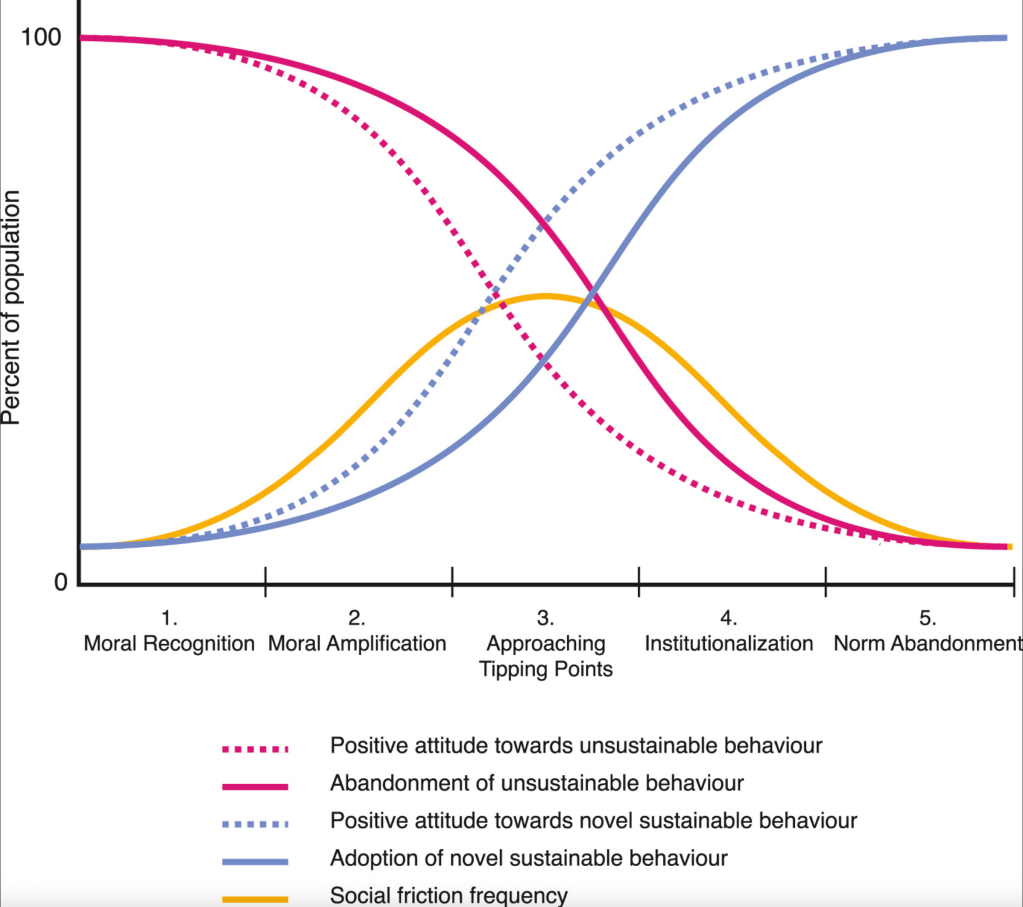
At later stages in the diffusion process (i.e., institutionalisation and norm abandonment), the novel behaviour can gain institutional support (e.g., government policies to promote plant-based products) and the dominant social norms may even switch so that ordering a meat-based meal is seen as the controversial choice, or as a behaviour that is specific to certain minority groups.
What distinguishes your Dynamic Model of Moralised Social Change from traditional models of behavioural change or diffusion of innovation, especially in the context of sustainability?
Our approach attempts to integrate various insights from different disciplines into a broad theoretical model. In psychology, most traditional models of behaviour change focus on change within individuals, usually within the timeframe of a single experiment or cross-sectional survey, rather than longer-term changes within individuals or changes involving entire groups or populations. Conversely, most sociological models of social change, such as diffusion of innovations theory (Rogers, 1962) and more recent work on network dynamics and complex contagion (Centola, 2018), focus on network characteristics or structural factors, rather than individuals and internal psychological processes. We aim to contribute a novel perspective to these approaches by theorising how internal processes of moralisation may impact on social interactions and the longer-term diffusion of sustainable behaviours across entire populations.
Furthermore, we began from a starting point of grassroots, bottom-up social change and considered how this might interact organically with top-down political, legal and market-related changes in the social environment. This is a bit different to most research on social norm interventions, which often start from a top-down perspective of how the government might implement such interventions.
You describe moralisation as a “double-edged sword” – that can both inhibit and speed up social change. What do you mean by this?
Moralisation (i.e., connecting a moral value to a behaviour) can be a powerful motivator that compels people to take action – by both changing their own behaviour, and by trying to convince others to change their behaviour. However, moralisation can also contribute to social conflict. For instance, when we are confronted by someone who claims to be acting more morally than we are, rather than feeling inspired to change, we can often feel threatened. This can lead us to derogate the source of the message (known as “do-gooder derogation“; Minson & Monin, 2012).
My co-authors and I argue that, at a collective level, these processes of moralisation and social conflict are likely to delay social tipping points, because they disrupt the communication channels required for the diffusion of ideas and behaviours. However, once a tipping point is reached, moralisation can speed up social change – in part because individuals who have moralised the issue will be motivated to enforce new social norms. This social change is also likely to be more enduring than change that is not driven by moral concerns.
In the context of plant-forward diets, how can advocates communicate issues of morality in a way that does not slow change?
Individual adopters often experience a dilemma between wanting to communicate their moral motives with the hope of persuading others to follow suit, and wanting to avoid being viewed negatively or socially excluded for judging others.
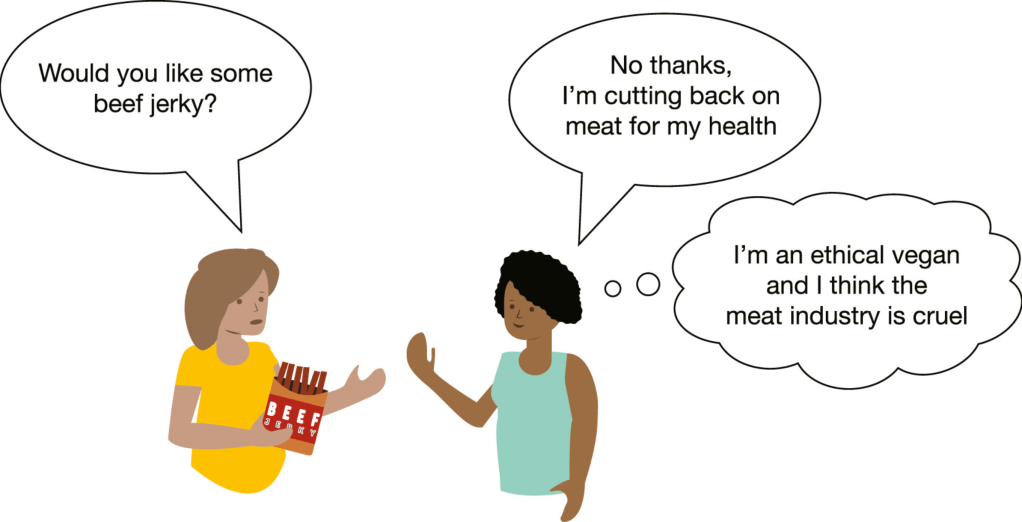
More research is needed on how advocates can effectively navigate such conversations. Nonetheless, a few initial ideas spring to mind:
First, our model suggests that the stage of the diffusion process may affect whether individual adopters can safely reveal their moral motives. Specifically, it may become easier to discuss moral motives once there is widespread recognition of the moral nature of the behaviour. This means that, potentially, adopters could consider adapting their strategy to where they think others are in this process. For example, downplaying moral motives to avoid being ostracised might be a necessary strategy in the early stages of diffusion. However, revealing one’s moral motives may be important for breaking the “spiral of silence” in later phases. Interestingly, research suggests we are often poor judges of the speed of cultural change, so we might currently be underestimating how open others are to hearing moral motives – if presented in a gentle way.
We are often poor judges of the speed of cultural change, so we might currently be underestimating how open others are to hearing moral motives – if presented in a gentle way.
Second, it might also help to keep in mind that, as an individual, you are just one part of a collective effort, and that other actors (e.g., non-profits) can also help raise awareness of the moral implications of behaviours.
Lastly, it might help to consider some insights from the research on complex contagion; for example, if you can aim to attend social events with at least two or three other plant-based friends, that might help contribute to the multiple exposures needed for others to consider changing their behaviour.
In the paper, you outline a couple of recommendations for moral innovators to correct misperceptions about how much social support there is for change. This includes that innovators “maintain their perceived status as part of the group” and “share their opinions publicly”. What might this look in practice?
Although being part of a community of moral innovators can be helpful for providing one another social support, in order to be able to influence wider social norms, it is also important to stay connected to different communities. People are motivated to pay attention to changing social norms in their environment, but not if they believe that the norm is something limited to a particular group (e.g., the practices of a specific religious group). So, in the context of plant-based diets, vegans need to be seen as legitimate members of common social groups (e.g., fathers, footballers, teachers, etc.) in order to be able to contribute to shifting social norms in those contexts.
To be able to influence wider social norms, it is important to stay connected to different communities.
Related to this, some of my research has looked at the role of a vegan social identity in helping vegans to maintain their behaviours and attempt to influence others. Having a vegan social identity may be particularly important in the early stages of diffusion, to help identify like-minded individuals and to offer and receive social support. However, as mainstream interest in plant-forward eating grows, the social identity of vegans may need to become less central or a new form of the identity may need to be developed.
What would you say to those who hold the pessimistic view that individual behaviour change is unlikely to lead to widespread social change?
I agree that promoting individual behaviour change on its own is unlikely to lead to widespread social change, but I think it is an important element of the change process. As individuals, changing our everyday behaviours (e.g., by adopting a plant-based diet) may not only have a concrete impact but may also influence other people and shape perceived social norms, leading to ripple effects across society (see below).

My view is that when it comes to addressing the harmful impacts of human behaviours, bottom-up approaches like these that aim to shift everyday social norms and practices will be needed alongside more stringent top-down policies, in order to make the alternative behaviour seem more feasible, normal and attractive. If we attempt to enact top-down policies without also incorporating bottom-up approaches to shifting widespread social norms and practices, I believe there is likely to be greater resistance and polarisation in response to such policies.
Do you think we’re currently seeing signs that plant-forward diets are approaching a tipping point? What are the key signals to watch for?
The notion of social tipping points has recently become quite popular with policymakers and researchers because it sounds like a simple and effective way to promote rapid social change – which is what we need in order to address the climate crisis and other urgent issues such as the scale of animal suffering in industrial farming systems. However, in reality, it can take years or decades of activists’ efforts to get to a point where social tipping points may occur. I think there is reason to believe that some countries may be approaching social tipping points around plant-based diets, though.
Here in Aotearoa, I think we’re still a way off, but in other countries (e.g., Denmark, the Netherlands), there has been much more visible shifts in that direction. I would love to do some cross-national research to try to figure out where different countries are at in our diffusion model. This is also an interesting time because there are some claims of the plant-based or vegan “bubble” bursting (this is also known as the “trough of disillusionment” in the Gartner Hype Cycle). I am curious to see which elements of change will be able to make it through this period.
What do you hope activists, researchers, or policymakers take away from your model that might change how they approach plant-forward dietary transitions?
There are a few things I might suggest:
First, apparent backlash and social conflict is not necessarily a sign that a cause is doomed to fail. Instead, it can signal that the cause is related to something that most people care deeply about like animal welfare.
Second, moralisation can be an important part of the process of social change. However, it is also important to create the conditions in which people can start to see their behaviour as a choice. For example, by having attractive, low-cost plant-based alternatives widely available, this makes choosing the plant-based option easier, seem normal, and not in conflict with various social identities.
Finally, I’d recommend staying optimistic and sharing your experiences, because social diffusion happens when people share their views rather than self-silence, and social diffusion happens more often than you think!
If you would like to get in touch with Maddie, they can be reached via email: maddie.judge@otago.ac.nz
Coverphoto by Michiel Annaert
Blog and interview questions by Jared Piazza and Rebecca Gregson



An Interview with Fatma Sueda Evirgen
Sueda talks with us about her organisation, Animetrics, and shares recent findings on Turkish consumers’ perceptions of what farming practices are permitted under halal food production. The results highlight a “powerful entry point” for animal advocacy.
Sueda, could you briefly introduce yourself.

Hi, I’m Sueda (she/her). I’m a behavioural and experimental economist and a co-founder of Animetrics. I will soon be joining the Berlin Social Science Center (WZB) as a postdoctoral researcher on a project focusing on promoting prosocial behaviour. I recently completed my PhD in Economics at Tilburg University in the Netherlands, where my research focused on identifying biases—such as those based on ethnicity—and studying the causal effects of institutional structures on social and economic outcomes. Social justice has always been at the heart of both my academic work and personal commitments. In recent years, this commitment has expanded into advocacy for non-human animals. Together with my then-flatmate (now co-founder) Gülbike Mirzaoğlu, we started Animetrics to help bring evidence-based and accessible research to the animal advocacy movement. Alongside my academic work, I engage in cross-movement work, by organising talks that highlight the common ground between animal advocacy and other social justice movements to encourage collaboration and exchange of strategies.
You are one of the co-founders of Animetrics. Could you briefly introduce your organisation. What makes Animetrics unique?
Animetrics is a research and capacity-building organisation dedicated to supporting advocates with evidence-based insights and practical tools. We are a team of four: myself, my co-founder Gülbike Mirzaoğlu, and our long-term volunteers Megan Jamer and Sophie Weiner. Gülbike holds a PhD in Economics and specialises in social contagion and experimental economics. She also gives lectures on animal rights/welfare and environmental issues—having delivered over 25 so far, and counting—in collaboration with the Middle East Vegan Society. Megan is our fundraising advisor and has been helping us shape our fundraising efforts with a great mix of strategic insight and practical experience. Sophie is our creative design and communications volunteer, helping us make our research more accessible and engaging for a wider audience.
At Animetrics, we prioritise research projects based on the needs of advocates. This means working across a wide range of topics. At the moment, our primary focus is on understanding attitudes toward farmed animals within Muslim communities and the MENA region. We’re especially interested in the regional, cultural, and religious dynamics that shape how people engage with farmed animal issues.
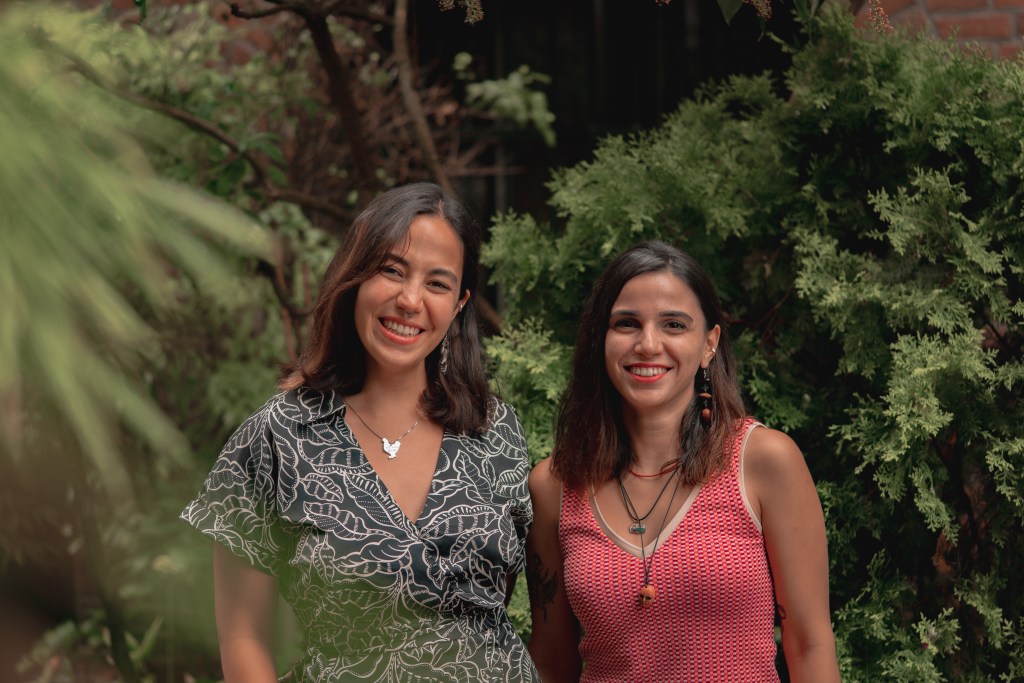
Gülbike and I founded Animetrics after long conversations about how we could best contribute to the movement. In those discussions, we identified several critical gaps: while excellent research exists, very little is conducted in the Global South. Economists are largely underrepresented in this space, and, too often, research doesn’t reach advocates or address their most immediate needs. These gaps matter, because the advocacy movement operates with extremely limited resources, and we can’t afford to make strategic decisions without context-specific evidence. We use our expertise to fill these gaps.
What makes us unique is our integrated approach. We co-design research projects with advocates and support them in applying findings to real-world strategies. Our work includes original and collaborative studies, and free capacity-building services like research support and training for advocates and organisations on how to generate and use evidence effectively.
Your team recently published a report of research you did with Muslim consumers in Turkey, exploring their perceptions of what is “halal” when it comes to animal welfare practices. What inspired this research, and what were some of the key findings?
This research was inspired by personal experience. Through conversations in our Muslim families and communities, Gülbike and I often encountered the assumption that halal food automatically ensures high animal welfare standards. That is unfortunately not the case. Advocates working with Muslim populations echoed this perception and pointed out a lack of data on how widespread these beliefs are or how people might respond if they were corrected. That sparked our study.
We surveyed around 800 Muslim adults in Turkey, where halal is the norm for food production, to explore two questions:
- How much do consumers know about whether common industrial farming practices are allowed under halal rules?
- And how might learning the truth affect their willingness to buy these products or consider plant-based alternatives?

Participants were presented with six common practices linked to animal welfare concerns: chick culling, debeaking, cow and calf separation, lack of required long-term medical care, absence of protection for animals’ natural lifespans, and inadequate space for chickens to exhibit natural behaviours. They were asked whether they believed each practice was permitted under halal food production. If they answered incorrectly, we shared the correct information and then asked how it might influence their purchasing decisions and openness to plant-based options.
The results showed major knowledge gaps: for each practice, over half of our participants either believed it was forbidden or were unsure. Once informed, many said they’d be less likely to buy products involving those practices, and a smaller but meaningful share said they would consider plant-based alternatives. Responses varied across the sample. Certain groups—such as women, older adults, individuals who place high importance on halal, and those who view animal welfare as central to halal—were more likely to respond strongly to the new information.
The results showed major knowledge gaps: for each practice, over half of our participants either believed it was forbidden or were unsure.

What were some of the practices that consumers thought were forbidden under halal food production rules, but were in fact permitted?
The most widespread incorrect belief was the belief that long-term medical care is legally required in halal production systems. When presented with the statement, “In facilities where halal products are made, it is legally mandatory for animals with permanent injuries or who are no longer productive to receive long-term care and medical treatment,” nearly half (47.2%) of respondents incorrectly believed this is true. In reality, no such legal requirement exists within halal food production in Turkey.
A similar proportion (46.8%) also believed that halal standards require chickens to be given enough space to express natural behaviours—another incorrect assumption. Many participants also wrongly believed that the other farming practices were prohibited. In all cases, at least one in four participants held incorrect beliefs about what halal food production allows.
Your team observed that consumers with gaps in their understanding of what is halal showed increased intentions towards plant-based eating. What do you think explains their openness to shift their diet in response to learning that their assumptions were mistaken?
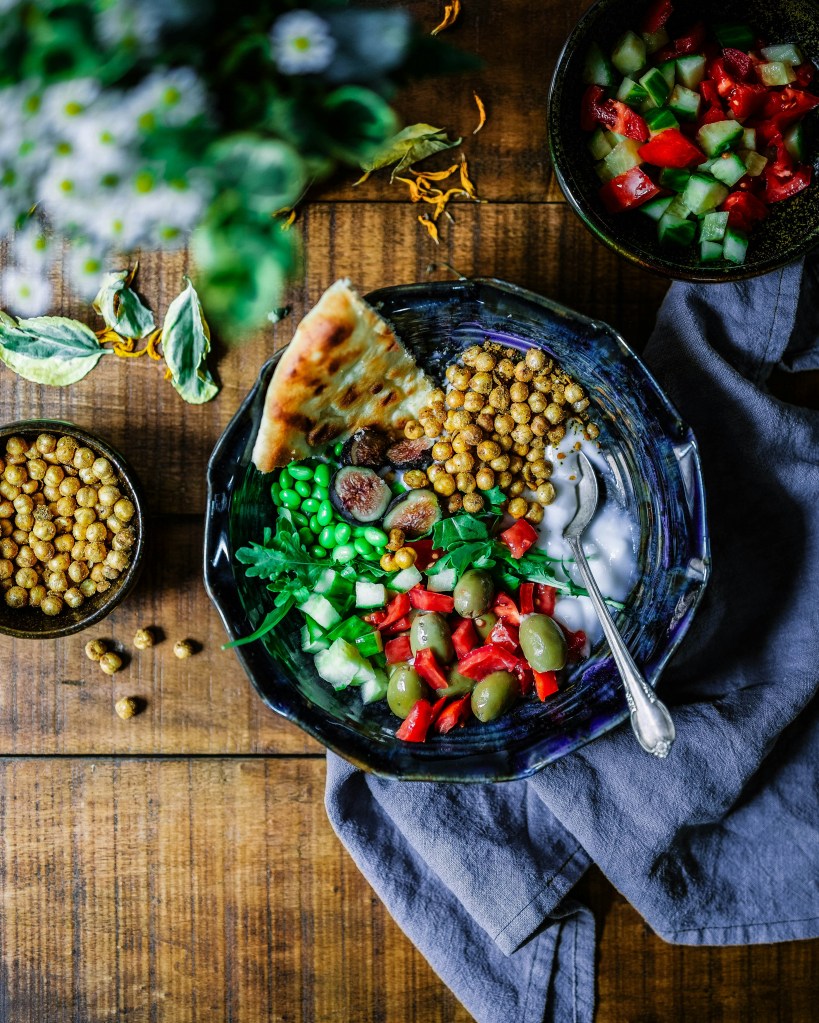
In our study, 70% of participants stated that they believe animal welfare is essential to halal. This suggests that welfare considerations may play a central role in how consumers evaluate the acceptability of animal products. When participants were presented with accurate information showing that certain industrial farming practices are permitted under halal standards, they may have experienced a sense of mismatch between what they believe halal should represent and what the industry currently allows. This may have triggered cognitive dissonance: a recognition that their beliefs about halal food conflicted with the actual conditions under which it is produced.
In this context, plant-based alternatives may have appeared more consistent with their ethical and religious values. This interpretation is supported by several patterns in the data. Participants who viewed animal welfare as central to halal were more likely to express increased intentions toward plant-based options, possibly because the new information directly challenged their beliefs. Similarly, those who had incorrectly believed a practice was prohibited under halal rules showed stronger shifts than those who were merely unsure, suggesting that this conflict shaped how participants responded. Another important insight is that beliefs about religious compatibility may shape openness to dietary change, as participants who saw plant-based diets as compatible with Islam were more likely to consider such alternatives.
How might Muslim consumers’ beliefs and commitments to eating halal be a platform for advocating for more plant-forward diets?
For many Muslim consumers, halal is not just a set of dietary rules. It’s closely tied to values such as compassion, stewardship, and avoiding unnecessary harm. This is reflected in the fact that a large share of participants in our study identified animal welfare as a core aspect of what halal means to them. This connection offers a powerful entry point for advocacy.
For many Muslim consumer, halal is not just a set of dietary rules. It’s closely tied to values such as compassion, stewardship, and avoiding unnecessary harm.
By highlighting where current production practices fall short of these values and showing how plant-based foods can meet halal requirements while avoiding animal welfare concerns, advocates can open constructive, values-aligned conversations. Framing plant-forward diets not only as compatible with Islamic principles but as an expression of them, may make these options more compelling. This is especially true when messages are tailored to resonate with cultural, religious, and ethical priorities within the communities being engaged.
See here to read the full report
For more information about Animetrics, visit their website here
Cover image by Tolis Dianellos
Interview and blog by Jared Piazza
For this week’s PHAIR blog, we are continuing our theme of dairy consumption – looking at psychological research that moves beyond the usual focus on meat consumption. I had a chat with Chelsea Davies and Samantha Stanley about their recent paper, “Untangling the dairy paradox: How vegetarians experience and navigate the cognitive dissonance aroused by their dairy consumption,” published in the journal Appetite. The paper explores whether vegetarians experience cognitive dissonance about consuming dairy products and, if so, what are the psychological consequences of these conflictual feelings – for example, do vegetarians rationalise their dairy consumption much like omnivores rationalise their meat consumption? Here’s what they had to say.

Chelsea and Samantha, could you each briefly introduce yourself?
My name is Chelsea Davies, and I am a Clinical Psychology Masters student at the University of Canberra in Australia. I first completed my honours degree in psychology at The Australian National University where I worked with Dr Samantha Stanley. Here, using a social psychological framework, we channelled our mutual interest in the negative impacts of the meat and dairy industry to guide our research. Specifically, we noticed there wasn’t much research on the psychology and rationalisation of dairy consumption, despite the theoretical and practical parallels to meat consumption (e.g., the impact on personal health, the animal, and the environment). I hope to continue exploring this field of social-environmental psychological research by integrating my clinical-based interests in the future.

I’m Dr Samantha Stanley and I’m a research fellow at the Institute for Climate Risk & Response at the University of New South Wales in Australia. In my work, I apply research and theory from social psychology to try to better understand the way that people think, feel, and act, in relation to climate change. My current role is funded by an Australian Research Council Early Career Fellowship and focuses on public attitudes towards policies that would support those most affected by climate change (e.g., resettlement for those at risk of displacement, compensation for Loss & Damage). I also have a strong personal interest in animal welfare and caring for the environment, which has shaped my research on the psychology of meat consumption and abstention.
Your new paper, “Untangling the dairy paradox”, extends work on the meat paradox to dairy consumption. Could you briefly summarise what the research was about and what you found.
In this paper, we aimed to test whether vegetarians experience cognitive dissonance about their dairy consumption. We had vegetarian participants complete an online survey about their motivations for being vegetarian and tell us about their recent dairy consumption. Then, we had half of them read about the ways that the dairy industry is harmful to animals, the environment, and human health. We found that those who read this message felt more guilty about their dairy consumption relative to those who did not read it, suggesting it induced cognitive dissonance. We wanted to know what vegetarians did with this cognitive dissonance – for example, would they ‘explain away’ or rationalise their dairy consumption as Natural, Necessary, Normal, and Nice (as found in meat-based research)? Interestingly, we found that, if anything, vegetarians were less likely to justify their dairy consumption, and more likely to contemplate reducing how much dairy they eat.
We found that, if anything, vegetarians were less likely to justify their dairy consumption, and more likely to contemplate reducing how much dairy they eat.
Work that has examined common arguments that meat eaters provide to defend meat consumption relate to four “N” categories: Necessary, Normal, Natural, and Nice. Your research suggests a fifth “N” applies to dairy justifications. What is that fifth “N” and how is it used to justify dairy consumption?

Chelsea had read widely on the 4Ns that justify meat consumption (and we are big fans of Jared’s work on this!). She found a Masters thesis by Sarah Kunze that uncovered a fifth “N”, Neglectable, in the context of dairy consumption. In this research, Sarah interviewed people in focus groups to hear about their justifications for consuming dairy. In doing so, she found some similar justifications that Jared and his colleagues found in relation to meat (e.g., that dairy is Normal to eat). But she also found a new category of justifications that seemed unique to dairy consumption. This fifth “N” (Neglectable) is used to justify dairy consumption by framing it as: (a) innocuous compared to meat (e.g., “Eating dairy products is better than eating other animal products”) and (b) so embedded in the food system that it’s unrealistic for people to completely cut it out (e.g., “Dairy products are too hard to avoid”). These examples are items in the scale we developed to measure the fifth “N”.
One surprising finding was that vegetarians who read about the environmental, animal welfare, and health issues linked to dairy defended dairy consumption on certain dimensions (e.g., its Naturalness) less than those who did not read about these issues. This is the opposite of what should occur if vegetarians were experiencing dissonance about their dairy consumption and were motivated to defend it. What does this result suggest about how vegetarians respond to potentially dissonance-arousing information about dairy?
In the cognitive dissonance literature, there are different avenues people can take to alleviate dissonance. Behaviour change isn’t a common route, especially for enjoyable behaviours like eating. A more common route is to justify one’s current behaviour, such as saying a food is too nice to give up (have you ever heard someone say they can’t go vegan because they love cheese too much?). Our results suggest that vegetarians in our sample did not try to alleviate cognitive dissonance by justifying their dairy consumption. Instead, they were more likely to acknowledge the problems with eating dairy by rating dairy consumption as less Natural and less Neglectable, and rating cows as having greater agency, when experiencing guilt about their consumption. Social identity theory offers one explanation for our unexpected finding. It is possible that when vegetarians in our sample read that dairy is equally as harmful to the environment, animals, and their bodies as meat, this threatened their sense of self. Then, to protect their identity as a value-conscious eater, they did not try to justify or defend their choice to eat dairy, and, instead, stated that they intended to reduce how much dairy they consume. Unfortunately, we didn’t have funds for a follow-up study to measure actual behaviour change, so we have no way to know if they followed through on this intention.
As a vegan, I find it easier to justify consuming dairy than meat. Indeed, it somehow “feels” less bad to consume an entire cheese pizza than a single pepperoni on a cheese pizza, even though I know that’s not true for the animals involved. Does your research into the dairy paradox help explain these irrational feelings I have about consuming dairy vs. meat?
This sounds like textbook “Neglectable” rationalising! We would hypothesise that it’s even easier to justify more ‘invisible’ ingredients too, like milk powder hidden in otherwise plant-based foods. We didn’t ask participants about their meat consumption or attitudes towards eating meat, but there are a few findings that are relevant here. Our cognitive dissonance induction reduced perceptions of dairy as Neglectable, which was associated with retaining higher levels of cognitive dissonance over time. In other words, seeing dairy as more Neglectable could help feelings of guilt pass. Perceiving dairy as a Neglectable food item could give people some protection from these guilty feelings when they hear about the negative aspects of the dairy industry. We also found a positive correlation between dairy consumption and Neglectable scores. This suggests that people who eat more dairy products also tend to see this behaviour as more Neglectable, so perhaps seeing dairy in this way helps vegetarians to keep eating cheese pizzas.
Cognitive dissonance is a powerful emotional state that can strengthen or change a behaviour.
What would you like vegan and animal advocates to take away from your research, and apply to their advocacy work?
One of the reasons we think our experiment led to behaviour change intentions rather than strengthening justifications for continuing to eat dairy is that we had participants commit to their vegetarian values (by telling us why they don’t eat meat) and report on their recent dairy consumption. This way, our experimental manipulation made the disconnect between their stated values and their behaviour very clear. Vegan and animal advocates could apply this in a few ways. The first is to consider tailoring their advocacy efforts to their audience. Vegetarians might respond differently to appeals to reduce their dairy consumption than meat eaters would to the same messaging. The second is to consider leveraging the reasons vegetarians give for abstaining from meat when explaining the problems with the dairy industry. For example, someone who has committed to abstaining from beef because they care deeply about cows might be more persuaded to change their dairy consumption if they are walked through the ways the dairy industry harms cows. Cognitive dissonance is a powerful emotional state that can strengthen or change a behaviour. Our research points to the importance of studying this process specifically within vegetarian samples and for dairy consumption, so that appeals can be tailored to the audience and the behaviour we’re hoping to change.
If you would like to get in touch with Chelsea and Samantha about their research: You can reach Chelsea by email at davies.a.chelsea@gmail.com and Samantha at s.stanley@unsw.edu.au
Interview and blog post by Jared Piazza
Cover photo by Hans Ripa
If you would like to read more about the ‘Dairy Paradox’ and the research discussed in this interview, please check out:
Davies, C. A., & Stanley, S. K. (2024). Untangling the dairy paradox: How vegetarians experience and navigate the cognitive dissonance aroused by their dairy consumption. Appetite, 203, 107692. https://doi.org/10.1016/j.appet.2024.107692

We sit down with Dr. Sam Finnerty regarding his research into the “Scientist’s Dilemma in Climate Activism” – how scientists manage the potential identity tensions that arise from their involvement in climate activism and advocacy.
Sam, could you briefly introduce yourself?

My name is Samuel Finnerty. I am a Wellcome Trust funded Senior Research Associate at Lancaster University. My academic journey began in social and cultural anthropology with a degree and master’s at Maynooth University, followed by a master’s in cognitive science at University College Dublin. I then undertook a PhD in social psychology at Lancaster University under the supervision of Mark Levine and Jared Piazza. My research initially explored the intersection of scientists’ identities and environmental activism but has since extended to examining how higher education institutions themselves are responding to the climate and ecological crises. Beyond academia, I’m engaged in climate action, continually reflecting on the roles scientists and institutions play during this critical moment.
You recently investigated the topic of the scientist’s dilemma in climate activism. What is ‘the scientist’s dilemma’, and how does it relate to scientists’ involvement in activism?
The scientist’s dilemma arises from the tension between traditional scientific norms—objectivity, impartiality—and the moral urgency of the climate crisis. Scientists are essential to understanding and tackling the crisis, yet many struggle with balancing professional expectations and public action. On the one hand, scientists are expected to maintain their credibility as neutral observers; on the other, some feel a moral responsibility to ensure their findings lead to societal change. This dilemma often forces scientists to navigate competing imperatives: should they remain distant and neutral, or actively advocate for solutions based on their expertise?
In other work, you found that scientists who see their scientist and activist identities as compatible engage more in activism. Can you tell us a little about that work and what you found?
Our Nature Communications Earth and Environment paper demonstrated that the content of a scientist’s identity—how they perceive the relationship between science and activism—significantly predicted their engagement in activism. Scientists who viewed advocacy as compatible with scientific objectivity and saw environmental stewardship as a moral duty were more likely to participate in action. This same group of scientists was also less inclined to endorse techno-solutionism, a perspective that emphasises future technological solutions, while downplaying the need for systemic and political change. These findings underscore the importance of “inter-identity fit”, as scientists who align their values with activism are more willing to engage meaningfully in addressing the climate crisis.

Does your work suggest that certain individuals are more likely to struggle with the scientist’s dilemma than others?
Yes, certain groups of scientists are more likely to experience this dilemma. The traditional conception of scientists as impartial and apolitical—rooted in scientific norms of objectivity and detachment—can deter engagement for those who strongly adhere to these values. Such conceptions are often reinforced through professional norms, institutional cultures, and concerns about credibility or polarisation. However, many scientists challenge this traditional model, arguing that remaining “neutral” in the face of the climate crisis is morally and intellectually untenable. These tensions reflect diverse scientist identity constructions that can either hinder or enable action.
In your recent paper, you interviewed scientists from several countries and found that scientists confront and wrestle with the scientist’s dilemma using two different repertoires: By “reconceptualising scientist identity” and “reframing the work that scientists do”. Can you briefly explain what those repertoires involve?
In our paper, we found that scientists manage the “scientist’s dilemma” through two broad approaches. First, some challenge or reinterpret traditional views of what it means to be a scientist, aligning activism with their professional identity. For example, they may emphasise a moral duty to act, arguing that expertise creates an ethical responsibility to engage, or frame activism as a logical and objective response to scientific evidence – an extension of their role rather than a departure from it. Others reject the notion of “pure objectivity” altogether, suggesting that acknowledging personal values can lead to greater transparency and stronger scientific integrity.

For those less comfortable with activism, the focus shifts to their professional roles. They channel their efforts into research, teaching, and public communication, reframing these activities as deliberate forms of advocacy. Some carefully distinguish their engagement as “advocacy” rather than “activism”, reflecting concerns about credibility or professional norms while still contributing to change.
Ultimately, these different approaches illustrate the creative and strategic ways scientists resolve the dilemma, allowing them to engage with the climate crisis in ways that align with both their values and their professional identities.
Do you have a favourite quote from your interviews with scientists? Why is it your favourite?
One of my favourite quotes comes from an ecologist who captured the urgency and unique responsibility of scientists:
“I’m not just any scientist, I’m an earth scientist. I specifically know about what’s happening to the planet and […] my knowledge compels me to act […] because […] I worry that there might be people out there thinking “well, if it was really that bad then the scientists would be freaking out.” So, I think it’s important that we act like it’s an emergency […] it’s important that scientists are visibly freaking out.”
I find this quote particularly compelling because it highlights why many scientists feel driven to act publicly. If scientists appear calm and detached, the public may fail to grasp the scale and urgency of the crisis. For this ecologist, visible action is not just about raising awareness—it’s about embodying the seriousness of the situation and demonstrating that the climate crisis demands an immediate, collective response.
Your most recent work explored how scientists talk about the future in the context of the climate crisis. What did you find, and why does it matter?
We found that scientists talk about the future in very different ways. Some insist that societal collapse is inevitable, which often reflects a deep frustration about the scale of the crisis. Others see collapse as delay-able, but only if we act urgently. Then, there are those who focus on transformation, framing the future as something that can still be reshaped through human action.
What struck me was how these ways of talking about the future influence not just how scientists see their role, but also the kinds of solutions they argue for—whether it’s prepping for societal collapse, engaging in civil disobedience or collective action, or investing in technological innovation. Scientists aren’t just producing knowledge; they’re shaping how society imagines what is possible, which can make a real difference in how people think about and respond to the climate crisis.
You are a scientist yourself (a psychologist), and an activist. How has this informed the work that you are doing and your approach?

Being both a social psychologist and an activist provides me with a dual perspective. As a psychologist, I study how identities, norms, and values shape behaviour—key factors in understanding scientists’ engagement with activism. As an ethnographer actively involved in climate action, I’ve experienced firsthand the tensions I research, such as balancing professional credibility with moral responsibility. This combination allows me to approach the work with both critical insight and empathy, understanding how scientists navigate these challenges in their own lives.
What are some take-aways from your work that you would like all scientists on the fence about activism to know?
Activism doesn’t have to mean civil disobedience or public protest—there are many ways for scientists to advocate for change. This could involve reframing your research to address pressing environmental challenges, using your expertise to educate and engage the public, or influencing policy through outreach and communication. Importantly, activism and scientific objectivity are not mutually exclusive. Many scientists see advocacy as a natural extension of their role: using knowledge to inform action is part of what it means to be a scientist.
Finally, the urgency of the climate crisis prompts reflection. Choosing to remain silent or inactive is, in itself, a decision with consequences. For many scientists, advocacy and activism provides a way to reconcile their expertise with their sense of moral responsibility, ensuring their work contributes meaningfully to addressing the climate emergency.
If you would like to get in touch with Sam, he can be reached by email at s.finnerty [at] lancaster.ac.uk
You can also follow Sam on social media here: https://bsky.app/profile/samuelfinnerty.bsky.social
Interview questions and blog by Jared Piazza
Cover photo credit by: Andrea Domeniconi/Alamy Live News

Rebecca Gregson sits down with Julie Hesselberg to discuss her new research on how families manage dietary changes when teenage members adopt more plant-rich diets.
Julie, could you briefly introduce yourself?

My name is Julie Hesselberg. I am a PhD Candidate at MAPP Centre, Department of Management, Aarhus University. I have a background in economics and sociology. My research interests cover consumer behaviour and consumer culture.
You have a new paper out, co-authored with Susanne Pedersen and Alice Grønhøj, “Meat reduction meets family reality: Negotiating sustainable diets in households with adolescents”. What inspired this research and what were some of the key findings?
The research is inspired by the basic fact that no consumer lives on an island. And yet, in consumer research, consumers tend to be seen as individual units making decisions for themselves. Consumer research, as I see it, often fails to address the challenge of sustainability and identify real-world, family-oriented solutions. In this research, we focus on family decision making as it relates to meat consumption. By drawing on qualitative approaches we provide some key insights regarding how such decisions play out in everyday life.
In your work, you refer to the “fragile family meal equilibrium”. Can you explain what you mean by this?
“Equilibrium” refers to a way of eating where all family members are somewhat happy with the chosen food and, most importantly, can enjoy a shared meal. So, when individual members have different preferences, as they often do, equilibrium refers to the point where such preferences ‘intersect’. Family members seem to be striving for the point of equilibrium as a way of staying cohesive and maintaining ‘family’. What constitutes this point, in terms of concrete meal choices, will differ among families. However, new food preferences within a family, such as more plant-rich eating, constitute threats to the achieved equilibrium and harmony they have established.
Is it fair to say that the desire to uphold harmony and avoid conflict in families serves both as a driver and a barrier to reducing meat consumption. How does your research show this?

Yes, it is fair to say that the desire to uphold harmony in families serves as both a driver and barrier to reducing meat consumption. In our research, we see that in some families, green food preferences are toned down or even abandoned as a way of maintaining the “equilibrium”. In other families, the new, green preferences can be incorporated in everyday eating, as a way to maintain the equilibrium. This latter outcome is more likely to be the case when family members support the new preferences.
“Conflict is symptomatic of change”. Do you see this statement applying to the way households negotiate sustainable diets? How so?
No, I do not see conflict as an integral part of how households negotiate plant-forward dietary practices. Quit the opposite. No doubt conflicts are found in families, but these conflicts do not appear to be in any way dominant in the families we studied. Instead, we found that both parents and adolescents put considerable effort into avoiding conflict. This can be contrasted with studies of how families negotiate issues such as junk-food consumption and the “pester power” children can exert within these power struggles.
In your work, did you find any evidence of a “contagion effect” (e.g., one family member inspiring the family system to establish new eating practices)? If so, how did this unfold and what do you think were the facilitating factors?
Yes, we did. There were several facilitating factors. One of them, which we provide evidence for, is a desire to uphold harmony. For instance, parents will often be more than happy to eat meat-reduced meals if their children are involved and driving the change – family cohesion is often more important than eating meat. Also, change is facilitated better when more family members support the change. Lastly, our research indicates that time can be an important factor. Suggestions for new meals can sometimes be discarded due to limited time available for learning and cooking new meals in everyday life.
Parents will often be more than happy to eat meat-reduced meals if their children are involved and driving the change.
You highlight that there is some disagreement over the role that children play in family food-decisions. What is the disagreement about, and how does your research add to this commentary?

In the literature, there has been disagreement about how much control parents exert over children’s eating (and vice versa) and whether these decisions are still fundamentally hierarchical or more collaborative. Our research contributes empirical insights to the dynamics of family negotiation by showing that meal choices for dinner is often a product of negotiations and compromises by family members, parents and children alike.
You find evidence that the transition toward more sustainable food consumption practices within the household is likely to be characterised by “gendered work”. What do you mean by this?
In the population we sampled from (families in Denmark), shopping, cooking and cleaning are often shared tasks, done by mothers and fathers alike. But meal planning, and thus the planning of new green meals that will satisfy all members of the household, tend to fall on the shoulders of mothers. This can be a barrier to change since the job is challenging for one person alone to accomplish – it is difficult, time-consuming, and requires the input of others for success.
What would you like actors working on the transition toward a more sustainable food system to take away from your research?
I would like such actors to recognise that the lack of household change can be due to relational family dynamics, and is not solely due to consumer unwillingness, lack of knowledge or cooking competences, or perceptions of financial burden. Moreover, choices regarding meat reduction can be a source of family cohesion, attention, and expressions of love. Therefore, we support the idea that plant-rich eating in families can be a good first step towards society-wide food-systems change.
Interview and blog post by Rebecca Gregson. Editorial assistance by Jared Piazza.

Cover photo by Kelsey Chance

An interview with Sophie Cameron, Matti Wilks, and Bastian Jaeger about their open-access PHAIR article, ‘Reduce by how much?‘, which considers what might be the optimal request we can make to consumers to hasten meat reduction.
Sophie, Matti and Bastian, could you each briefly introduce yourselves?
I’m Sophie Cameron, I completed my PhD and post-doctoral fellowship in moral developmental psychology at the University of Queensland. My research focuses on when children develop an understanding of moral character, and how it affects both their own behaviour and their evaluation of others’ behaviour. I am passionate about animal welfare and fascinated by the complicated relationship that human societies have with animals and meat.

I’m Matti Wilks, I’m a lecturer (assistant professor) in the Department of Psychology at the University of Edinburgh. I completed my PhD at the University of Queensland and was a postdoc at Princeton and Yale Universities. My research draws from social and developmental approaches to understand our moral motivations and actions. I am most fascinated by our moral circles and the factors that shape who we do and do not grant moral status to. In other research, I also examine attitudes towards cultured meat, as well as understanding the intersection between AI and psychology.

I’m Bastian Jaeger, I’m an assistant professor in the Department of Social Psychology at Tilburg University in the Netherlands. My background is in social cognition and behavioural economics and most of my research in the past focused on questions around first impressions – how we form them, how accurate they are, and how they influence decision-making. Once I had a more secure position in academia, I decided to look for a research topic where I felt that I could have more impact. Now, most of my research focuses on the intersection between animal welfare, moral psychology, and behaviour change. I am interested in applied questions, such as how to reduce meat consumption, and more foundational questions, such as how people think about the moral standing of non-human animals.
You recently investigated the topic of what might be the optimal request when approaching people about reducing their meat consumption. What inspired this research and what were some of the key findings?
There’s a long-standing debate about what is the most effective strategy for sustained behaviour change. Should we aim for incremental improvements that are easier to achieve, such as advocating for small reductions in meat consumption (e.g., Meatless Mondays) or minor changes in animal welfare standards? Or should we focus on a more demanding message, advocating for veganism or the abolition of factory farms? There are good arguments on both sides. Small changes might lead to complacency and prevent more important changes in the future, but they might also be more practical and feasible for people, slowly transforming public opinion and actually facilitating future changes. Ultimately, these are hypotheses that we should test – and that’s what we wanted to tackle in our paper.
In your recent PHAIR paper, you point out that asking people to completely eliminate meat from their diets may not be optimal to reduce overall meat consumption in the world. Why might this be the case?
Our paper is based on a simple, but also important observation. If the goal is to reduce how much meat is consumed overall, then we need to consider how many people consume how much meat. Different appeals that aim to reduce meat consumption likely impact these two variables in a different way. An appeal to eliminate meat consumption altogether may be ignored by most people because it is so demanding. But the few people that do comply with it change their consumption by a lot. So we get a lot of reduction, but only a few people taking action. Contrast that with what we might observe with a much less demanding appeal to cut, for example, 10% of meat from your diet. Many more people will probably comply with it because it’s easier to do, but they will only change their consumption by a little. So, we get a small reduction by a lot of people.
It’s not clear which strategy will lead to the greatest reduction in meat consumption overall. This depends entirely on how many people will comply with each appeal. It is also possible that the appeal that is optimal for overall meat reduction lies somewhere in the middle. That’s what we set out to test in our studies.
It’s not clear which strategy will lead to the greatest reduction in meat consumption overall. This depends entirely on how many people will comply with each appeal.
What did your research suggest in the most optimal request?
In our studies, we asked participants whether they would comply with meat reduction appeals that varied in how demanding they were. We first gave some reasons for reducing meat consumption and informed participants about the increasing number of people who are cutting back. Then participants indicated whether they would be open to reducing their meat consumption by different amounts, ranging from 10% all the way to 100%, for the duration of a week. We also asked them how much meat they eat in a typical week. This allowed us to look at two things.

First, as we suspected, we found that the more demanding the appeal was, the fewer participants agreed to cut their meat consumption by that amount (see Figure, left side). For example, in our sample of US participants, almost 90% said they would be open to reducing meat consumption by 10%, whereas only 25% said they would be open to eliminating meat from their diet entirely for a week (note that, although we encouraged participants to follow up on their intended reduction, we did not test whether they actually did, which means that the actual willingness to reduce consumption is likely lower).
More importantly, we could calculate for each requested reduction how much meat consumption was reduced overall. Our results consistently suggested that mid-range requests – asking for a reduction of around 50% – would be most effective in reducing overall meat consumption, more effective than the most demanding appeal (100% reduction) and the least demanding appeal (10% reduction) (see Figure, right side).
Was there much cross-cultural variability around this optimum?
What the optimal request is will ultimately depend on how many people are open to cutting back their meat consumption by various amounts. To get some idea of how much the optimal request varies, we ran the same analysis with four different groups of participants. We recruited a total of 500 people from Australia, the UK, and the United States via the online recruitment platform Prolific. These countries are, of course, relatively similar in terms of culture. Nonetheless, we were still a little surprised by how similar the results looked. In all three countries, mid-range requests around 50% were more effective than both the more demanding and the less demanding requests.
In all three countries, mid-range requests around 50% were more effective than both the more demanding and the less demanding requests.
We also recruited a sample of 200 university students from the Netherlands (participants represented in the above Figure). Overall, they were more open to reducing their meat consumption than our older, more demographically diverse participants from the Anglosphere. But we again saw that mid-range requests (50%-70%) were more effective than the more demanding and the less demanding requests.
There is, of course, more work that needs to be done here to understand how the optimal request varies across populations and which characteristics of a population are most important for determining the optimal request. However, our results suggest that mid-range requests around a 50% reduction may be better than much less or much more demanding requests.
Do you have a sense of whether mid-range requests are a feasible goal for most consumers?
It is safe to say that not every participant in our study who said they would be open to reducing their consumption by about 50% (which is about 60% of our US sample, for example) would actually do it. We also only asked about people’s willingness to reduce for a week. It is difficult to say how many people would try it but then go back to their regular diet after a week of reduction. We know that achieving widespread, sustained behaviour change is difficult, especially for behaviours that have a lot of “pull factors”. If I already eat meat, then continuing to do so is easier and more convenient in many ways.
Personally, we would guess that in the countries we studied, only a minority of people would try out a short-term reduction by about 50% and even fewer would stick to it over a period of months. Ultimately, we need more research that actually measures participants’ meat consumption in response to different requests to figure this out.
How would you like to see animal advocates applying your research?
Because of the many difficulties that we mentioned, it is difficult to make very confident recommendations. We would highlight two general points. A lot of discourse seems to focus on the extreme ends of a continuum: abolitionist approaches pushing for veganism versus small asks that could find broad adoption. Our findings suggest that the request that is most successful in reducing overall consumption may well lie somewhere in the middle of that spectrum.
More importantly, we hope that our paper shows one way in which this important question could be tested empirically. We think it’s important to adopt an evidence-based approach when trying to figure out what works best for the animals in the long run. Unfortunately, we often lack the strong evidence that is needed to address this question with confidence. It’s a difficult task and high-quality evidence often requires studies that are very time- and resource-intensive, for example, measuring participants’ actual meat consumption over longer periods of time. Our hope is that we will see more collaboration between advocacy groups and scientists on these questions in the future, for example, via forums such as PHAIR.
Questions and blog by Jared Piazza
Cover photo by amirali mirhashemian

A study on meat and animal-product consumption in the Tesco 1.0 dataset
Cover photo by Bruno Kelzer
In this blog post, Rakefet, Chris, and Katharina provide an overview of their recent, open-access article, “Every little helps: Exploring meat and animal product consumption in the Tesco 1.0 dataset“, available here. They delve into the findings of their study, highlighting the benefits of using actual sales data and its implications for future research on meat reduction.
The Need for Behavioural Data on Meat Consumption
Meat and animal product consumption has been linked to several ethical, health, and environmental issues that affect our planet. The industry contributes to various environmental problems, such as climate change, deforestation, and the overuse of freshwater (Clark et al., 2020, Eshel et al., 2014, Theurl et al., 2020). Animal agriculture is a key contributor to global human-induced GHG emissions, emitting approximately 8.1 gigatons (Gt) carbon dioxide equivalents (CO2eq) (FAO, 2010), corresponding to 14.5% of global anthropogenic GHG emissions in 2013 (Gerber et al., 2013). According to the World Bank report, animal agriculture is also responsible for a large share of deforestation, for example, in the Amazon. Compared with 1970, 91% “of the increment of the cleared area has been converted to cattle ranching” (Margulis 2004, p. 9).
Animal agriculture also poses a threat to public health, exacerbating antibiotic resistance while constituting one of the most common sources of food-borne illness and zoonotic disease (Aiyar & Pingali, 2020; Canica et al., 2019; Fosse et al., 2008). Furthermore, animals bear the brunt of the impact, with, for example, 99% of U.S.-based farmed animals being raised on factory farms (Reese-Anthis, 2021). As factory farms are focused on efficiency and profit, they often disregard the natural needs and behavioural tendencies of animals (Broom, 1991), since the costs of raising animals humanely are often deemed economically unviable (Webster, 2001).
Although a great deal of recent research has focused on reducing meat consumption and promoting meat alternatives, most studies have relied on self-reported dietary data (e.g., see the review by Kwasny et al., 2022). This is where the importance of actual sales data for meat consumption research comes into play. Compared to self-reported data, actual sales data have an edge as they are more reliable and provide a better representation of dietary habits.
Compared to self-report data, actual sales data have an edge as they are more reliable and provide a better representation of dietary habits.
As self-reported data can often have biases and inaccuracies, analysts can use actual sales data to get a more accurate picture of what people are consuming. We used the Open Access Tesco 1.0 dataset (Aiello et al., 2020) to explore the consumption of meat and animal products in the UK, and identified regional, seasonal, and sociodemographic variations.
The Tesco 1.0 Dataset
The Tesco 1.0 dataset plays a crucial role in providing valuable insights into actual dietary habits based on real food purchase data. It contains records of over 420 million real food purchases made by 1.6 million loyalty card holders across 411 Tesco stores in London in 2015. The data is aggregated most granularly at the level of monthly purchases of 11 broad food categories in 4833 lower super output areas (LSOA) – see figure 1 below.
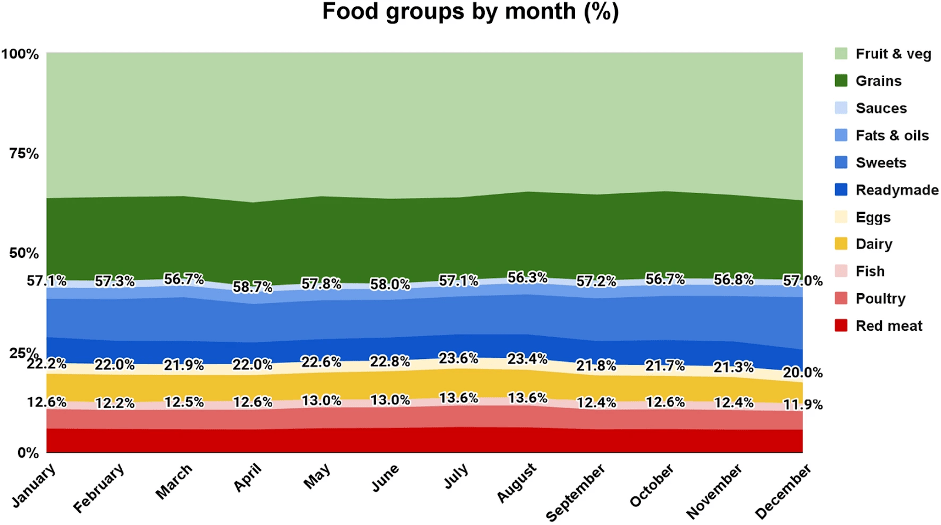
Regional and Seasonal Variations
Our analysis of the Tesco 1.0 dataset shows that the spring and summer months had the highest consumption of meat and animal products, including poultry, which decreased in autumn (see figure 2 below). Though these seasonal trends in meat consumption are useful in identifying areas for meat-reduction campaigns, it is worth noting that the dataset only contains 12 months of data. Thus, seasonal trends cannot be identified over several years.

Sociodemographic Factors
To explore the socio-demographics of shoppers represented in the Tesco 1.0 dataset, we used another open access dataset – the LSOA Atlas – which provides summary demographics for each of the LSOAs in Greater London. This allowed us to identify several demographic predictors of meat consumption, some of which are surprising. For instance, it was found that areas with older, lower education, and more conservative voter-support had a lower proportion of meat purchases. This latter finding is interesting as it’s contrary to what self-report data at the individual-level might suggest about meat consumption as a function of political orientation (e.g., Hodson & Earle, 2018). On the other hand, the data also showed that a lower proportion of meat purchases could be observed in areas with a higher population density, better health, and more Hindus. These findings were in line with our hypotheses about meat consumption.
Benefits and Limitations
The dataset has some limitations, which are important to point out. Most notably, it only contains data for one grocery store, in one city, over one year and may not be generalisable to other times, locations, or retailers. The dataset also does not provide information on waste or how food was prepared. It also does not speak to the intentions behind the food purchases. For example, though the dataset provides information about the gender of the purchaser, it cannot illuminate whether the purchaser was shopping for themselves versus shopping for their partner or families. This is important to bear in mind when considering any gender differences in the data. Furthermore, some of the relationships we observed between demographic variables and meat purchases were relatively small, though statistically significant due to the large sample, and therefore should be interpreted with care.
Limitations aside, the Tesco 1.0 dataset can serve as a useful resource for meat reduction research. Our findings provide insights into regional, seasonal, and sociodemographic variations in animal product consumption. Future research using purchase data would benefit from datasets that relate to other parts of the UK, and internationally, to investigate wider cultural differences in meat consumption. Purchase data research would also benefit from having information on the family structure of shoppers, as well as having datasets that extend beyond a solitary year to consider seasonal trends in a more protracted manner.
About the Authors

Rakefet Cohen Ben-Arye is a social psychology Ph.D. student from Bar-Ilan University. Her research interests include animal advocacy, promoting plant-based choices, and alternative proteins. Rakefet can be reached by email: Rakefet.Cohen@live.biu.ac.il

Chris Bryant is the Director of Bryant Research, which works with animal charities and alternative protein companies to advance the protein transition. He has his PhD in Psychology from the University of Bath. Chris can be reached by email: Chris@Bryantresearch.co.uk

Katharina Hofman is a master’s graduate in behavioral science from the London School of Economics. Her particular research interests lie in the area of food consumption behavior and effective animal advocacy. Katharina can be reached by email: K.Hofmann@lse.ac.uk
This PHAIR blog was edited by: Jared Piazza
 PHAIR Society