
Join us at the Vegan and Animal Rights Conference (VARC), 20-22 March 2026 in Manchester (UK)!
Next week, the Vegan and Animal Rights Conference (VARC) returns to Manchester, bringing together advocates, change-makers, and movement leaders from across the animal advocacy community. The conference offers a valuable opportunity to align strategies, collaborate across organisations, and strengthen the collective impact of the animal rights movement.
As part of the programme, the PHAIR Society stream will feature two sessions highlighting cutting-edge psychological research highly relevant to vegan and animal advocacy.
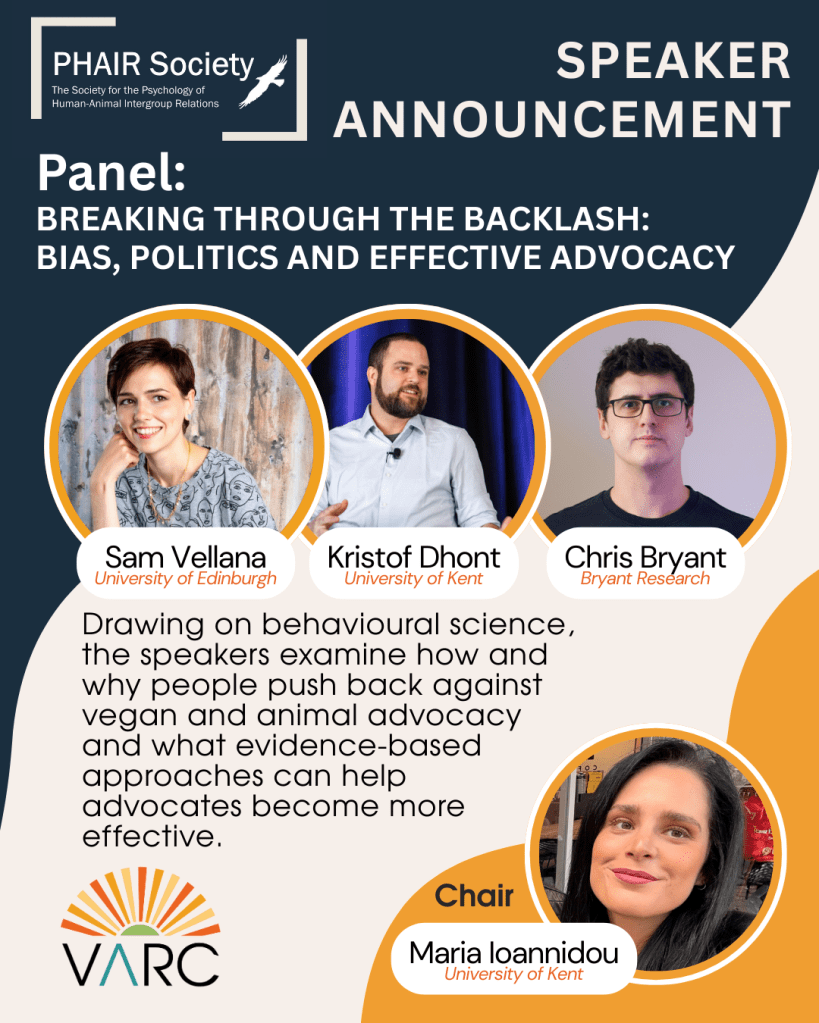
Breaking Through the Backlash: Bias, Politics, and Effective Advocacy
Speakers: Sam Vellana (University of Edinburgh), Kristof Dhont (University of Kent), and Chris Bryant (Bryant Research
Chair: Maria Ioannidou (University of Kent)
Why does animal advocacy sometimes spark resistance, backlash, or outright hostility? This session explores the psychological and social barriers that can limit the impact of animal rights efforts, including anti-vegan bias, political identity, and cultural resistance. Drawing on insights from behavioural science, the speakers discuss why people push back against vegan and animal advocacy and what evidence-based approaches can help advocates navigate these challenges and become more effective.
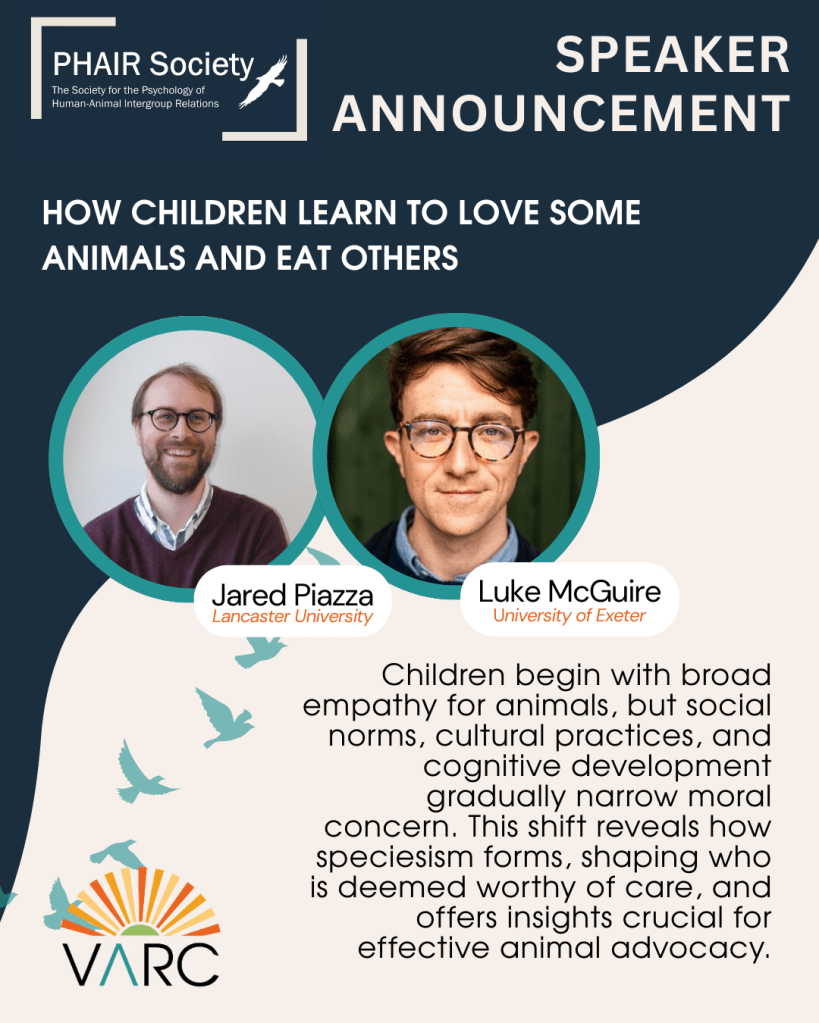
How Children Learn to Love Some Animals and Eat Others
Speakers: Luke McGuire (University of Exeter) and Jared Piazza (Lancaster University)
Chair: Kristof Dhont (University of Kent)
Children often express deep care for animals, yet somehow grow up to accept their exploitation as normal. What changes along the way? Drawing on psychological science, this session explores how children’s moral views of animals develop and shift over time, and the factors that shape who is seen as worthy of care and who is not. The speakers highlight what this developmental shift means for understanding speciesism and why understanding these shifts may be crucial for effective animal advocacy.
Together, these sessions highlight how psychological and behavioural science can help us better understand social barriers to change and inform more effective strategies for advancing animal rights.
Register for VARC and view the full programme here: https://www.varconference.com/
If you’re attending VARC, we hope you’ll join the PHAIR sessions and connect with fellow researchers and advocates. We look forward to seeing many of you in Manchester next week.

An Interview with Fatma Sueda Evirgen
Sueda talks with us about her organisation, Animetrics, and shares recent findings on Turkish consumers’ perceptions of what farming practices are permitted under halal food production. The results highlight a “powerful entry point” for animal advocacy.
Sueda, could you briefly introduce yourself.

Hi, I’m Sueda (she/her). I’m a behavioural and experimental economist and a co-founder of Animetrics. I will soon be joining the Berlin Social Science Center (WZB) as a postdoctoral researcher on a project focusing on promoting prosocial behaviour. I recently completed my PhD in Economics at Tilburg University in the Netherlands, where my research focused on identifying biases—such as those based on ethnicity—and studying the causal effects of institutional structures on social and economic outcomes. Social justice has always been at the heart of both my academic work and personal commitments. In recent years, this commitment has expanded into advocacy for non-human animals. Together with my then-flatmate (now co-founder) Gülbike Mirzaoğlu, we started Animetrics to help bring evidence-based and accessible research to the animal advocacy movement. Alongside my academic work, I engage in cross-movement work, by organising talks that highlight the common ground between animal advocacy and other social justice movements to encourage collaboration and exchange of strategies.
You are one of the co-founders of Animetrics. Could you briefly introduce your organisation. What makes Animetrics unique?
Animetrics is a research and capacity-building organisation dedicated to supporting advocates with evidence-based insights and practical tools. We are a team of four: myself, my co-founder Gülbike Mirzaoğlu, and our long-term volunteers Megan Jamer and Sophie Weiner. Gülbike holds a PhD in Economics and specialises in social contagion and experimental economics. She also gives lectures on animal rights/welfare and environmental issues—having delivered over 25 so far, and counting—in collaboration with the Middle East Vegan Society. Megan is our fundraising advisor and has been helping us shape our fundraising efforts with a great mix of strategic insight and practical experience. Sophie is our creative design and communications volunteer, helping us make our research more accessible and engaging for a wider audience.
At Animetrics, we prioritise research projects based on the needs of advocates. This means working across a wide range of topics. At the moment, our primary focus is on understanding attitudes toward farmed animals within Muslim communities and the MENA region. We’re especially interested in the regional, cultural, and religious dynamics that shape how people engage with farmed animal issues.
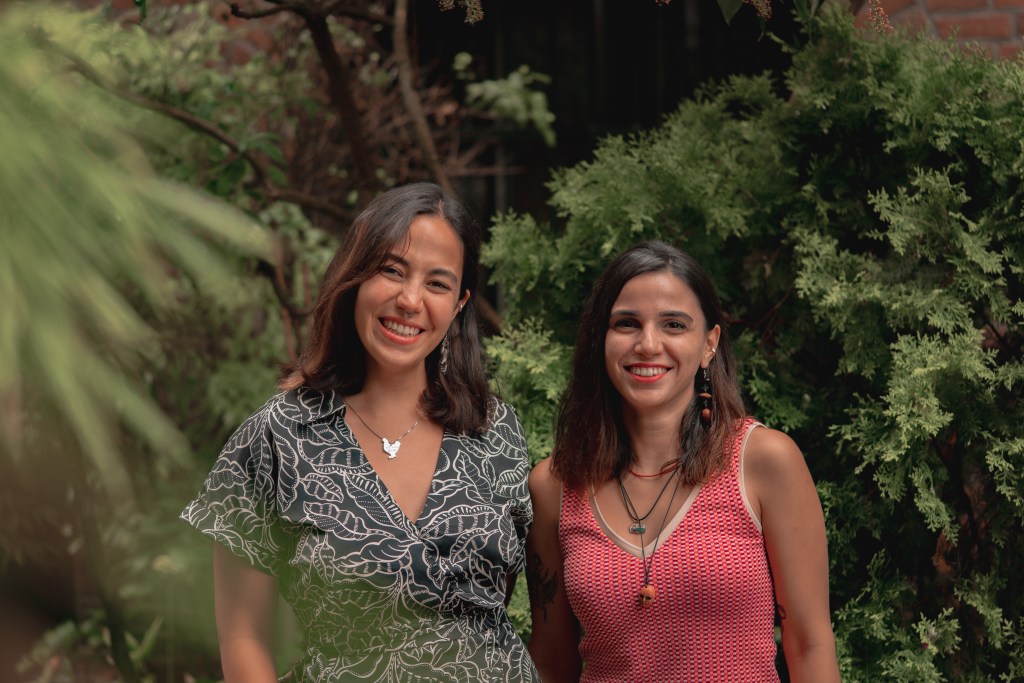
Gülbike and I founded Animetrics after long conversations about how we could best contribute to the movement. In those discussions, we identified several critical gaps: while excellent research exists, very little is conducted in the Global South. Economists are largely underrepresented in this space, and, too often, research doesn’t reach advocates or address their most immediate needs. These gaps matter, because the advocacy movement operates with extremely limited resources, and we can’t afford to make strategic decisions without context-specific evidence. We use our expertise to fill these gaps.
What makes us unique is our integrated approach. We co-design research projects with advocates and support them in applying findings to real-world strategies. Our work includes original and collaborative studies, and free capacity-building services like research support and training for advocates and organisations on how to generate and use evidence effectively.
Your team recently published a report of research you did with Muslim consumers in Turkey, exploring their perceptions of what is “halal” when it comes to animal welfare practices. What inspired this research, and what were some of the key findings?
This research was inspired by personal experience. Through conversations in our Muslim families and communities, Gülbike and I often encountered the assumption that halal food automatically ensures high animal welfare standards. That is unfortunately not the case. Advocates working with Muslim populations echoed this perception and pointed out a lack of data on how widespread these beliefs are or how people might respond if they were corrected. That sparked our study.
We surveyed around 800 Muslim adults in Turkey, where halal is the norm for food production, to explore two questions:
- How much do consumers know about whether common industrial farming practices are allowed under halal rules?
- And how might learning the truth affect their willingness to buy these products or consider plant-based alternatives?

Participants were presented with six common practices linked to animal welfare concerns: chick culling, debeaking, cow and calf separation, lack of required long-term medical care, absence of protection for animals’ natural lifespans, and inadequate space for chickens to exhibit natural behaviours. They were asked whether they believed each practice was permitted under halal food production. If they answered incorrectly, we shared the correct information and then asked how it might influence their purchasing decisions and openness to plant-based options.
The results showed major knowledge gaps: for each practice, over half of our participants either believed it was forbidden or were unsure. Once informed, many said they’d be less likely to buy products involving those practices, and a smaller but meaningful share said they would consider plant-based alternatives. Responses varied across the sample. Certain groups—such as women, older adults, individuals who place high importance on halal, and those who view animal welfare as central to halal—were more likely to respond strongly to the new information.
The results showed major knowledge gaps: for each practice, over half of our participants either believed it was forbidden or were unsure.

What were some of the practices that consumers thought were forbidden under halal food production rules, but were in fact permitted?
The most widespread incorrect belief was the belief that long-term medical care is legally required in halal production systems. When presented with the statement, “In facilities where halal products are made, it is legally mandatory for animals with permanent injuries or who are no longer productive to receive long-term care and medical treatment,” nearly half (47.2%) of respondents incorrectly believed this is true. In reality, no such legal requirement exists within halal food production in Turkey.
A similar proportion (46.8%) also believed that halal standards require chickens to be given enough space to express natural behaviours—another incorrect assumption. Many participants also wrongly believed that the other farming practices were prohibited. In all cases, at least one in four participants held incorrect beliefs about what halal food production allows.
Your team observed that consumers with gaps in their understanding of what is halal showed increased intentions towards plant-based eating. What do you think explains their openness to shift their diet in response to learning that their assumptions were mistaken?
In our study, 70% of participants stated that they believe animal welfare is essential to halal. This suggests that welfare considerations may play a central role in how consumers evaluate the acceptability of animal products. When participants were presented with accurate information showing that certain industrial farming practices are permitted under halal standards, they may have experienced a sense of mismatch between what they believe halal should represent and what the industry currently allows. This may have triggered cognitive dissonance: a recognition that their beliefs about halal food conflicted with the actual conditions under which it is produced.
In this context, plant-based alternatives may have appeared more consistent with their ethical and religious values. This interpretation is supported by several patterns in the data. Participants who viewed animal welfare as central to halal were more likely to express increased intentions toward plant-based options, possibly because the new information directly challenged their beliefs. Similarly, those who had incorrectly believed a practice was prohibited under halal rules showed stronger shifts than those who were merely unsure, suggesting that this conflict shaped how participants responded. Another important insight is that beliefs about religious compatibility may shape openness to dietary change, as participants who saw plant-based diets as compatible with Islam were more likely to consider such alternatives.
How might Muslim consumers’ beliefs and commitments to eating halal be a platform for advocating for more plant-forward diets?
For many Muslim consumers, halal is not just a set of dietary rules. It’s closely tied to values such as compassion, stewardship, and avoiding unnecessary harm. This is reflected in the fact that a large share of participants in our study identified animal welfare as a core aspect of what halal means to them. This connection offers a powerful entry point for advocacy.
For many Muslim consumer, halal is not just a set of dietary rules. It’s closely tied to values such as compassion, stewardship, and avoiding unnecessary harm.
By highlighting where current production practices fall short of these values and showing how plant-based foods can meet halal requirements while avoiding animal welfare concerns, advocates can open constructive, values-aligned conversations. Framing plant-forward diets not only as compatible with Islamic principles but as an expression of them, may make these options more compelling. This is especially true when messages are tailored to resonate with cultural, religious, and ethical priorities within the communities being engaged.
See here to read the full report
For more information about Animetrics, visit their website here
Cover image by Tolis Dianellos
Interview and blog by Jared Piazza


Thank you for an inspiring and unforgettable PHAIR 2025 Animal Advocacy Conference in Edinburgh! 🌱
Over the past few days, we witnessed something truly special: a coming together of 200 brilliant minds and compassionate hearts from all over the world. Researchers in the social and behavioural sciences and dedicated animal advocates joined forces to explore how we can better understand human behaviour and create meaningful, lasting change for animals.
From groundbreaking research on a range of topics such as dietary choices and veganism, effective approaches to advocacy, and the psychology of human-animal relations, to creative strategies and real-world campaigns led by non-profit organisations, each presentation and discussion reminded us just how powerful this community can be when science and advocacy work hand in hand.
To our incredible speakers: thank you for sharing your expertise so generously and for challenging us to think deeper and act bolder. Special thanks to Brooke Haggerty, Christopher Hopwood and Peter Singer for their keynote talks.
To our tireless volunteers: thank you for the countless hours you gave to make everything run smoothly: Sam Vellana, Annalyse Ellis, Ali Ladak, Mia Patel, Georgia Harlow, and Maria Ioannidou.
Thank you to everyone who volunteered to chair conference sessions: Maria Ioannidou, Jared Piazza, Rebecca Gregson, João Graça, Matthew Ruby, Luke McGuire, Stefan Leach, Christopher Hopwood, Willem Sleegers, Chris Bryant and all symposium chairs.
To our generous sponsors: thank you for believing in this mission and making this conference possible: ProVeg International, Bryant Research, Beyond Carnism, Animal Think Tank, Animal Ethics, and Food Systems Research Fund.
A very special thank you to the conference chairs, Steve Loughnan and Matti Wilks, whose vision, dedication, and hard work made this conference a reality.
And to every participant who joined us, asked questions, exchanged ideas, and opened your hearts: thank you. Your commitment to building a kinder, more compassionate world is what makes this movement so powerful and so hopeful. As we return to our daily work, let’s carry forward the connections we’ve made, the knowledge we’ve gained, and the shared sense of purpose that unites us.
As Chris Hopwood stated in his keynote: “Our treatment of animals is the moral crisis of our time, and we are up against it. Most people are not yet with us, but we have the science, and we have each other.”
Until next time 💚
Kristof Dhont, President PHAIR Society


The PHAIR Animal Advocacy Conference 2025 is just around corner and we are very much looking forward to it.
The conference programme and full schedule (with list of titles and abstracts) are now available on the conference website (https://phair2025.co.uk/programme/). You will also find information about the venue and travel information on the website.
The conference opens on Wednesday July 2nd with a public talk from Professor Peter Singer from 6-7pm. The conference then runs from Thursday July 3rd – Saturday July 5th, with Keynote talks by Professor Christopher Hopwood (University of Zurich) and Brooke Haggerty (Executive Director at Faunalytics).
Don’t miss the main Networking Event on Thursday July 3rd at 7pm (at The Caves), generously supported by ProVeg International, and our canape event at the Conference centre directly after the keynote talk on Friday, generously supported by Bryant Research.
Connect with us on Instagram @phair_society or Facebook @AnimalAdvocacyConference for photo and video updates throughout the conference and let’s use #PHAIR2025 across all platforms.


We thank ProVeg International, Bryant Research, Beyond Carnism, Animal Think Tank, Animal Ethics, and Food System Research Fund for their generous support! The PHAIR Animal Advocacy Conference 2025 would not be possible without them.

Faunalytics is excited to host their fourth annual remote symposium, Fauna Connections, for animal advocates on September 18, 2025 (tentatively 12pm-5:30pm EDT).
They invite academics and scientists from the social and behavioral sciences, or related disciplines, to submit a presentation abstract focusing on a synthesis of research. They are particularly interested in comprehensive talks, such as expert overviews (think of it as a mini-lecture you can give to advocates), that provide a deeper understanding of topics relevant to animal advocacy.
For more information and submission guidlines: https://faunalytics.org/fauna-connections. Applications for presentations are due by June 20th.
If you are interested, please apply! And please share this opportunity with anyone you believe would be interested in presenting at this symposium. Thank you so much!
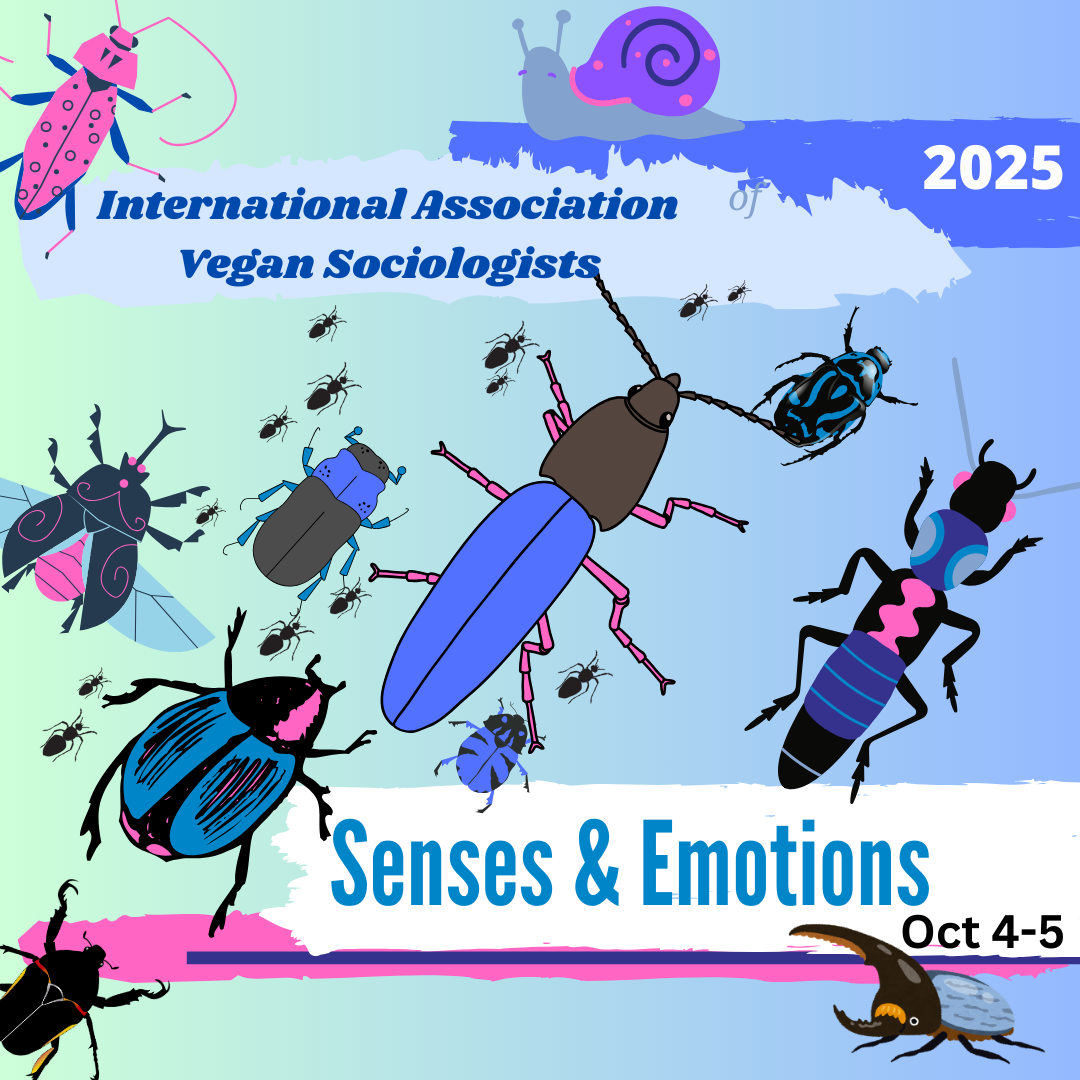
The International Association of Vegan Sociologists is welcoming submissions for individual presentations or panels for their 2025 annual online meeting “Senses & Emotions”, Oct 4-5, 2025.
Call for Paper Deadline: May 31, 2025
The 2025 IAVS annual meeting will showcase research related to veganism, animal rights, and sociological theories of emotions/senses. Participants are invited to consider how emotions and sensory experiences are integral to understanding and challenging nonhuman animal exploitation.
Proposals and queries should be sent to info@vegansociology.com by 31st May 2025. Submission guidelines and further information can be found on the conference webpage: https://www.vegansociology.com/conference/
Potential topics include (but are not limited to):
- Nonhuman animals as minded, feeling beings: how are animals’ emotions or sensory experiences minimised or acknowledged in society and/or vegan sociology research?
- Veganism, activism and emotional labour: How do activists navigate the emotions involved in advocating for other animals? What role does emotional labour play in vegan activism?
- Socialisation of emotions & animal exploitation: How are emotional norms or ‘rules’ around nonhuman animals socialised in ways that challenge or support vegan ways of being?
- Sensory experiences and the Body: how can vegan sociology help us to explore human and nonhuman animals’ felt experiences of the social world?
- Vegan Sociological perspectives on particular emotions: e.g. how might explorations of disgust, desire, grief, joy, sadness further our work for nonhuman animals
- Innovative research methods for exploring sensory elements of the multispecies social world: e.g. Emotional/Sensory mapping, visual, auditory, tactile, olfactory methods
- Representations of nonhuman animal emotions: ‘happy’ exploited animals, suicide food, attempts to build empathy
- Digital emotions and online vegan communities
- Intersections of species, race, gender, and emotional politics
Time to Register
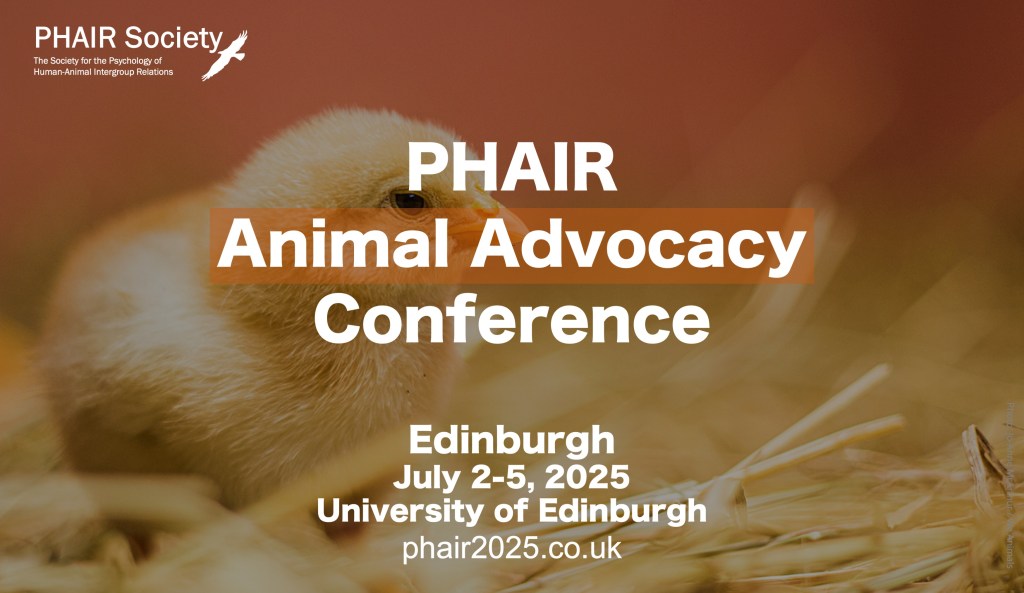
Join us in Edinburgh for the PHAIR Animal Advocacy Conference, July 2–5, 2025!
There’s only ONE WEEK left to register at early bird price. Or support our work by buying a Supporter ticket! Don’t miss the opportunity and complete your registration now: https://phair2025.co.uk/register/
Public Lecture by Peter Singer

The conference begins with an in-person, public talk by Peter Singer (July 2, 6-7pm). RESERVE your seat HERE!
Journalists have bestowed the tag of “world’s most influential living philosopher” on Peter Singer. He was Ira W. DeCamp Professor of Bioethics in the University Center for Human Values at Princeton University from 1999-2024, where he now holds the rank of Emeritus Professor of Bioethics.
Singer first became well-known internationally after the publication of Animal Liberation in 1975. Some of his other books are: Practical Ethics, The Expanding Circle, Rethinking Life and Death, Pushing Time Away, The Life You Can Save, Ethics in the Real World, Why Vegan?, Animal Liberation Now, and, most recently, The Buddhist and the Ethicist.
In 2012, Singer was made a Companion of the Order of Australia, the country’s highest civilian honour. In 2021 he was awarded the Berggruen Prize for Philosophy and Culture, and in 2023, the Frontiers of Knowledge Prize for the Humanities, from the Spanish BBVA Foundation.

Social Event: Ceilidh with Live Music
On Thursday evening, we will host a Ceilidh (with live Scottish band) at The Caves. This evening will provide the perfect networking opportunity in an informal and inspiring setting, while enjoying drinks and tasty plant-based food. More details will follow.
Book your Accommodation
Book your room at budget-friendly rates in the Holland House, located on the site of the conference where all the action is: https://phair2025.co.uk/accommodation/ Enter the code PHAIRALOC at time of booking to secure your room from the PHAIR reserved accommodation block.
Alternatively, you can stay on-site in 4 star university hotels The Scholar Hotel or The Scott Hotel with a discount using the code PHAIR25.
Keynote Speakers
Brooke Haggerty, Executive Director of Faunalytics

Chris Hopwood, Professor at the University of Zurich & Editor-in-Chief of PHAIR

We are pleased to welcome many esteemed colleagues and speakers who will be delivering a diverse range of symposia, talks and workshops. Our conference website will be updated regularly when more information becomes available.
Cover photo credit: Jo-Anne McArthur / We Animals Media
This blog post was originally written for The Vegan Society, published Friday, 24 January, 2025. Re-posted for the PHAIR Society with permission.
In this blog post, Jared Piazza considers recent findings from developmental psychology regarding children’s relationship with animals and animal products. He argues that children make an ideal audience for vegan education, and also considers the many practical challenges in reaching this audience.
Children care about animals
Children have a special relationship with animals. From a young age, children are deeply interested in animals and seek interactions with them. One study gave 1- to 3-year-olds an opportunity to play freely in a room where there was a live animal (e.g. a hamster, lizard, etc.) and many attractive toys available. Children spent more time interacting with the animal than any of the toys, and this was true even when the animal was a spider.
In society, we try to make sure that children’s interactions with animals are pleasant. Children watch television shows that have animal characters as protagonists. Parents take children to local farms and petting zoos where they get to feed animals and watch them being cared for. Children are taught to care for companion animals and to respect wildlife outside their home.
Because of these foundational experiences, most children develop a fondness for animals and care deeply about their wellbeing. Indeed, some recent studies have shown that children’s concern for animals at times eclipses that of adults.
For instance, Matti Wilks and colleagues presented a group of American adults, and a group of 5- to 9-year-olds, with theoretical moral dilemmas in which they could save either a person or an animal. Adults resoundingly chose to save the person over the animal, whereas children were much more divided about whom to save.
Children’s heightened concern for animal lives even shows up in their judgments of eating animals. Luke McGuire and colleagues found that British children, ages 9 to 11, rated it less permissible to eat animal products, compared to adults. Children also judged it more important to treat farmed animals (e.g. pigs) well. When asked to justify the wrongness of eating animals, British children tended to invoke concerns about animal rights and welfare.
An emerging, developmental puzzle
This emerging research on how children think and reason about eating animals raises an interesting developmental puzzle. We know that most children around the world are raised in families where eating animal products is commonplace, and most children themselves eat animal products. So:
Why do many children who eat animal products also judge it wrong to do so?
It could be a case of children being morally inconsistent – saying one thing while consciously doing another. More likely, it reflects a degree of naïveté in children’s understanding of the food they eat and where it comes from.
Young children may not realise that much of what they eat comes from animals and that it requires harming animals to create these products. This may be especially true of children raised in urban environments where they have little to no involvement in animal farming and the processes by which animal products are generated.
Are children unsuspecting meat eaters?
There are only a few studies that have explored what children know about the production of animal products. At least one study, with urban American children, found that they can struggle to identify which foods come from animals.
In that study, Erin Hahn and colleagues asked American 4- to 7-year-olds to sort foods according to their plant versus animal origins. They gave the children two boxes: one covered in leaves (denoting a plant source) and another covered in fur (denoting an animal source). Overall, the children performed reasonably well on this task; however, they did make a number of errors. For example, almost half of the children thought that cheese was from plants, and about 40% thought that bacon and hotdogs came from plants. Even chicken nuggets were commonly miscategorised, despite the word “chicken.”
Categorising foods according to their plant versus animal origins may be challenging for urban-raised children for multiple reasons. For one, research by Heather Bray and colleagues suggests that urban parents sometimes avoid having frank conversations with their children about the origins of animal products. Omnivorous urban parents were more likely than rural parents and vegetarian parents to tell ‘white lies,’ dodge, or deflect probing questions from their children. Such maneuvers are meant to spare children from the harsh realities involved in meat production, but they might also keep children guessing about where their food comes from.
Children’s poor performance on this food-origins task could also reflect misunderstandings children have about the task itself. Another way to test children’s knowledge is to see if they can identify which animals are used for food. Heather Henseler Kozachenko and I adopted this approach. We presented 18 animals to two groups of British children, 6- to 8-year-olds and 9- to 11-year-olds, and asked them to identify “which animals do people eat?”
When asked this way, both groups of children were pretty good at identifying which animals are eaten. For example, 91% of 6- to 8-year-olds, and 91% of 9- to 11-year-olds, correctly identified that chickens are eaten by people; 96% of older children understood that pigs are eaten (80% of younger children), and 85% of older children indicated sheep are eaten (73% of younger children). Where children struggled most was correctly identifying animals that are eaten by people outside of their own culture – for example, knowing that there are people who eat frogs, sharks and octopuses.
Together, these two initial studies suggest that American and British children’s knowledge of animal products is incomplete at best. Yet, they are far from naïve in their understanding of which animals are eaten. More research is needed to get a fuller picture of what children know about animal products and how this knowledge develops, especially in populations outside of the Western world.
From unsuspecting to aware and attached
Even when children can reliably identify which foods come from animals, and which animals are eaten, this knowledge alone is probably not enough to deter them from using and consuming animal products.
It is learning about the harsh realities involved in animal agriculture – particularly what happens to animals in large-scale factory farming and how these industrial farms negatively impact the health of our planet – that tends to motivate adults to abandon animal products. However, this is also the sort of food-systems knowledge that children tend to lack and are commonly shielded from.
Such “shielding” practices are likely guided by good intentions. Parents don’t want to upset children or cause issues for themselves at home. However, one potential long-term consequence is that children learn to stop asking questions and continue to consume animal products unabated. By the time children do learn about these realities – for example, when they are teenagers or young adults – they have already built up a strong attachment to animal products and are motivated to keep eating them, despite the conflicted feelings they may experience. Efforts to intervene become much harder once these attachments are in place.
We know from research by João Graça and others that many adults have strong attachments with meat, founded on a lifetime of eating and enjoying meat. Furthermore, we know that adults who have strong attachments to meat are more likely to defend animal agriculture and are less interested in replacing meat in their diet; for example, with plant-based alternatives. Adult meat eaters engage in a range of psychological mechanisms to maintain their positive attachment to meat, including objectifying animals used for food and disregarding information that could potentially change their attitudes about so-called ‘food’ animals.
Thus, from a psychological perspective, childhood may be the best time to intervene in order to reduce animal consumption and encourage more sustainable and cruelty-free options. In summary, this is because it is during childhood that people:
(1) care a lot about animals,
(2) are still forming attachments to food, and, as a result,
(3) are the least motivated to defend their current eating practices.
Arguably, this combination of heightened concern for animals and weaker attachment to animal products make children the ideal audience for vegan advocacy. Indeed, Heather Henseler Kozachenko and I recently found that children displayed none of the typical motivated defences adults exhibit when reasoning about ‘food’ animals.
In this new study, we presented adults and British children ages 6 to 12 information about the level of intelligence of animals commonly used for food (e.g. chickens, cows), or regarding animals not commonly eaten (e.g. kākāpō). They made judgments of the acceptability of killing animals for food and eating them (e.g. “eating hamburgers”), either from their own perspective or another person reflecting on this information.
Adults in these tasks tended to do two things:
- they judged that it is worse to harm animals described as more intelligent than it is to harm animals described as less intelligent, but only when the animal being described is not eaten by humans: in other words, they responded strategically to animal intelligence information;
- they thought other people would act on this animal intelligence information more than they actually did themselves – that is, they showed ‘self-other distinctions’ in their moral judgments.
By contrast, children did not show these hallmark motivated reactions. They tended to condemn harming and eating animals at rates higher than adults; they did not make use of animal-intelligence information strategically; and they did not exhibit self-other distinctions in their judgments.
This research is preliminary and it bears replicating with children of different ages and nationalities, but it does suggest that children may be less motivated to defend the normative practice of eating animals, compared to their adult counterparts.
Practical challenges of vegan education with children and future directions
As future stewards of the planet, children represent an important demographic for vegan education. As we have seen, children may be somewhat open to replacing animal products in their diet. Furthermore, research suggests families are often supportive of children who want to make such changes.
Nonetheless, advocates of vegan education – such as The Vegan Society’s Education Network – face a number of practical barriers when working with children and families:
- How can educators teach children about the poor treatment of factory-farmed animals, while simultaneously being considerate of their emotions and sensibilities and the concerns of parents and gatekeepers?
- How do educators introduce children to plant-based alternatives in a positive way and get schools to subscribe to more plant-based options? Is it best to focus on the health benefits of such a change, ordoes raising the environmental and moral issues also help?
- How can advocates mitigate parents’ reasonable fears about the disruptive consequences of their children adopting a plant-forward diet – for example, the need for families to learn new foods, new recipes, and cultivate new eating practices? What do we tell parents of ‘picky eaters,’ who are less willing to try novel foods?
These are some of the more difficult questions we need better answers to and should occupy the research agendas of those interested in vegan advocacy. We also need more research examining individual differences within childhood, since there is likely significant variability in children’s concern for farmed animals, their empathy, and degrees of openness to dietary change.
Children represent an important group in the consideration of a more compassionate food system because on the whole they care about animals and their attachments to animal products are still in development. Children may be the ideal audience for vegan education, but there are plenty of practical challenges involved in reaching them during this conducive period – challenges that deserve more attention from researchers and vegan educators seeking to inspire future generations of animal advocates.
Blog post by Jared Piazza, originally written for The Vegan Society here. Re-published with permission for the PHAIR Society.
Cover photo by Rowan S
We are excited to announce the 2025 edition of the PHAIR Animal Advocacy Conference.
The conference will take place July 2–5, 2025 at Pollock Halls at the University of Edinburgh, in Edinburgh, Scotland. The conference begins with a public talk by Peter Singer held on July 2, and the main programme runs July 3–5.
The conference brings together researchers from social and behavioural sciences, and animal activists and advocates from around the world. We are interested in research on a range of topics relevant to animal advocacy including how we think about and relate to non-human animals, dietary choices and veganism, and effective approaches to animal advocacy.
The call for presentation submissions will be announced in November.
For more information and updates: phair2025.co.uk
An interview with Dr Marielle Stel about her recent research published in Anthrozoos on the value of perspective taking for attitude change. Do role reversal interventions work? If so, what might they be doing?

Marielle, could you briefly introduce yourself?
My name is Marielle Stel and I am currently working as an associate professor at the University of Twente (The Netherlands). I graduated as a social psychologist with specific interests in empathy and behaviour change. The research I’ve conducted so far can be broadly described as empowering individuals and society to enhance their safety for both physical threats (disasters and crises, including pandemics and climate change) as well as social threats (other people’s antisocial, egocentric behavior, deception). In my recent lines of work, I have been studying how to facilitate behaviour change towards a more compassionate and sustainable world, for instance, by aiming to increase the moral standing of animals. Regarding my personal interests, I love spending time with my four rescue cats, taking relaxing walks in nature, and bouldering.
You recently investigated a ‘role reversal’ intervention to change people’s attitudes and behavioural intentions towards using animals. What inspired this research and what were some of the key findings?
We were interested to what extent some of the existing interventions used by animal activists (e.g., Peta) would indeed lead to a change in attitudes and behaviours towards animals. We choose to investigate the role reversal intervention (click here for the video) as it included aspects that could theoretically change speciesism (e.g., creating awareness of how animals are being treated, facilitating taking the animal’s viewpoint, and emotional reactions towards observing unjustified suffering).

In two studies, we showed that this intervention led participants to more strongly intend to reduce their harmful behaviour towards animals, compared to a control condition with no video intervention. These behaviours included reducing the use of products for which animals were used (e.g., meat, dairy, cosmetics, medicines) and using animals for entertainment. Further analysis showed that this reduction in behavioural intentions was due to participants feeling a sense of injustice. There were no effects of the intervention on speciesist attitudes or signing an animal rights petition. So this intervention shows promise as people intended to change some behaviours that cause animals harm.
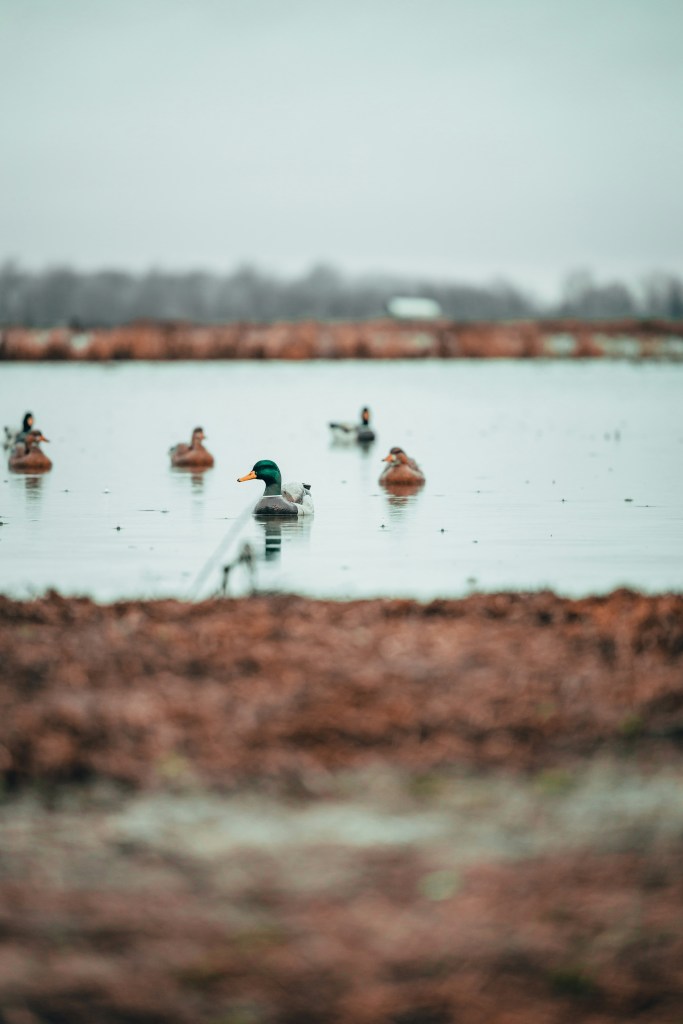
Could you say more about the ‘role reversal’ element of the video intervention. This seemed to depict animals as perpetrators of exploitative acts on humans. How might portraying humans as victims at the hands of animals increase our sympathy for animals who suffer at our hands?
We hypothesised that due to the role reversal element, the video may facilitate taking the animals’ viewpoint. Showing the reversed roles of animals and humans leads people to have to switch mentally. Furthermore, by showing a parallel world, activists hope that people become more aware of what we are doing to our animals and how awful this would be when the same would happen to us humans.
You are right that the animals become the perpetrators here, but it seems that the overarching message came across rather than the thought that animals would and could do that to humans. This is, for instance, reflected in increased feelings of injustice reported by participants when having watched the video, which in turn reduced intended harmful behaviours toward animals.
Do you worry that, in some contexts, it might backfire to portray animals as the perpetrators of violence?
I do not worry about that for the reasons just mentioned. However, if animals were portrayed as perpetrators of violence consistently and for a long period of time, for instance, in the media, on product packages, etc., it indeed may influence people’s attitudes towards animals negatively.
The ‘role reversal’ video seems to be increasing behavioural intentions via a sense of injustice. How might ‘role reversal’ images create this sense of injustice?
That is a good question. Feelings of injustice can be elicited when people learn about the suffering while taking perspective. So together with showing how animals are being treated (which does not necessarily have to be role reversed) and the role reversal aspect, this sense of injustice may have been elicited when watching the video. We did not find, however, that the video influenced perspective taking in itself, but it did influence feelings of injustice. Also, we did not have a condition showing these same pictures but without the role reversal. Thus, we cannot be certain whether this specific aspect of the video is necessary to obtain the effects.
Do you think this ‘role reversal’ method may be more effective than just having participants assume the perspective of victimised animals? Is this something you are currently testing?
No, I do not think it is necessarily more effective. Here, we were interested in whether these often-shared illustrations would actually have an effect. I believe that facilitating perspective taking more directly, for instance, by explicitly asking people to do so, might be more straightforward. Also, you do not have to worry about possible unwanted perpetrator effects.
We are not (yet) currently testing whether the video without role reversal would be as effective. We did conduct related studies on perspective taking. In two studies, we demonstrated that showing the suffering of animals alone is not sufficient to reduce speciesism (see preprint here). We showed that taking the perspective of the animals is crucial to obtain a reduction in speciesist attitudes and actual animal product consumption.
Importantly, the prejudice literature suggests that we should facilitate “imagine-self” perspective taking (imagining oneself in the situation of another individual) rather than “imagine-other” perspective taking (imagining how the other individual feels). Vorauer and Sasaki (2014) reported that the imagine-other perspective taking actually hindered prejudice reduction as this type of perspective-taking ironically led participants to focus more on how their own group was viewed by the outgroup rather than how the outgroup feels.
The video intervention was accompanied by sad music. Is the sad music essential to the intervention? Does it create a mood or tone that is essential for the intervention to work?
We did not test this, but I am guessing that the sad music is not essential for the intervention to work. It does create a mood that may strengthen the effect. That would be interesting to investigate. Happy music would probably reduce or neutralise the effects as some people may then interpret the illustrations as being funny.
The intervention altered people’s behavioural intentions but not their speciesist attitudes. Could your measure of speciesism be contributing to this null finding? (The Speciesism Scale is generally used to measure stable attitudes that vary between people rather than within.)
We agree it is indeed tricky to try and change such a stable attitude. Yet, we are interested in trying to find this ‘holy grail’: if/when people would change their beliefs about humans being morally superior, together with how morally acceptable they regard using animals for human aims. This would hopefully change their compassionate and sustainable behaviour more consistently. In the recently conducted perspective-taking studies I just talked about (see preprint), our intervention did reduce speciesist attitudes, measured with the Speciesism Scale.
Next steps: What are some outstanding questions from this research? Where would you like to take this research?
In general, my research focuses on the broader outstanding question of what aspects are needed to reduce speciesism and social dominance. Most people do not want to harm animals, yet they still do. I am interested in how to best inform and help people to reduce this inconsistency and overcome the many barriers that exist.
How would you like to see such an intervention applied by animal advocates?
The ‘how’ does not really matter to me, when the knowledge we create is helpful for animal advocates. When published, all interventions will be freely available to use. But the knowledge can be applied in other ways as well; for instance, by explicitly asking people to take the perspective of animals when showing images of animal suffering.
Questions for Dr Marielle Stel? She can be reached by email at m.stel@utwente.nl or via LinkedIn: https://www.linkedin.com/in/marielle-stel-a110915/
Interview questions and blog by Jared Piazza
Cover photo by: Alexander Andrews

Cover photo credit: Linda Robert
A brief interview with Professor Chris Hopwood, Editor-in-chief of the PHAIR Journal, about the history and purpose of the ‘roadmap for collaboration’ available here.
What is the brief history of this document? What motivated its production, how did it come together, and who has been involved?
A few years ago, I started consulting on a project with Courtney Dillard and Andie Thompkins from Mercy For Animals (MFA) to conduct survey data on attitudes about farmed animals and plant-based foods across 23 countries. During our work together, it became clear to me that there are important differences in the way academics like me and advocates like Courtney and Andie approach our work. This collaboration has been wonderful for me so far, and hopefully MFA has also seen it as a success. However, there were some differences in perspective along the way that I wished I had considered ahead of time.
For instance, my practice is to always post all my materials, data, and script for other researchers to access, use, and check my work, but there are obvious reasons why this is not advisable in an advocacy context. Another example is that the outlets that are most impactful for scientists (peer-reviewed journals like PHAIR) are not the same as the outlets that are most impactful for advocates (more publicly visible blogs, social media, and targeted communications to members), and this can affect the way studies are conducted and how the results are written up. These are not things I really thought fully about before beginning this project with MFA, but I spent a lot of time thinking about them during our work together.
Courtney, Andie, and I agreed that it might be helpful to the field for us to try to parse these kinds of issues and to encourage productive advocacy-science collaboration more generally. We enlisted two colleagues who we knew would have significant experience and good ideas about this – Andrea Polanco from Faunalytics and Chris Bryant from Bryant Research. Together, the five of us generated a draft that aimed to:
- define important terms related to advocacy-science collaboration,
- distinguish the relative strengths of advocates/advocacy organizations and scientists/universities,
- highlight some challenges that can come into advocacy-science collaboration,
- describe principles and best practices, and
- provide a few salient examples.
We solicited feedback from members of the animal advocacy research community and got a lot of great ideas. We also presented this draft at the Animal Advocacy Conference in Kent this summer, and got very helpful feedback from the attendees about our own blind spots, some issues to cover or emphasize, and other ways to improve the document. We used this feedback to revise the document into the version that is currently posted at https://phairsociety.org/advocacy-science-collaboration/.
What is the aim of the document and what is your hope for how academics and advocates will use it?
Best practice would be for animal rights advocates and psychological scientists to fully consider these kinds of issues ahead of time and come to a transparent agreement about how they would be handled during their collaboration. Our idea was to generate a document that could guide people at the outset of this kind of work.
What do you see are the main benefits of scientists and advocates working together?
The underlying idea of this project was that there are considerable benefits to animal rights advocates and psychological scientists working together. Collaboration can help both psychological scientists and advocates.
One thing I have struggled with most of my career, like most of my colleagues, is the nagging existential question about whether I am spending my time doing anything useful. My mid-career turn towards research on human-animal intergroup relations largely reflects an attempt to have a real impact. But to fulfil whatever potential I might have, I needed to go beyond conducting studies whose end goal is publication in peer-reviewed journals to figuring out what kind of research would be most helpful. Nobody knows more about what kind of research is needed than the people who are trying to apply research in their day-to-day work. Psychological researchers like me can therefore learn a lot about the kinds of research questions to ask by working closely with advocates.
Conversely, we believe advocacy will be most impactful to the extent that it is based on evidence. Of course, there are many ways to define impact and evidence, and we hope to have been inclusive of different perspectives in our approach. Across different approaches, the careful application of scientific methods increases rigor and confidence in any findings, and psychological scientists therefore have expertise that can be helpful to advocates.
One example that has been preoccupying me lately is the question of how effective meat reduction interventions that use psychological techniques to target individual behavior change are. There have been a few review papers published in the last couple of years listing the various factors that ostensibly make these kinds of interventions effective (e.g., see Harguess et al., 2020; Kwasny et al., 2022; Mathur et al., 2021). These papers may give advocates the impression that they should be using such techniques in their work. However, I am skeptical: meat reduction intervention studies typically:
- measure attitudes rather than actual behavior change,
- they rarely include meaningful follow-ups,
- there are few replications,
- and I am concerned about selective reporting or “publication bias” (studies that find an effect are more likely to have been published than studies that don’t).
In general, my observation is that the more rigorous a study is, the less likely a robust effect is found. This concerns me, because it raises the possibility that advocacy groups are using valuable resources on interventions that may appear to have some evidence and efficacy based on a review of the literature, even though the evidence is pretty thin. People whose day jobs are on the ground doing actual advocacy cannot be expected to deconstruct the scientific literature or design the kinds of studies that can rigorously test intervention hypotheses. This is where psychological scientists can help.
What are some of the major challenges to collaboration?
We outline several domains of challenge in the document, including:

- Bias. For instance, there may be anti-scientific bias among certain people in the advocacy community, who have a strong intuitive sense that what they are doing is right and should be effective. Conversely, there is a risk that researchers doing research on this politically-tinged topic may be perceived by other academics as biased.
- Tensions regarding goals and values. Advocates are generally interested in changing the world to be better as quickly as possible. Scientists are generally interested in learning about the nature of the world, and this usually involves a lot of mulling, replicating, and reconsidering. In many cases, advocacy proceeds by moving forward with the best information available, whereas science is generally most productive if progress is cautious and slow. As an example: From my scientific perspective, we do not have strong evidence that meat reduction interventions are an effective use of resources. But what is an advocate to do, throw up their hands and stop trying things until better evidence is available?
- Communication. Both the way we communicate with one another and with outside groups. To one another: the norms about roles and expectations within a collaboration may differ so much that you do not see them coming. It is naturally best to clarify these differences ahead of time. Outside: scientists tend not to be as good at explaining the relevance of our findings to the public as advocates. This is a great example of why it can be so fruitful for us to work together.
Where can interested readers find the document?
The document is posted on the PHAIR Society website at https://phairsociety.org/advocacy-science-collaboration/.
If you have any thoughts, comments, or suggestions, please share them with me, Chris Hopwood, at chopwoodmsu@gmail.com.
For further discussion of the roadmap, check out this blog post by Faunalytics.
PHAIR contributor: Jared Piazza

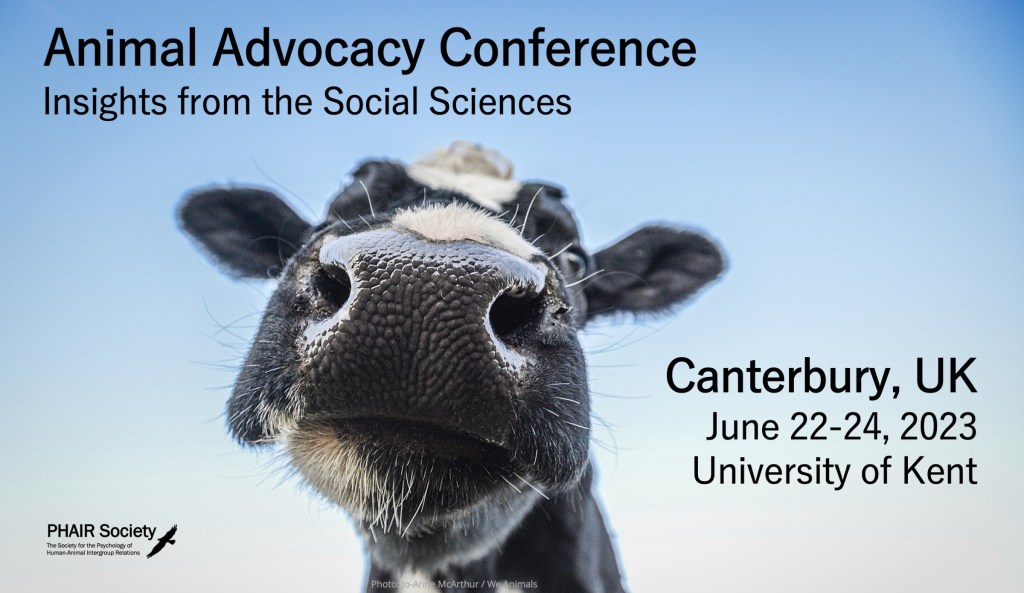
We are thrilled to announce the 2023 edition of the Animal Advocacy Conference: Insights from the Social Sciences.
The conference will take place June 22-24, 2023 at the University of Kent, UK.
We will bring together researchers from different fields in the social and behavioral sciences, and animal activists and advocates from around the world.
Learn about the latest ideas, findings and campaigns in the following domains:
- The psychological, social, and societal factors shaping how we perceive and think about animals, human-animal relations, and animal welfare and rights
- The impact of advocacy and activism strategies related to animal rights, veganism, meat reduction and reduction of other animal products (e.g., dairy, eggs)
- The social and behavioral science of animal cruelty, meat consumption (and other animal-product consumption), vegetarianism/veganism, and speciesism
- The connections and intersections between human-animal relations and human intergroup relations as well as between animal ethics and other social justice domains including environmentalism, feminism, and anti-racism
This conference uniquely bridges the gap between academic researchers and activists/professionals in the field of vegan and animal rights advocacy. The conference will create a stimulating environment where academics and activists/advocates exchange relevant knowledge, engage in lively debates, share their ideas, and can start collaborations.
Call for Submissions
The submission portal will open on November 2, 2022. We invite academic and research submissions in three different formats: Oral Presentation, Symposium, Poster Presentation.
For more information and updates: blogs.kent.ac.uk/animaladvocacy
 PHAIR Society