
An Interview with Fatma Sueda Evirgen
Sueda talks with us about her organisation, Animetrics, and shares recent findings on Turkish consumers’ perceptions of what farming practices are permitted under halal food production. The results highlight a “powerful entry point” for animal advocacy.
Sueda, could you briefly introduce yourself.

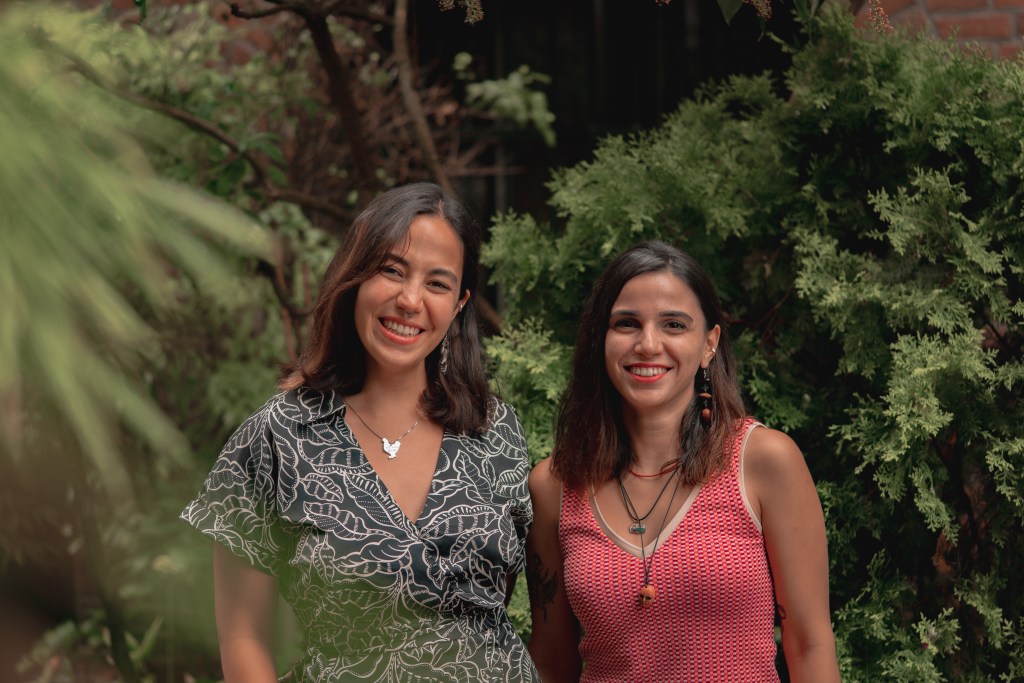
Hi, I’m Sueda (she/her). I’m a behavioural and experimental economist and a co-founder of Animetrics. I will soon be joining the Berlin Social Science Center (WZB) as a postdoctoral researcher on a project focusing on promoting prosocial behaviour. I recently completed my PhD in Economics at Tilburg University in the Netherlands, where my research focused on identifying biases—such as those based on ethnicity—and studying the causal effects of institutional structures on social and economic outcomes. Social justice has always been at the heart of both my academic work and personal commitments. In recent years, this commitment has expanded into advocacy for non-human animals. Together with my then-flatmate (now co-founder) Gülbike Mirzaoğlu, we started Animetrics to help bring evidence-based and accessible research to the animal advocacy movement. Alongside my academic work, I engage in cross-movement work, by organising talks that highlight the common ground between animal advocacy and other social justice movements to encourage collaboration and exchange of strategies.
You are one of the co-founders of Animetrics. Could you briefly introduce your organisation. What makes Animetrics unique?
Animetrics is a research and capacity-building organisation dedicated to supporting advocates with evidence-based insights and practical tools. We are a team of four: myself, my co-founder Gülbike Mirzaoğlu, and our long-term volunteers Megan Jamer and Sophie Weiner. Gülbike holds a PhD in Economics and specialises in social contagion and experimental economics. She also gives lectures on animal rights/welfare and environmental issues—having delivered over 25 so far, and counting—in collaboration with the Middle East Vegan Society. Megan is our fundraising advisor and has been helping us shape our fundraising efforts with a great mix of strategic insight and practical experience. Sophie is our creative design and communications volunteer, helping us make our research more accessible and engaging for a wider audience.
At Animetrics, we prioritise research projects based on the needs of advocates. This means working across a wide range of topics. At the moment, our primary focus is on understanding attitudes toward farmed animals within Muslim communities and the MENA region. We’re especially interested in the regional, cultural, and religious dynamics that shape how people engage with farmed animal issues.
Gülbike and I founded Animetrics after long conversations about how we could best contribute to the movement. In those discussions, we identified several critical gaps: while excellent research exists, very little is conducted in the Global South. Economists are largely underrepresented in this space, and, too often, research doesn’t reach advocates or address their most immediate needs. These gaps matter, because the advocacy movement operates with extremely limited resources, and we can’t afford to make strategic decisions without context-specific evidence. We use our expertise to fill these gaps.
What makes us unique is our integrated approach. We co-design research projects with advocates and support them in applying findings to real-world strategies. Our work includes original and collaborative studies, and free capacity-building services like research support and training for advocates and organisations on how to generate and use evidence effectively.
Your team recently published a report of research you did with Muslim consumers in Turkey, exploring their perceptions of what is “halal” when it comes to animal welfare practices. What inspired this research, and what were some of the key findings?
This research was inspired by personal experience. Through conversations in our Muslim families and communities, Gülbike and I often encountered the assumption that halal food automatically ensures high animal welfare standards. That is unfortunately not the case. Advocates working with Muslim populations echoed this perception and pointed out a lack of data on how widespread these beliefs are or how people might respond if they were corrected. That sparked our study.
We surveyed around 800 Muslim adults in Turkey, where halal is the norm for food production, to explore two questions:
- How much do consumers know about whether common industrial farming practices are allowed under halal rules?
- And how might learning the truth affect their willingness to buy these products or consider plant-based alternatives?

Participants were presented with six common practices linked to animal welfare concerns: chick culling, debeaking, cow and calf separation, lack of required long-term medical care, absence of protection for animals’ natural lifespans, and inadequate space for chickens to exhibit natural behaviours. They were asked whether they believed each practice was permitted under halal food production. If they answered incorrectly, we shared the correct information and then asked how it might influence their purchasing decisions and openness to plant-based options.
The results showed major knowledge gaps: for each practice, over half of our participants either believed it was forbidden or were unsure. Once informed, many said they’d be less likely to buy products involving those practices, and a smaller but meaningful share said they would consider plant-based alternatives. Responses varied across the sample. Certain groups—such as women, older adults, individuals who place high importance on halal, and those who view animal welfare as central to halal—were more likely to respond strongly to the new information.
The results showed major knowledge gaps: for each practice, over half of our participants either believed it was forbidden or were unsure.

What were some of the practices that consumers thought were forbidden under halal food production rules, but were in fact permitted?
The most widespread incorrect belief was the belief that long-term medical care is legally required in halal production systems. When presented with the statement, “In facilities where halal products are made, it is legally mandatory for animals with permanent injuries or who are no longer productive to receive long-term care and medical treatment,” nearly half (47.2%) of respondents incorrectly believed this is true. In reality, no such legal requirement exists within halal food production in Turkey.
A similar proportion (46.8%) also believed that halal standards require chickens to be given enough space to express natural behaviours—another incorrect assumption. Many participants also wrongly believed that the other farming practices were prohibited. In all cases, at least one in four participants held incorrect beliefs about what halal food production allows.
Your team observed that consumers with gaps in their understanding of what is halal showed increased intentions towards plant-based eating. What do you think explains their openness to shift their diet in response to learning that their assumptions were mistaken?
In our study, 70% of participants stated that they believe animal welfare is essential to halal. This suggests that welfare considerations may play a central role in how consumers evaluate the acceptability of animal products. When participants were presented with accurate information showing that certain industrial farming practices are permitted under halal standards, they may have experienced a sense of mismatch between what they believe halal should represent and what the industry currently allows. This may have triggered cognitive dissonance: a recognition that their beliefs about halal food conflicted with the actual conditions under which it is produced.
In this context, plant-based alternatives may have appeared more consistent with their ethical and religious values. This interpretation is supported by several patterns in the data. Participants who viewed animal welfare as central to halal were more likely to express increased intentions toward plant-based options, possibly because the new information directly challenged their beliefs. Similarly, those who had incorrectly believed a practice was prohibited under halal rules showed stronger shifts than those who were merely unsure, suggesting that this conflict shaped how participants responded. Another important insight is that beliefs about religious compatibility may shape openness to dietary change, as participants who saw plant-based diets as compatible with Islam were more likely to consider such alternatives.
How might Muslim consumers’ beliefs and commitments to eating halal be a platform for advocating for more plant-forward diets?
For many Muslim consumers, halal is not just a set of dietary rules. It’s closely tied to values such as compassion, stewardship, and avoiding unnecessary harm. This is reflected in the fact that a large share of participants in our study identified animal welfare as a core aspect of what halal means to them. This connection offers a powerful entry point for advocacy.
For many Muslim consumer, halal is not just a set of dietary rules. It’s closely tied to values such as compassion, stewardship, and avoiding unnecessary harm.
By highlighting where current production practices fall short of these values and showing how plant-based foods can meet halal requirements while avoiding animal welfare concerns, advocates can open constructive, values-aligned conversations. Framing plant-forward diets not only as compatible with Islamic principles but as an expression of them, may make these options more compelling. This is especially true when messages are tailored to resonate with cultural, religious, and ethical priorities within the communities being engaged.
See here to read the full report
For more information about Animetrics, visit their website here
Cover image by Tolis Dianellos
Interview and blog by Jared Piazza

 PHAIR Society