
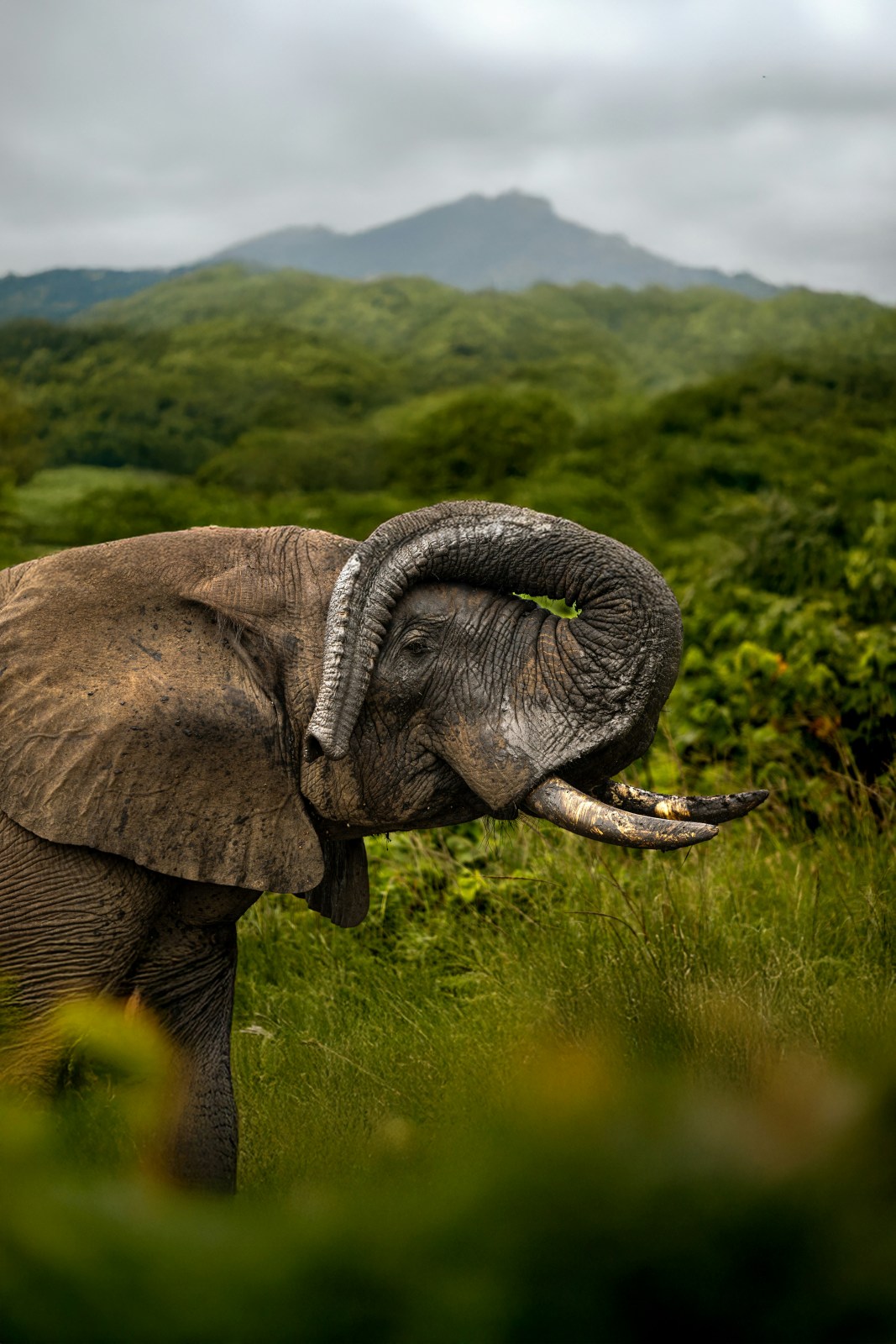

Researcher: Teresa Schenk
Affiliation: Department of Psychology, Ludwig-Maximilians-Universität München, Germany
Favourite animal: Elephant
Contact info: Email Teresa.Schenk[at]psy.lmu.de; LinkedIn www.linkedin.com/in/teresa-schenk
Hi, Teresa! What’s the central topic of your PhD research? Who have you been working with?
My PhD is about moral concern for non-human animals. I’m interested in understanding why we extend more moral concern to some species than to others. Why do so many of us see a dog as a family member and a pig as food, even though the two are similar in many ways? I’m especially curious about the psychological processes behind where we draw these lines, and how they develop as we grow up.
I’ve mainly been working with my supervisor, Professor Mario Gollwitzer, whose background in Social Psychology. He has really helped me think about animals as part of broader questions about morality and group relations. I also had the chance to collaborate with fellow PhD students Penelope Agranov, Özgün Özakay, and Anna Carolin Poernbacher at the EASP summer school 2025, which was a really fun and inspiring experience.
What inspired you to pursue this topic / these questions?
I’ve always cared about animals and how they’re treated. I don’t eat animal products myself, so these questions have been part of my everyday life for a long time. I’ve also always been drawn to moral questions more broadly. I wanted to understand why animals are treated the way they are. Most people say they care about animals, yet we accept treating some of them in ways we would deem unthinkable for others (e.g., the “meat paradox“). Studying moral concern from a psychological perspective allows me to combine my care for animals with my interest in morality, and better understand how people manage these moral tensions.
What are some key findings from your work that you would like other researchers or animal advocates to know about?
For researchers, one take-away is that we need to look closely at how we measure speciesism. Many existing measures only capture some animals or build in confounds, for example, by forcing zero-sum choices between humans and animals, or by mixing up moral values with factual beliefs about animals.
In work that’s currently under review, we also found that the literature on moral concern for animals is hard to pull together, partly because studies use such different measures. What does emerge is a tension between forces that expand our moral concern, like empathy, perceived similarity, and seeing animals as having minds, and forces that constrain it, like being reminded that we use animals, or beliefs that justify hierarchies.
What theoretical perspectives have been influential to your work?

A concept that has shaped my thinking from the start is the moral circle, which Peter Singer (1981) described as the boundary between those who count morally and those who don’t. What I find especially useful is the more psychological take on it by Jesse Graham and colleagues. They describe our moral concern as being pulled in two directions at once: some “centrifugal” forces like empathy push it outwards towards distant others, while other “centripetal” forces pull it back towards ourselves and those close to us.
The meat paradox , a term coined by Steve Loughnan, Brock Bastian and colleagues, is the classic example: it describes the tension that many people care about animals and don’t want them to suffer, yet they eat them (an act that causes animals suffering). According to cognitive dissonance theory, these dissonant cognitions feel uncomfortable, and people are motivated to resolve the dissonance, for example, by devaluing animals.
Another key concept for me is speciesism, a term coined by the psychologist Richard Ryder (1971) and popularised by Peter Singer (1975). It describes giving animals different moral consideration simply because of the species they belong to. In psychology, speciesism is understood as a form of prejudice, comparable to racism or sexism, and the Social Dominance–Human Animal Relations Model (SD-HARM) by Kristof Dhont and colleagues suggests that these prejudices share common roots in a preference for hierarchies between groups.
You recently published a paper in Social Psychology titled “From factory to fork – Does food systems knowledge shape children’s evaluations of animals?” What inspired this work and what are some of the key findings?
Previous research has shown that children are less speciesist than adults, but it’s still unclear why. Research with adults suggests that people resolve the meat paradox partly by seeing the animals they eat as less intelligent or less able to suffer. Jared Piazza and colleagues proposed that young children might not yet feel this conflict, simply because they don’t know much about how meat is produced or the ways in which farmed animals suffer. The conflict would only appear as they learn more about food systems and their own role as consumers. That idea hadn’t been tested, so that’s what we set out to do.
In a first study with 4- to 6-year-olds who eat meat, children who knew that their meat comes from pigs or chickens cared just as much about these animals as children who didn’t know. They also saw them as equally intelligent and equally able to feel pain and emotions. In a second study with 7- to 16-year-olds, older children knew more about how pigs are raised for food. But, contrary to what we expected, children who knew more were actually less speciesist and saw pigs as more capable of feeling emotions.
One finding from this paper was that children’s level of food-systems knowledge was unrelated to how much they valued pigs’ well-being, and was even associated with lower speciesism and greater attribution of emotional capacity to pigs. How do you interpret these findings? What do they tell us about how children relate to animals or animal products?
I think the main message is that knowing where meat comes from doesn’t automatically lead children to value animals less or deny animals mind. One reason might be the kind of knowledge we measured. In research with adults, animals tend to be devalued after fairly abstract reminders that they’re food or after participants eat meat. Our questions were about pigs’ concrete living conditions, such as being kept in cramped spaces or separated from their young. That kind of information may make it harder to look away and may instead highlight how vulnerable these animals are.
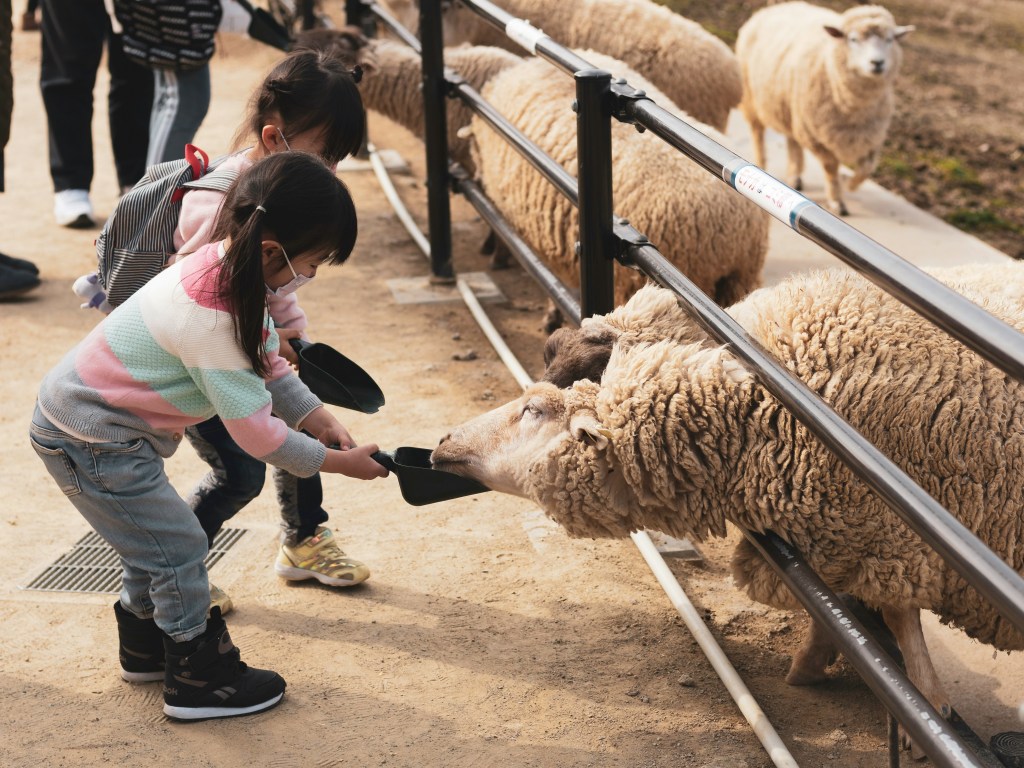
It could also work the other way round: children who already care more about animals may pay more attention to how they’re treated. Another reason might be that children don’t yet feel responsible for what they eat. Their parents decide what’s on the plate, so they can know animals suffer without feeling like it is on them. At the same time, even the youngest children in our study already rated dogs more positively than pigs and chickens. So the distinctions we draw between animals may start less with knowledge and more with the cultural categories children grow up with: some animals are friends, others are food.
What are some of the challenges you have faced when studying this topic with young people?
The biggest challenge was making the survey child-friendly. We had to simplify the wording and the response scales without losing the content, while still being able to pick up differences between children. To get there, we tested the questions with children beforehand and used just four answer options, each with a clear verbal label. We also used the survey with children of quite different ages, so we had to make sure it worked equally well with young children and teenagers.
Finally, we ran the studies online, because we wouldn’t have been able to recruit enough children otherwise. That meant parents did the survey with their children. To address this potential issue, we adopted procedures from Henseler Kozachenko and Piazza and made sure that parents read out every question in full and didn’t influence their child’s answers.
What are some of the big research questions or topics that you would like to pursue further?
I’d really like to get to the bottom of why adults are more speciesist than children. One idea I’d like to test is whether it has to do with responsibility for one’s own diet. Once young people start making their own food choices, the conflict between caring about animals and eating meat may become much harder to ignore. I also think qualitative work would be really valuable here. Interviewing children about how they think about eating meat could reveal things that questionnaires simply miss.
Another topic I’m curious about is euphemisms. We talk about “pork” rather than pigs, and animals are “processed” rather than killed. I’d like to find out whether this kind of language shapes how children see farmed animals. Finally, I’d like to work on measurement and developing new ways of measuring moral concern for animals that distinguish more clearly between related constructs, such as how much moral worth we grant animals versus how acceptable we find using them. Otherwise, it’s hard to know what our findings are really telling us.
If you’ve enjoyed the blog, continue reading more from Teresa:
Key Papers by Teresa Schenk
Schenk, T., & Gollwitzer, M. (2026). From factory to fork – Does food systems knowledge shape children’s evaluations of animals? Social Psychology, 57(1), 14-26. link to paper
Schenk, T., Agranov, P., Özakay, Ö., & Poernbacher, A. C. (2026). Rethinking the measurement of speciesism: Conceptual and methodological considerations. Psychology of Human-Animal Intergroup Relations, 5, Article e20003. link to paper
Blog and interview by Jared Piazza for PHAIR
Elephant. Cover-photo credit: Stanislav Stelmakhovich

