


Researcher: Tina Bagus
Affiliation: DIPF | Leibniz Institute for Research and Information in Education, Frankfurt am Main, Germany
Favourite animal: Turtle
Contact info (email): t.bagus@dipf.de
What is the central topic or question of your PhD research? What inspired you to pursue this topic?
In my PhD research, I am developing an instrument to assess experiences of inner conflict in multifaceted situations. With this instrument, I aim to investigate how inner conflict is related to decision-making and reasoning, and how these relations develop from childhood to adulthood. A special focus of this research is on inner conflict related to the meat paradox, especially in people who are ambivalent about eating meat.
Hanna Beißert and Luke McGuire sparked my interest in human-animal relationships when I was involved in a research project that sought to replicate findings with British samples on the development of speciesism and attitudes of meat eating in Germany. During this time, I was impressed by children’s straightforward perspectives and the very ambivalent attitude of some adults towards meat-eating. Thus, my PhD research is inspired by the development of meat-related conflict but I also examine inner conflict as a general construct in various socio-moral situations and across development.
What are some key findings from your work? What theoretical perspectives have been useful to your work?
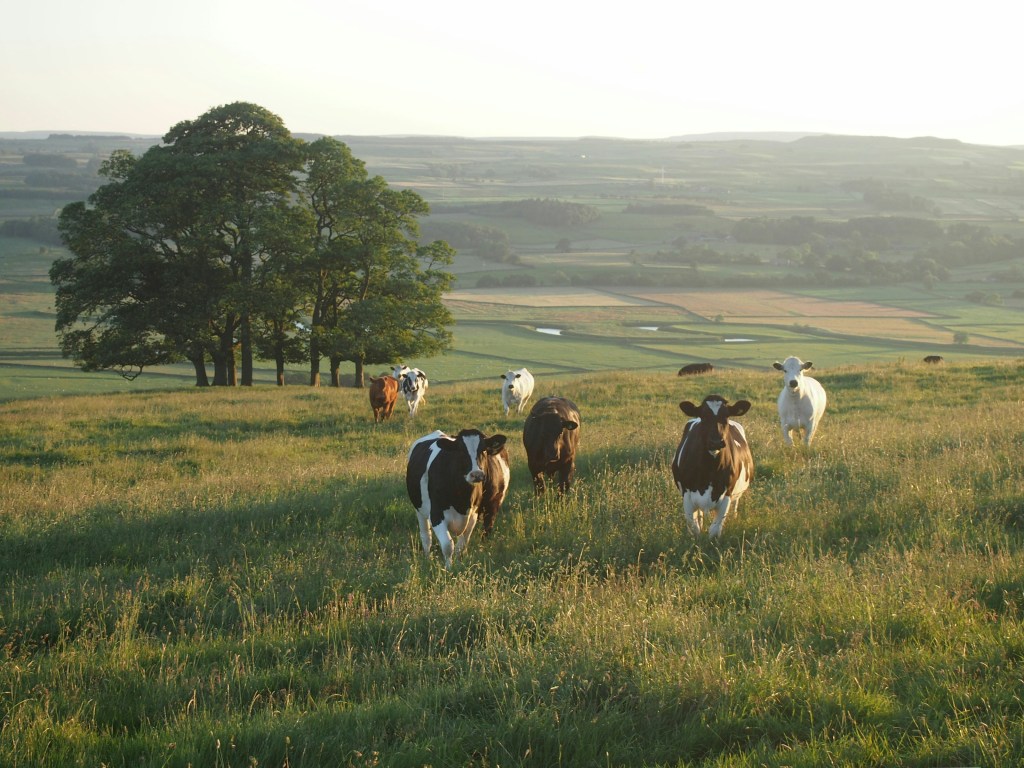
In my recent work, I moved beyond the “pro-meat vs. oppose” dichotomy to examine the reasoning of people who are conflicted about their meat consumption. These ambivalent respondents are more likely to engage in dual-sided reasoning (using arguments both for and against meat eating), which is indicative of meat-related cognitive dissonance. My work builds on Rothgerber’s (2020) theoretical model of meat-related cognitive dissonance, which posits that individuals who eat meat while also caring about animal welfare experience an unpleasant state of cognitive dissonance. To reduce this dissonance, people may employ strategies such as rationalising meat consumption through the “4 Ns” (i.e., reasoning that meat eating is natural, necessary, normal, or nice) or by using conditional justifications related to humane husbandry (for example, reasoning: “it is only okay to eat animals that are treated humanely before being killed” – see image). Whereas proponents appear to have largely resolved this conflict through the use of pro-meat justifications, ambivalent respondents seem to be in an ongoing process of coping with this inner conflict, as reflected in their dual-sided weighing up of the pros and cons of meat eating.
In your recent publication, “Reasoning about eating animals across the lifespan”, you found that German children, adolescents and adults reason somewhat differently about eating animals. What were some of the key developmental differences across the age groups you studied?
Consistent with research using British samples, we found that German children were more likely than adults to refer to moral concerns about animal welfare, and this was true even for children who reported eating meat. This points to a disconnect between children’s moral evaluations and their eating behaviour – a key assumption of the developmental model of meat-related conflict (see Piazza et al., 2023). The model posits that children experience little inner conflict because their limited food-systems knowledge allows their moral concerns and eating behaviour to remain largely disconnected, whereas increasing knowledge with age gives rise to an emerging conflict between animal welfare concerns and meat eating.

Consistent with this model, German adolescents in our study showed both “child-like” moral reasoning – for example, appealing to animal welfare – as well as “adult-like” reasoning with appeals to the naturalness of eating meat and humane husbandry conditions that justify meat eating. This supports the view that adolescence may be a transitional phase, during which growing meat-related conflict fosters the use of dissonance-reducing reasoning strategies and a developmental shift from a primarily, welfare-oriented perspective in childhood towards a more nuanced (e.g., conditional) and biology-oriented justification pattern in adulthood.
Why is it important to understand how people of different ages reason about eating animals?
Because it shows how perspectives on meat consumption emerge and take shape when growing up in a society where meat eating is the norm. Investigating how people learn to justify or question socially accepted practices at different ages can reveal how cultural and social norms are taught and internalised over time. Furthermore, knowing how reasoning differs by age can help educators, caregivers, and advocates better communicate about meat eating, food systems, and animal welfare in age-appropriate ways.
How would you like to see your work applied or being used? Are there implications for animal advocacy?
As part of my PhD, I am currently developing and validating an inner conflict scale to assess experiences such as the conflict that many meat eaters experience. So far, my research with this instrument shows that many people consider meat eating as a complex and potentially conflicting issue. Being able to identify which consumers experience inner conflict about meat can be valuable for animal advocacy because it can help direct interventions towards more receptive audiences. For example, advocates might use the scale to examine whether “conflicted” meat eaters might be open to transitioning towards a plant-based diet or receptive to messages about reducing their meat consumption, more so than non-conflicted meat eaters, and, as a result, direct their efforts and resources more strategically.
Other than that, our findings on young people’s perspectives on meat-eating can serve as a useful starting point for age-appropriate discussions about meat, food systems and animal welfare, empowering children and adolescents to make informed food choices.
Lastly, I think our work on children’s reasoning shows that children are already good animal advocates. Children’s perspectives are often overlooked, but listening to them on an equal footing can be very impactful, as their arguments are often convincing and relatable. Children can remind us of basic moral principles such as reciprocity (‘You wouldn’t want to be eaten either!’) and the need to consider the basic rights to all living beings.
What do you see as an important ‘next step’ for developmental research into the topic of animal-product consumption?
There is still much to be investigated in developmental research on meat-related conflict with many open questions and promising directions for future work. As most studies have been quantitative and cross-sectional, I think it will be an important next step to conduct qualitative studies, especially focusing on adolescence as a phase of changing moral views of animals. Interview studies with children who are just entering adolescence would be very valuable, ideally, following them over time to capture how their reasoning about eating animals develops into young adulthood.
I would also find it particularly promising and exciting to conduct in-depth interviews with children who eat meat but at the same time consider it morally unacceptable to eat animals. Exploring how children themselves think about this apparent contradiction in their behaviour and attitudes could help us better understand how individuals, more generally, come to manage, live with, and, at times, confront these ongoing tensions.
Key Papers by Tina Bagus
Bagus, T., McGuire, L., & Beißert, H. (2026). Reasoning about eating animals across the lifespan. Appetite, 217, 108333. https://doi.org/10.1016/j.appet.2025.108333
McGuire, L., Bagus, T., Carter, A. G., Fry, E., & Faber, N. S. (2025). Reasoning to justify eating animals varies with age. Child Development, 96, 953-965. https://doi.org/10.1111/cdev.14217
Blog authors and interview questions by: Jared Piazza, Kiera Galvin, Rebecca Gregson, and Matthew Watkins
Cover image credit: David Courbit
 PHAIR Society